
Articles
Green Innovation
BioBright is Making Zero-Carbon Ports the New Standard
The UK-based startup is transforming ports into climate solutions by combining nature-based water purification with real-time emissions monitoring.
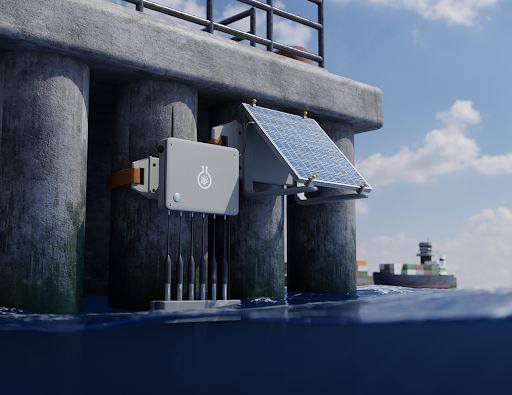
Growing up near the coast, Vanessa Barzasi, the CEO of BioBright, wondered how something as vast as the ocean could be so vulnerable. "After speaking with more than 500 stakeholders and ports globally, I realized that they all share the same problem," Barzasi shared. "Rising emissions, toxic water, and no scalable solution to help them achieve their goals." This understanding became the foundation for BioBright, the algae-based monitoring and purification system that won the Island Solutions Showcase at the Virtual Island Summit 2025.
The win, announced during the summit's closing session, comes with two complimentary tickets to the Global Sustainable Island Summit 2026 in Gran Canaria where BioBright will present their innovation on a global stage. The win validates BioBright's approach to one of the maritime industry's most pressing challenges.

A Family Solution to a Global Problem
Co-founded In 2021, BioBright started as a family fascination with macroalgae. Vanessa and her brother, Ayrton Barzasi, initially explored these organisms for their luminescence and aesthetic qualities. Their focus soon shifted as they recognised the urgent need for practical climate solutions. "By combining technology and nature together, we are transforming ports into climate solutions and not climate problems," Vanessa shared.
As CEO, Vanessa contributed her entrepreneurial expertise in finance and business development, complemented by a BSc in Economics and Master's in Anthropology. Ayrton, the CTO and CSO is the science expert behind the technology, holding a BSc in Genetics and Genomics and an MPhil in Cell Science.
Today, BioBright positions itself as the only port-focused algae-based solution that simultaneously purifies water, reduces emissions, and provides verifiable data. BioBright's thesis rests on a simple observation: ports drive vital economic activity but also generate significant environmental harm. BioBright offers a way to maintain the former while addressing the latter.
How The Innovation Works
BioBright combines smart sensors with living algae. The monitoring system tracks carbon dioxide levels in both air and water, along with common port pollutants such as copper, zinc, nitrate, phosphate, ammonia, and ammonium. The data feeds into an online platform that port operators can access from anywhere, showing pollution levels in real time. This addresses a major gap in how ports currently manage emissions. Many facilities still rely on one person manually recording data in spreadsheets, which cannot capture how pollution levels change throughout the day.
The biological component performs the actual cleaning. BioBright cultivates macroalgae in purpose-built structures attached to harbour walls or moored as floating arrays. During the day, the algae absorb carbon dioxide from the air and water while releasing oxygen while pulling pollutants directly from the water as they grow. Once the algae mature, BioBright harvests them for conversion into biofuels and fertilisers, creating a circular system where the pollution-fighting process generates commercially valuable products. Four hundred grams of algae can absorb 800 grams of carbon dioxide every hour, with the biomass doubling roughly every two months.
From Theory to Practice
BioBright has moved beyond the laboratory to test its approach in real-world conditions. It worked with Catapult Connected Places, the Department of Transport, Thames Estuary Growth Board, and the Port of Tyne on a business case study examining whether the technology could genuinely help ports achieve net zero emissions. A separate collaboration with Boatfolk, which operates 11 marinas across the UK, helped refine which data points to implement and how to present them effectively.
BioBright's most significant validation came through winning a spot in the Clean Maritime Demonstration Competition Round 6, a UK government-funded initiative. BioBright is now conducting a six-month pilot project in Southampton, working with RoboK and Red Funnel to install the monitoring system and collect comprehensive data. The project aims to demonstrate emission reductions and operational efficiency improvements ranging from five to 15 percent.
This comes at a critical time period. By 2030, major European ports face enormous carbon tax liabilities under the EU Emissions Trading System (ETS). The Port of Rotterdam, for example, could incur over £1.2 billion in carbon-related costs. BioBright estimates that a £100,000 investment in its solution can deliver a 30 percent annual return on investment through avoided taxes and improved operational efficiency. For an average UK port, the startup projects annual savings starting at £1 million through emission reductions and a 30 percent cut in operational inefficiencies.
The regulatory landscape further amplifies the urgency. The UK ETS extended to cover domestic shipping in 2026. Ports that fail to address emissions face potential fines ranging from £10 million to £100 million for severe pollution incidents, with carbon tax penalties potentially reaching £50 million or more per port annually after 2050.
Island Relevance and Global Reach
During her pitch at the Island Solutions Showcase, Barzasi emphasised how BioBright's solution addresses challenges particularly acute for island communities. Islands balance vital economic activity from ports with the need to protect pristine marine environments that support tourism and local livelihoods. Port emissions affect not only regulatory compliance but also the health of people living and working nearby, as well as marine biodiversity.
When asked whether BioBright's services would extend to the Caribbean, Barzasi responded affirmatively. "Our aim is to be inside every port around the world," Vanessa confirmed. The business aims to operate in ports worldwide, particularly those struggling with emissions reductions and oil spill management. BioBright also conducts biodiversity reports before installation to determine which algae species work best in each location. The system can even incorporate sargassum, the brown macroalgae that seasonally inundates Caribbean shores, for harvesting and biofuel production.
BioBright has engaged with stakeholders across Europe, Asia, and North America. It participated in London Maritime Week, where it won another competition, and plans to present at events in Hong Kong. BioBright's goal involves securing 200 port clients, which would unlock £20 million in annual revenue.
A Bright Path for BioBright
Looking ahead, the Southampton pilot will provide crucial performance data to refine the technology and demonstrate its value proposition to potential clients. "Following this recognition, we plan to expand our pilot projects across additional ports, continue collecting actionable data on emissions and water quality, and refine our solutions based on real-world feedback," Vanessa shared in an interview with Island Innovation.
BioBright will also present as the Island Solutions Showcase winner at the Global Sustainable Island Summit 2026 in Gran Canaria on April 20-23, 2026. Attendees can expect live demonstrations of the monitoring system, insights from ongoing pilots, and discussions about how the technology supports sustainable maritime operations while benefiting island communities. "Let's create a world where zero-carbon ports are actually the new standards together," Vanessa closed.