Fishing Up Islands: Samoa’s Floating Classroom Helping Navigate Sea & Culture
At the edge of Samoa’s lagoons, the Gaualofa, a traditional Samoan voyaging canoe, glides silently across the sea, carrying its most precious cargo: knowledge.
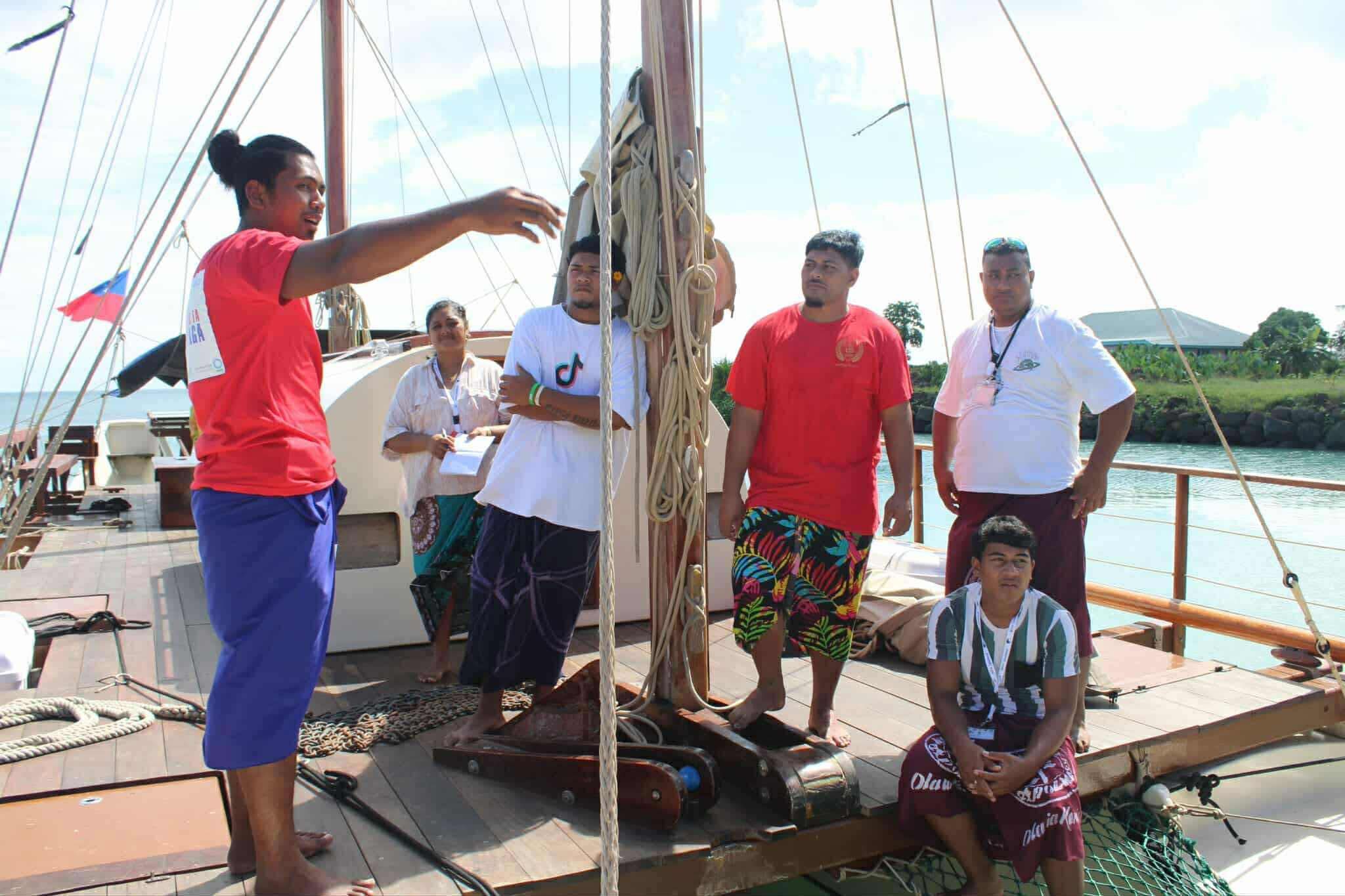
Onboard, Samoan youth lean over the railing, watching the waves and listening as their instructors explain the importance of the ocean, the reefs, and the mangroves that surround their villages. Today, the sea itself is the classroom.
The Guardians Programme, established in 2018, brings environmental education directly to villages across Samoa. Initiated through the support of Conservation International Samoa, alongside the Samoa Voyaging Society, and with early contributions from National Geographic, the programme later received additional support from UNESCO as a contributing partner. The programme teaches students about coral biology, fisheries, waste management, and the importance of mangroves, and of course, the art of voyaging all through hands-on lessons both on land and at sea.
Aboard the Gaualofa, lessons take on a new dimension. The canoe is more than a vessel; it is a living classroom where students learn the art of navigation, how to sail in balance with wind and waves, and the stories of their ancestors who voyaged across the Pacific centuries ago.
The Gaualofa is part of a rich tradition of Samoan voyaging canoes, or va’a, which were central to life in the islands long before modern transportation. These double-hulled canoes allowed communities to navigate vast ocean distances, connect islands, and share knowledge, food, and resources. Canoes were constructed with careful attention to local materials - timber, ropes, and sails woven from pandanus leaves - and their design reflected generations of accumulated wisdom about the sea.
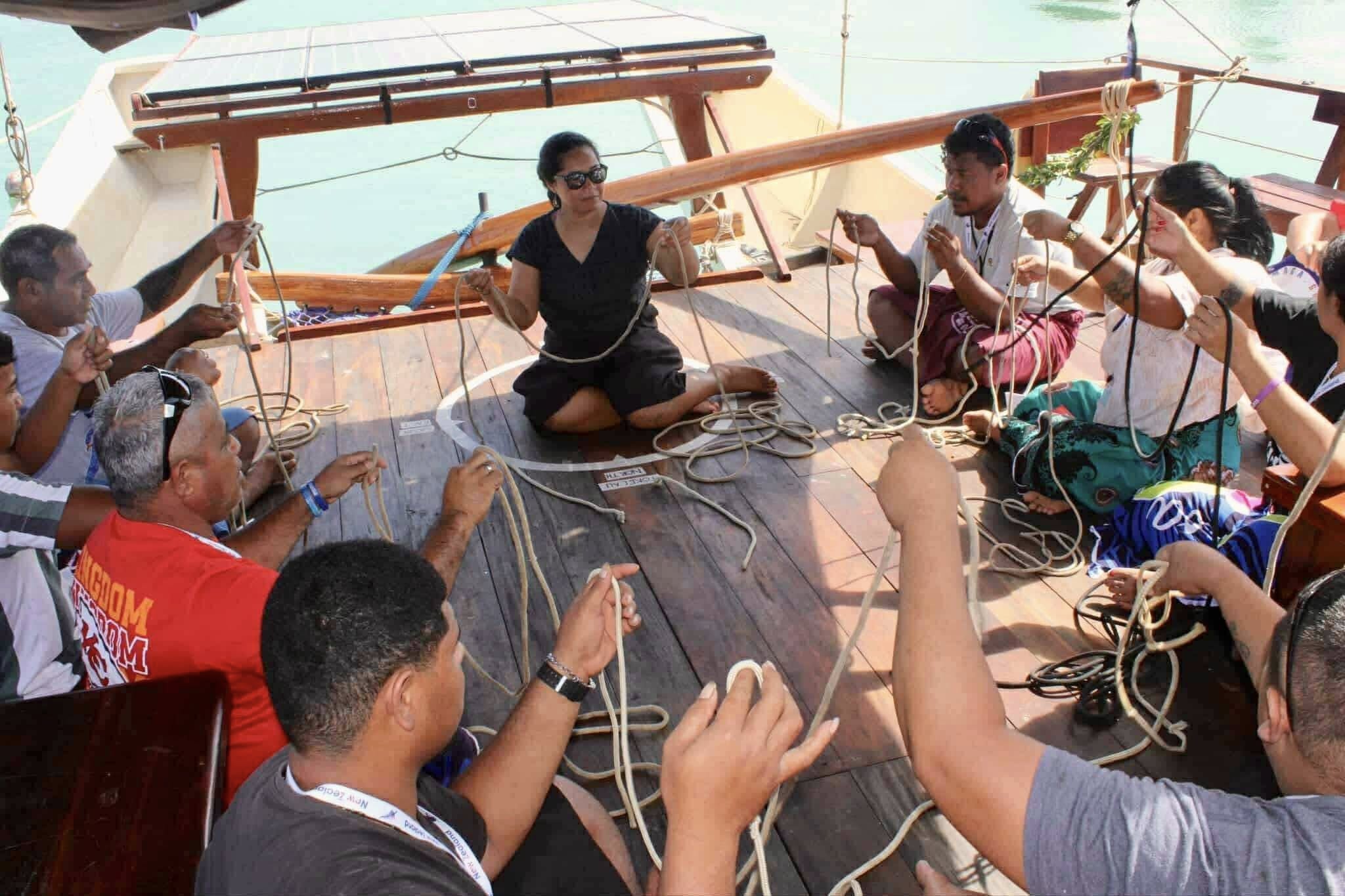
As former president of the Samoa Voyaging Society, Memea Lyvia Seiuli Black described, traditional wayfinding is “our ancestors’ technology” - an extraordinary system built on memorising the stars, reading the sky, understanding the winds, and recognising the patterns of waves. It is knowledge accumulated over centuries, refined through observation and experience. “It’s amazing,” she reflected, “how our ancestors memorised the stars and understood the winds and patterns of the waves so they could sail to their destinations.”
Central to the programme today is the revival of this knowledge. Leota Fitimaula Donna Ioane, the current president of the Samoa Voyaging Society, spoke of the ancestral experience of “fishing up” islands - voyaging outward with intention and skill, sailing beyond sight of land until new land reveals itself on the horizon. It is not about drifting, she explained, but about knowing how to search, how to read the ocean, and how to trust inherited knowledge systems.
In teaching students to “fish up” islands - to keep sailing until the shoreline disappears and then reappears - the programme instils patience, observation, and confidence in traditional knowledge. The metaphor captures both exploration and responsibility: the ocean is not empty space, but a living map waiting to be read. In this way, the sea becomes not a boundary, but a pathway - one that connects heritage, environment, and future generations.
For the Voyaging Society, Leota emphasised that this knowledge is “not reserved for an elite few. It’s for everybody. It’s for our people,” - a philosophy that continues to shape the Guardians Programme. Sharing traditional navigation with young people is not simply about preserving history; it is about strengthening identity and fostering environmental awareness. Learning to voyage deepens understanding of the ocean’s rhythms, fragility, and power. The aim is not only the transfer of knowledge, but the rebuilding of connection. In a time when many young people encounter fish primarily in markets rather than in the ocean, the programme seeks to restore an intimate relationship with the sea and the land that sustains them. By sailing, observing, and engaging directly with their environment, students begin to see themselves not as consumers of natural resources, but as custodians of them. The canoe becomes a teacher, offering lessons in responsibility, teamwork, and respect for the natural world. Students learn that preserving the environment is intertwined with preserving culture.
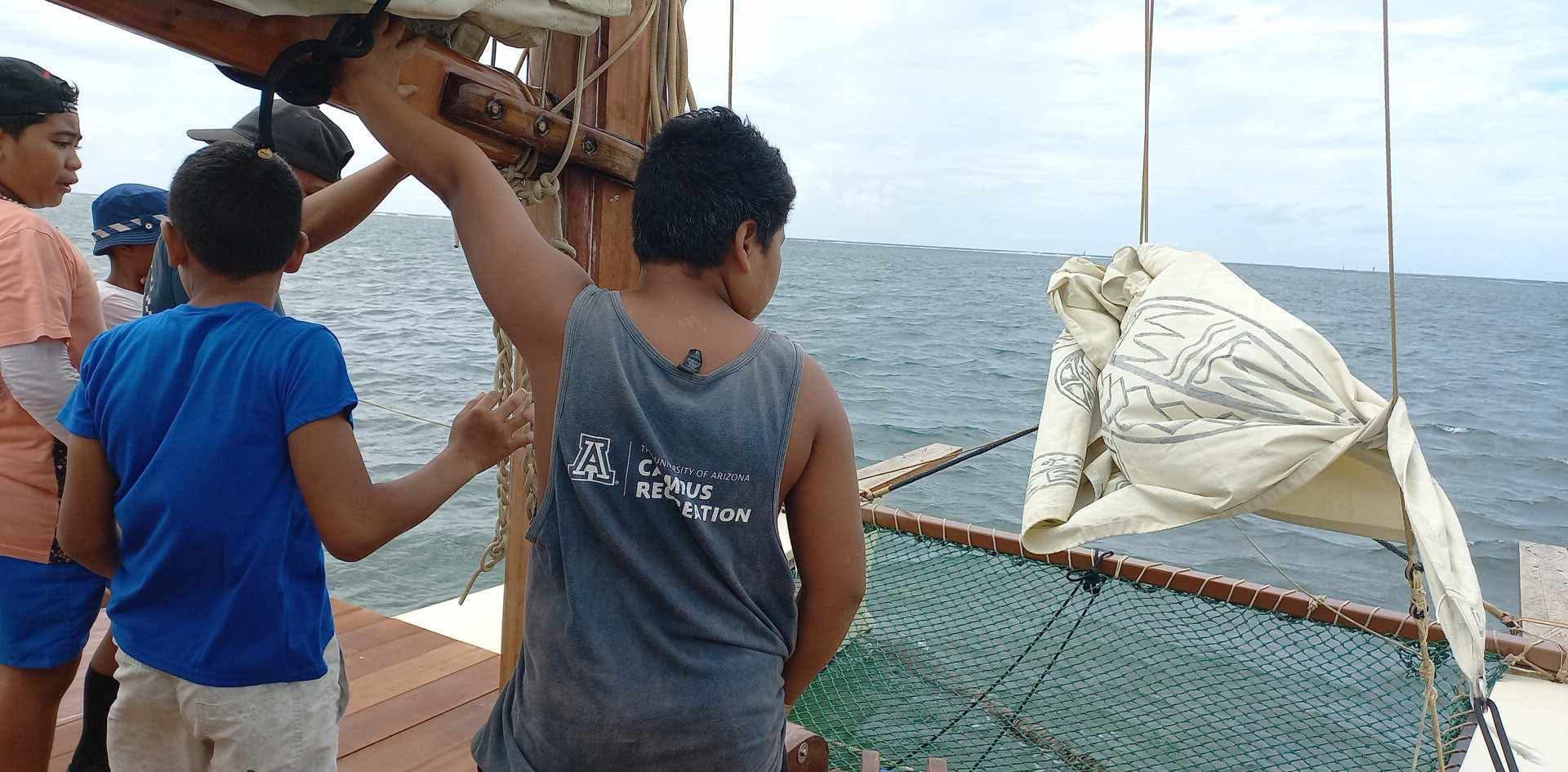
Beyond the canoe, the Guardians Programme emphasises hands-on environmental stewardship. Students explore mangrove forests, coral reefs, and fisheries, observing how these ecosystems support their communities and learning strategies to protect them. Lessons are practical: planting mangroves, monitoring coral health, and understanding sustainable fishing practices show students how small actions can have a meaningful impact.
Community engagement is central to the programme. Elders and village members join community sails, sharing stories of past voyages while witnessing the environmental lessons students are learning. In a society grounded in fa’a Samoa - the Samoan way of life, where village structures, chiefly leadership, and collective responsibility shape daily life - these shared experiences carry particular significance. They create an intergenerational bridge, reinforcing the understanding that the health of the islands relies not on individual action alone, but on collective knowledge, stewardship, and unity. Each journey leaves ripples far beyond the water’s edge, fostering young people who are not only climate-literate but also deeply connected to their cultural heritage.
As the Gaualofa sails toward the horizon, students watch the ripples spread across the water, understanding that their learning will extend into their villages, families, and communities. In Samoa, education is no longer confined to four walls. It floats, it sails, it connects - and it carries forward both the knowledge of the sea and the legacy of the islands.