On Solutions Day at COP27, governments, members of civil society, and small-medium scale innovators will come together to share experiences and examples of best practices for the future. The aim is to create meaningful and tangible solutions to the challenges explored during the negotiations process. These solutions will range from greening of national budgets, the creation of sustainable cities, sustainable transport, improved waste management, alternatives to plastic, and more.

Creativity and innovation form some of the fundamental pillars for finding solutions to the climate crisis, and bringing together a wide range of stakeholders will lead to an appreciation and incorporation of diverse perspectives. This will lead to the ability to identify opportunities to transcend traditional ways of thinking and develop new and original ideas, and these can be implemented to ensure a sustainable future.
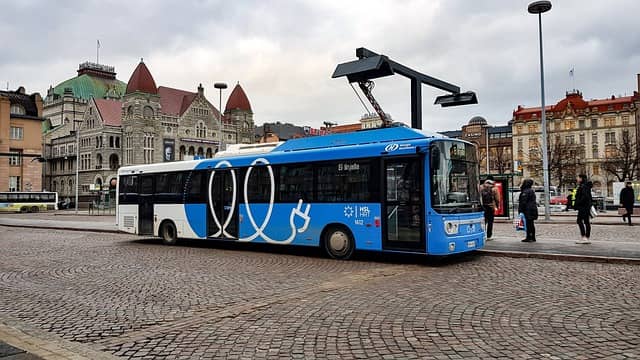
One of the key aspects of the discussions on this day of the conference is sustainable transport. The UN has established that new and emerging technologies, from electric cars and buses to zero-carbon producing energy sources, as well as policy innovations, are critical for combating climate change. However, in order to be effective, they must ensure that transport strategies benefit everyone, including the poor and marginalised in society.

Like transportation, the agricultural and food sector contributes significantly to global greenhouse emissions, from production, consumption, and food waste. The Food and Agriculture for Sustainable Transformation initiative seeks to address this issue by showcasing how agriculture can be an important part of the solution to fight the climate crisis by sequestering carbon in soil and plants and promoting adaptation and resilience.
The proceedings at COP27 illustrate that the quest for solutions range from global to local, and represent a wide variety of approaches in relation to inclusivity, stakeholder involvement, and scale of implementation. Solutions Day will help to catalyse the successful integration of collaborative discussions into policies, technological, and digital innovation, with the ultimate purpose of bringing clarity to the climate solution debate.
Live from COP27
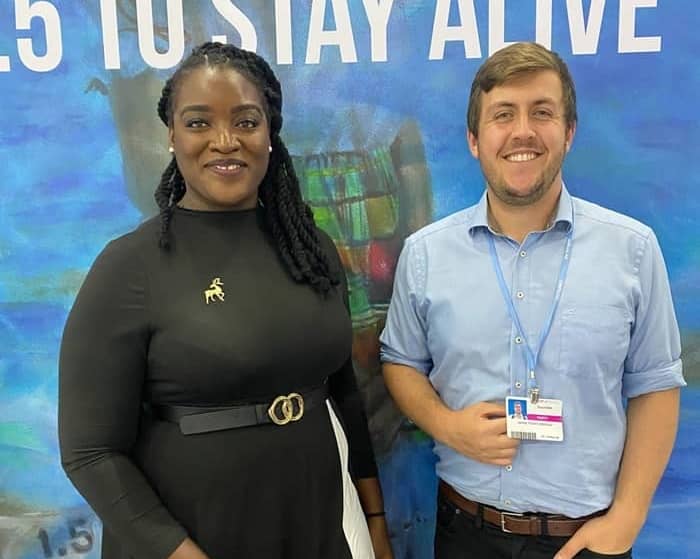
James with Honourable Minister Quincia Gumbs Marie ---
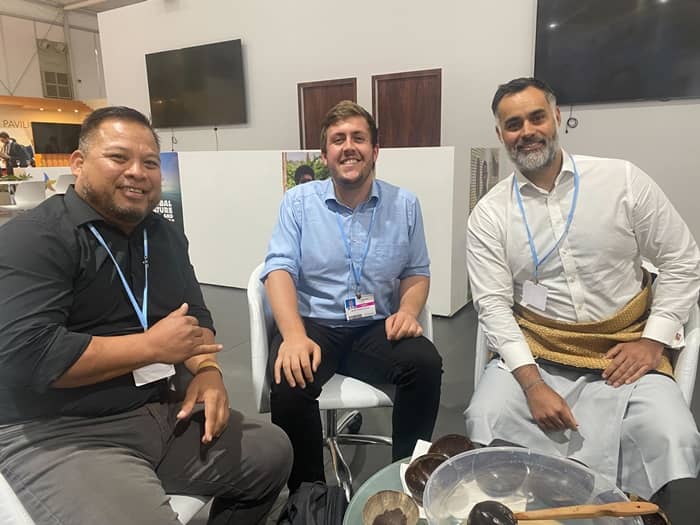
3James drinking Kava with the Tongan delegation

2James drinking Kava with the Tongan delegation
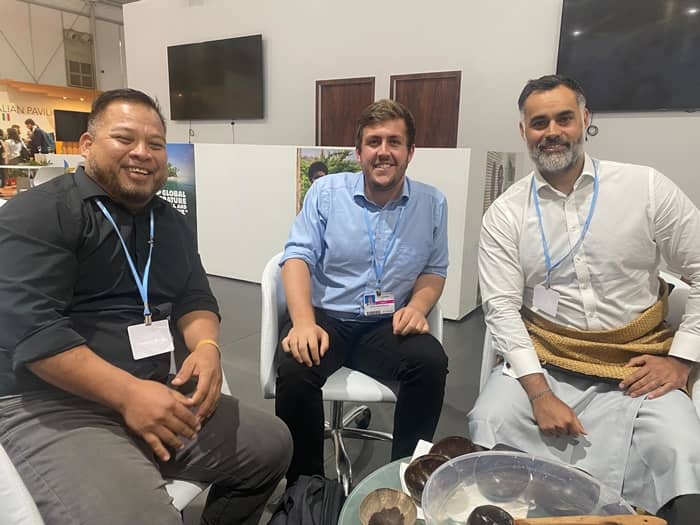
1James drinking Kava with the Tongan delegation
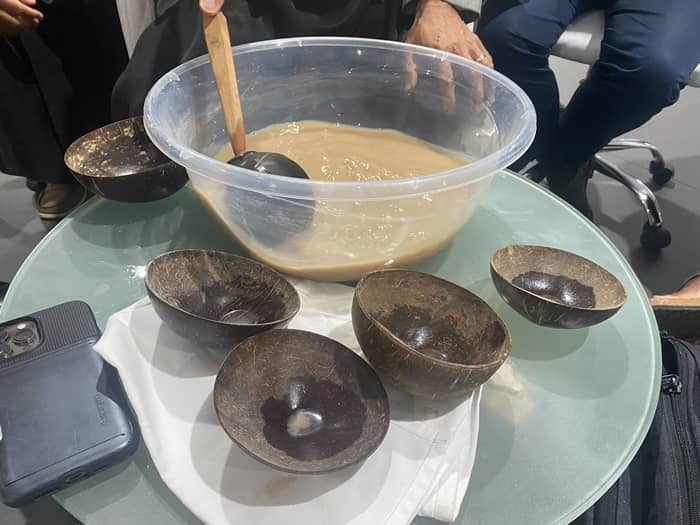
4James drinking Kava with the Tongan delegation
(Picture on the left) James Ellsmoor (CEO of Island Innovation) met The Hon. Quincia Gumb-Marie, Anguilla’s Minister of Sustainability, Innovation & the Environment.(Pictures on the right) James also had the opportunity to meet members of the Tongan delegation and drink Kava. Kava is a traditional drink harvested from the root of the Tongan plant called piper methysticum. For many centuries, drinking kava has been an important cultural tradition of most South Pacific island nations, including Tonga.
News and key insights
Join Island Innovation's Ambassadors Program
Do you want to be part of a global network of island changemakers? Do you want to gain critical skills to drive positive changes in your community? Apply to become an Island Innovation ambassador (all ages can apply!).
Today's island-related events
Date & Time: 17 November, 10:00 – 11:00 AM (Egypt)Location: Mediterranean Pavilion and onlineOrganization: Union for the Mediterranean
Date & Time: 17 November, 3:00 – 4:30 PM (Egypt)Location: Thebes (150) and onlineOrganization: Welthungerhilfe, OroVerde
Date & Time: 17 November, 1:15 — 2:45 PM (Egypt)Location: Amon (150) and onlineOrganization: Germany & Adelphi Research (AR)
Date & Time: 17 November, 3:00 – 4:00 PM (Egypt)Location: Mediterranean Pavilion and onlineOrganization: Interreg MED Programme and UNIMED
Thank you to our endorsing partners
ClimaTalk is a youth-led non-profit organisation demystifying climate policy and empowering young people in the fight for climate action. The ClimaTalk team consists of 100+ young volunteers from 30+ countries and 6 continents.
They have so far published 400+ short and accessible climate policy articles, have created a database on youth climate lawsuits, a university courses map with hundreds of environmental courses, and have reported live from three international climate conferences. Their COP27 project is the Austrian winner of the European Charlemagne Youth Prize 2023.
They envision an empowered generation of climate policy experts and campaigners.
Sustainable Ocean Alliance (SOA) activates young people, develops and implements innovative solutions, and mobilizes an ocean workforce to restore the health of the ocean in our lifetime.
Founded in 2014, SOA has cultivated the world’s largest network of next-gen leaders, entrepreneurs, advocates, mentors, and partners—all working to create solutions for the largest challenges facing our ocean.
Resilience First is proud to be a partner initiative for the UNFCCC’s Race to Resilience global campaign, the sibling campaign of Race to Zero.
Launched at the Climate Adaptation Summit on 25 January by The Rt Hon Alok Sharma MP, COP26 President, after an opening statement from Ban Ki-moon, the 8th UN Secretary General, the campaign sets out to catalyse a step change in global ambition for climate resilience, putting people and nature first in pursuit of a resilient world where we don’t just survive climate shocks and stresses but thrive in spite of them.
Through a partnership of initiatives, the campaign will focus on helping frontline communities to build resilience and adapt to the impacts of climate change, such as extreme heat, drought, flooding and sea-level rise.
Resilience First is now offering our business members the unique opportunity to become recognised leading players in contributing to a better, safer world, through partnership of the UNFCCC’s Race to Resilience Campaign.
Partnership of the campaign which aims to build global resilient communities includes pledging to certain commitments which would minimise businesses’ risk whilst evolving their climate resilience plans.
Official Platform For Youth At The Climate Conference And Its Related Events. The Platform Aims To Raise Awareness Of Climate Issues And The Challenges Facing The Planet That We Have No Other
It Is A News Platform That Supports Youth Initiatives, Green Projects And Civil Society Institutions That Work To Reduce The Impact Of Climate Change, Under The Auspices Of The Ministries Of Youth And Sports, And Environment In Egypt And With The Support Of The IVLP Program At The Ministry Of Foreign Affairs In USA
A mentorship program for young people to improve their leadership potential by acquiring new skills
The Local2030 Islands Network is the world’s first global, island-led network devoted to addressing the climate crisis by advancing the Sustainable Development Goals (SDGs) through locally driven, culturally informed solutions.
The Network brings together a diverse set of island nations, states, and communities from all regions of the world — islands connected through our shared island experiences, cultures and vision. Here, island leaders and experts from across jurisdictions meet as peers, working to develop and share innovative homegrown solutions that can change the world. Through the Network, islands are uniquely positioned to lead in the global effort in achieving a more resilient future for island Earth.
In 2006, the United Nations Convention on Biological Diversity (CBD) held its eighth meeting of the Conference of the Parties (COP). Recognising the specific challenges and vulnerabilities faced by islands, particularly Small Island Developing States, a programme of work was adopted specifically to significantly reduce the loss of biodiversity on islands (decision viii/1). Healthy ecosystems underpin sustainable livelihoods, health and poverty eradication.
The decision further called on “Parties to establish national, sub-regional, regional and international island partnerships that bring Governments and civil society organizations together to increase political, financial and technical support to accelerate the implementation of the programme of work on island biodiversity”.
Inspired by this call, the leaders of Palau, Seychelles, Republic of Marshall Islands, Grenada and the British Virgin Islands came together to catalyse this into reality, and the Global Island Partnership (GLISPA) was born.
Peace Boat is a Japan-based international NGO which promotes peace, human rights, and sustainability. Established in 1983, it holds Special Consultative Status with the Economic and Social Council (ECOSOC) of the United Nations (UN).
Peace Boat carries out its main activities through a passenger ship that travels the world. Working in partnership with UN SDG Action Campaign, Peace Boat’s activities onboard and in port empower participants, strengthen local capacity for sustainability, and build people-to-people cooperation beyond borders. The voyages, run on a social business model, blend sustainable tourism, lifelong learning and friendship activities with educational programmes, cooperative projects, and advocacy.
Oceanic Global inspires us to care deeply for the ocean and provides solutions to protect it. The international NGO sheds light on humanity’s essential relationship to the ocean and empowers individuals, communities, and industries to create positive change. Oceanic Global creates educational experiences, consults on sustainable operations, and engages local communities to generate measurable impact for our collective wellbeing.
Established in 2012, the Caribbean Biodiversity Fund (CBF) is the realization of a bold vision to create reliable, long-term funding for conservation and sustainable development in the Caribbean region. The CBF and a group of National Conservation Trust Fund form the Caribbean Sustainable Finance Architecture, which, among other objectives, supports and incentivizes targeted Caribbean nations to meet the goals of the Caribbean Challenge Initiative (CCI), national conservation priorities, and targets under other international and regional commitments.
The Accelerator is an entrepreneurial engine that catalyzes and accelerates priority initiatives toward a Climate-Smart Zone, delivering resilience, social development, and broad-based economic growth for the Caribbean.
Our central objective is to help transform the region’s economy by fast-tracking sound public and private investment opportunities that support climate action and economic growth through sustainable development.
Drawing on the deep experience of our nations and institutions, a group of twenty-seven visionary Caribbean Governments, alongside some of the largest global companies, financial institutions, and foundations have joined The Accelerator to make the Caribbean a beacon of climate-smart development.
SMILO, a France based NGO, supports small islands of less than 150km² towards the sustainable management of their territory and resources. Our approach aims to guarantee that human development respects and fosters islands’ good ecological and environmental status, thanks to a shared governance. The main objective is to bolster integrated operations for the preservation and sustainable management of the island’s natural resources, in relation to water and sanitation, waste, energy, biodiversity, landscapes and heritage issues. The local dynamics and these sustainable practices are recognised with the awarding of the Sustainable Island” label. Currently, 18 islands are involved in our labelling process. Within this process, SMILO manages the Islands Fund, which finances concrete operations on the islands. SMILO international Network contributes to strengthening cooperation and solidarity between islands and island partners. Over 40 members are part of this network and are located in West Africa, the Indian Ocean, Southeast Asia, Europe and the Mediterranean.
Race To Zero is a global campaign to rally leadership and support from businesses, cities, regions, investors for a healthy, resilient, zero carbon recovery that prevents future threats, creates decent jobs, and unlocks inclusive, sustainable growth. It mobilizes a coalition of leading net zero initiatives, representing 454 cities, 23 regions, 1,397 businesses, 74 of the biggest investors, and 569 universities. These ‘real economy’ actors join 120 countries in the largest ever alliance committed to achieving net zero carbon emissions by 2050 at the latest. Collectively these actors now cover nearly 25% global CO2 emissions and over 50% GDP. Led by the High-Level Climate Champions for Climate Action – Nigel Topping and Gonzalo Muñoz– Race To Zero mobilizes actors outside of national governments to join the Climate Ambition Alliance, which was launched at the UNSG’s Climate Action Summit 2019 by the President of Chile, Sebastián Piñera. The objective is to build momentum around the shift to a decarbonized economy ahead of COP26, where governments must strengthen their contributions to the Paris Agreement. This will send governments a resounding signal that business, cities, regions and investors are united in meeting the Paris goals and creating a more inclusive and resilient economy.
#IslandsAtCOP27 #IslandPavilionCOP27