
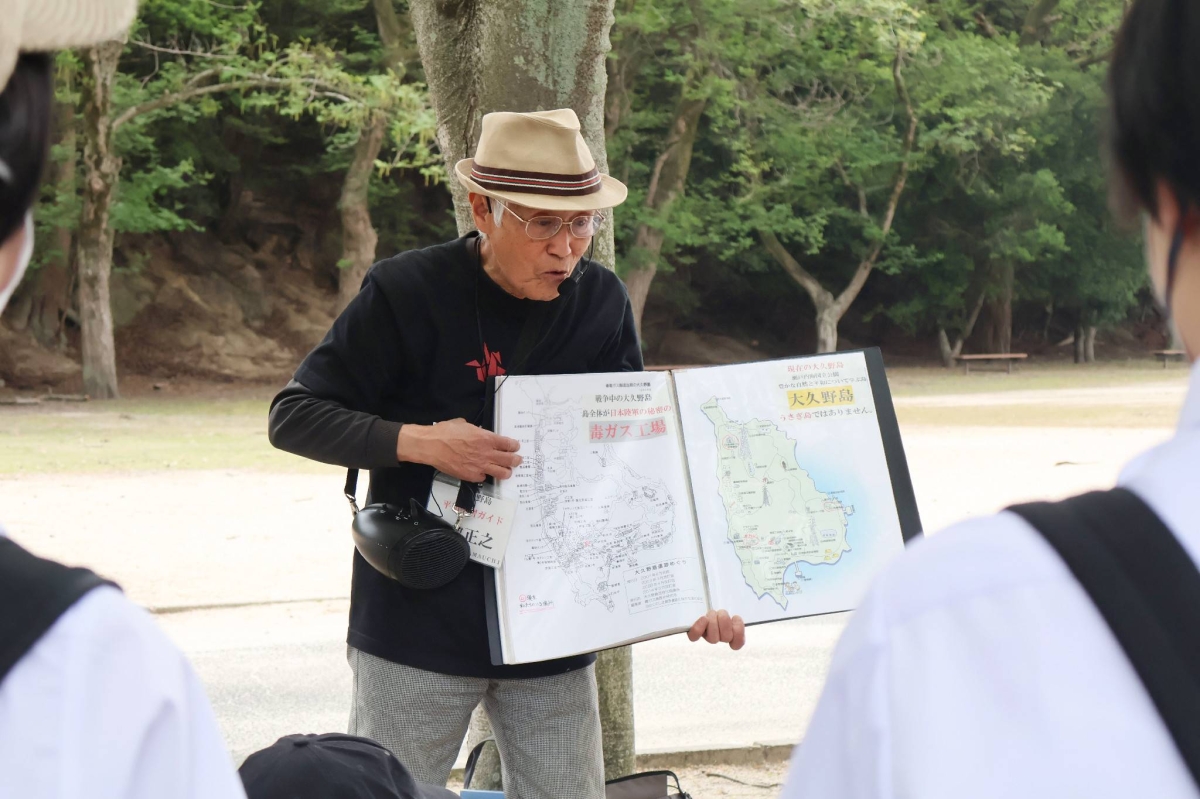
"Caption:Masayuki Yamauchi teaches junior high school students about the history of Okunoshima, an island in Takehara, Hiroshima Prefecture, in May. Photo credit: Jiji via JapanTimes.co.jp Excerpt from japantimes.co.jp
Takehara, Hiroshima Pref. – Okunoshima, an island in the Seto Inland Sea, is known as a ""rabbit island"" for being inhabited by around 500 to 600 wild rabbits. Despite this current image, the island has a dark past. The tiny island, located in the city of Takehara, Hiroshima Prefecture, hosted a poison gas plant of the now-defunct Imperial Japanese Army before and during World War II, leading to its removal from the map for confidentiality purposes.
Masayuki Yamauchi, an 80-year-old former high school teacher, has continued to tell the island's history for about 30 years, calling for attention to be paid to Japan's history of aggression, not just its damage from the war, such as the 1945 atomic bombing of Hiroshima. Built by the Imperial Japanese Army in 1929, the poison gas plant manufactured yperite, or mustard gas, which causes skin sores, as well as balloon bombs. According to Yamauchi, the plant had around 6,600 workers and produced a total of about 6,600 metric tons of poison gas by the end of the war in August 1945. Some of the gas was deployed in China. As a social studies teacher, Yamauchi learned that the poison gas had been abandoned and caused harm. To convey this fact, he began working as a guide for visitors to the island about 30 years ago. In mid-May, Yamauchi gave a tour to junior high school students from Gifu Prefecture around the island. In front of the memorial monument for workers at the poison gas plant, he shared stories of those who suffered harm from the poison gas, such as chronic bronchitis. ""Children of your age also came to work (at the plant),"" said Yamauchi. The students listened attentively while taking notes. "