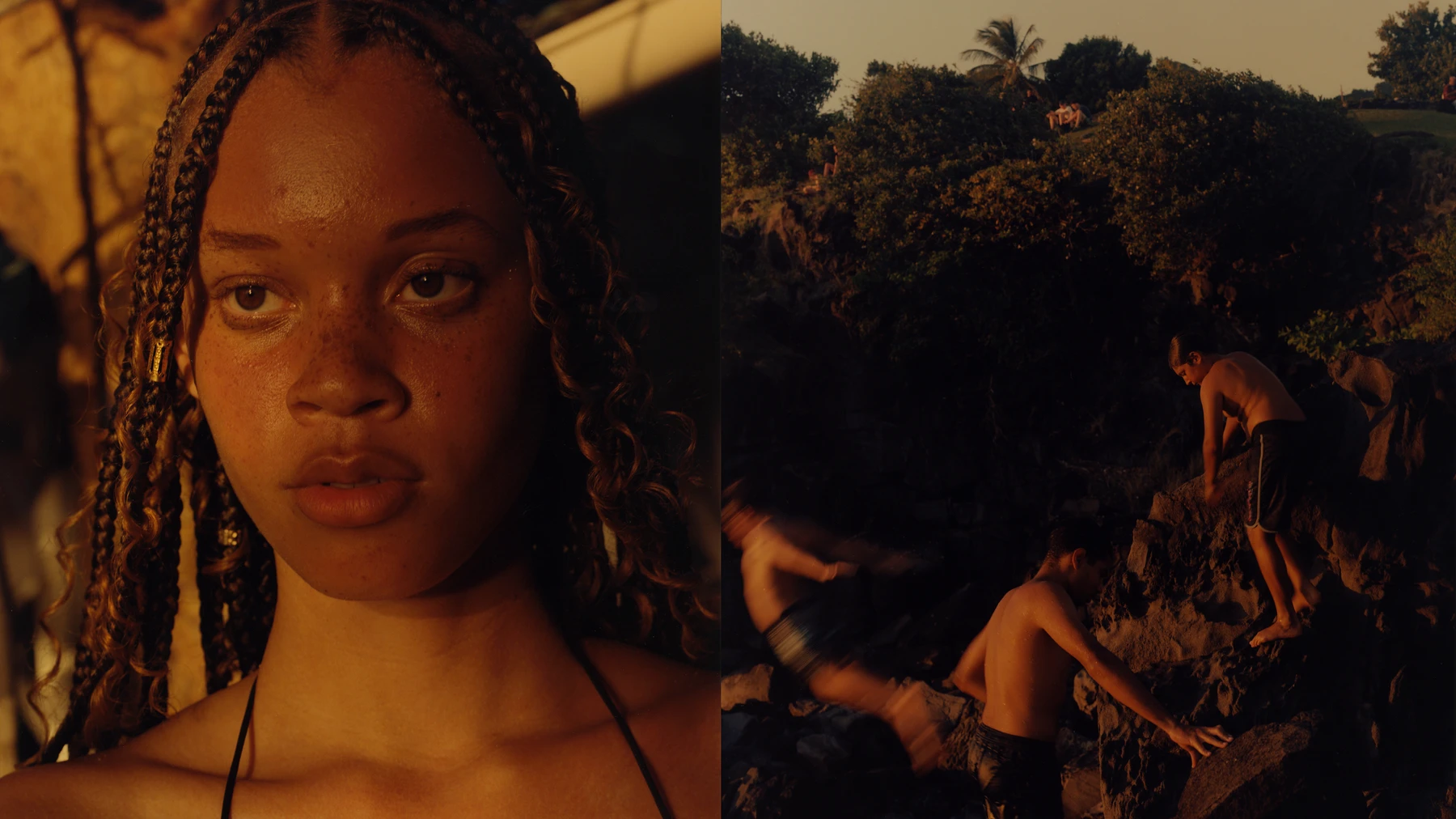
PHOTOGRAPHY CÉCILE S. BAUDIE. Retrieved from i-d.vice.com
Originally named Karukera — or “the island of beautiful waters”— by the native Arawaks, the land now known as Guadeloupe was colonised in 1493 by Christopher Columbus before being claimed by the French two centuries later. Since then, the French government has failed to intervene in an island-wide health crisis caused by a pesticide used from the early 70s to the early 90s on banana crops. Now with one of the highest incidences of prostate cancer in the world, and with 90 percent of its adult population showing traces of the pesticide in their blood, Guadeloupe is home to a non-biodegradable poison that will continue growing in its soil for lifetimes.
While celebrating its majestic mountainscapes, bountiful fruit trees and magical nights teeming with the sounds of frogs, crickets and what many believed to be mystical creature, Anaïs’s essay is also a condemnation of the French government and a powerful call to action. Accompanied by photographs taken by Cécile S. Baudier, “Karukera” serves to shine a light on this violent injustice.
You can’t see the poison, but you know it’s here. In our rivers, our soil and in the milk of breastfeeding women. We live with it but didn’t ask for it. Our government has benefited from our land and in doing so they have created an inescapable consequence that our bodies are paying for. We don’t avoid infected mountain rivers or coasts by the sea. This is our home and we cannot move. To me this is what it means to be Caribbean. We know how to endure, because there is in fact nowhere to run. The ground we walk on and the waters we swim in is what nourishes our bodies and our souls. Perhaps this is why our relationship with nature is so deep and perhaps this is why the pollution of our island is so hard to accept.