
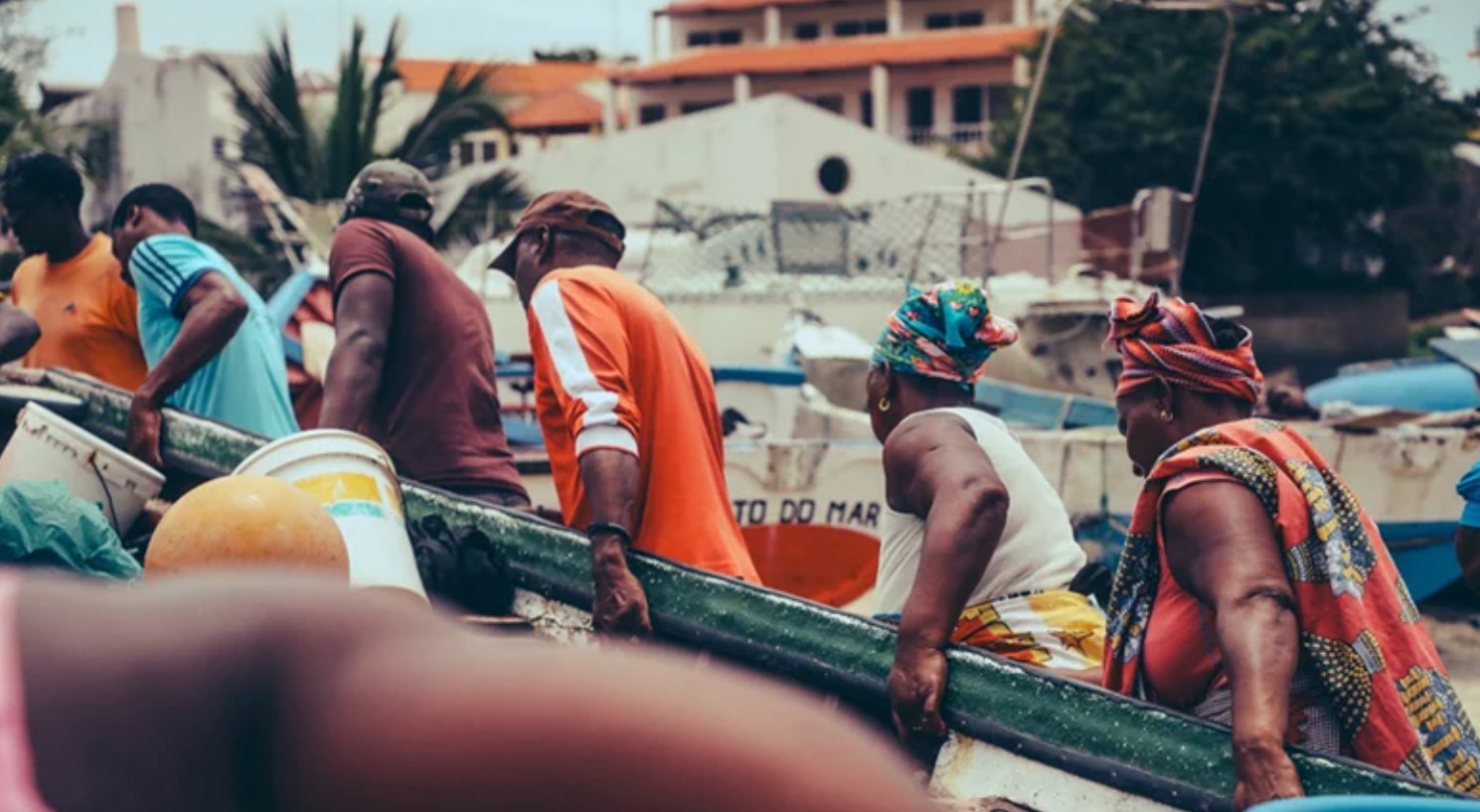
Photo Credit: Marco Silva / World Bank
Cabo Verde, a small island nation in the Atlantic Ocean, is at a critical crossroads while facing climate change. The Cabo Verde Country Climate and Development Report (CCDR) reveals a dual reality on the one hand, stark vulnerabilities, and on the other, opportunities for innovation and sustainability. The report charts a bold and necessary course for the country to not only survive but thrive in the face of transformation.
Cabo Verde’s geography makes it uniquely vulnerable. Rising sea levels threaten its stunning coastlines, upon which much of the nation’s tourism industry depends. As an absolute water scarce country, more frequent and intense droughts and saline intrusion jeopardize its agriculture, a key source of income and food security for rural communities. Warming oceans and overfishing threaten the fishery sector, which accounted for 72% of exports in 2021. At the same time, its dependence on imported fossil fuels and food leaves it exposed to fluctuating international markets. These vulnerabilities paint a sobering picture: without action, climate change could shrink the country’s GDP by up to 3.6% in 2050. Tourism revenues alone could fall by as much as 10%, striking a major blow to the backbone of the economy.
Yet, the CCDR argues that, with decisive action, the nation can turn this crisis into an opportunity to reimagine its development pathway.