
An oil-rich West African island offers decades of insight into the wild meat trade
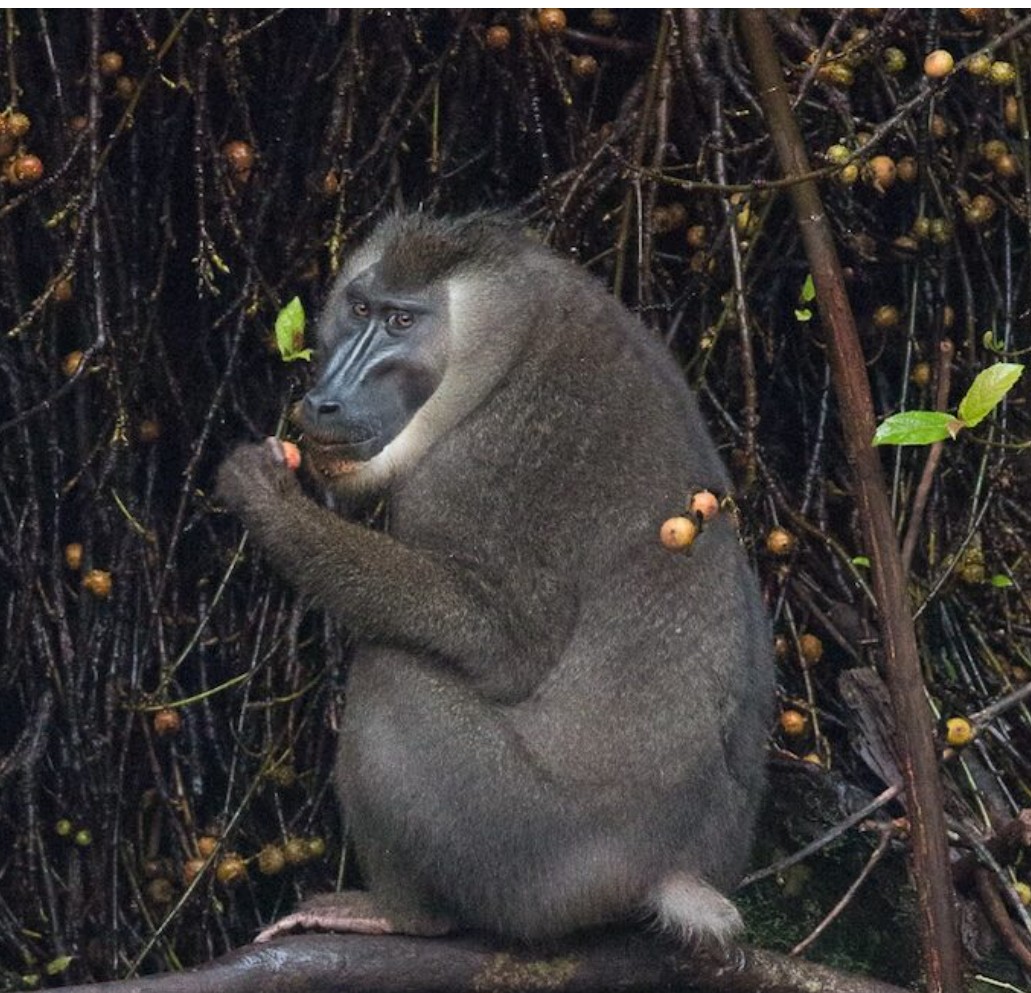
Photo courtesy of Ian Nichols. Retrieved from news.mongabay.com
The volcanic island of Bioko, about 160 kilometers, or 100 miles, northwest of mainland Equatorial Guinea, is carpeted in lush green tropical rainforest. This forest is home to many endemic animals, including Bioko drill monkeys (Mandrillus leucophaeus poensis), listed as endangered, and black colobus monkeys (Colobus satanas satanas), critically endangered. Interspersed in the landscape are patches of croplands and cacao and coffee plantations that cater to the expanding human presence on the island, most of it concentrated in the north, where Equatorial Guinea’s bustling capital, Malabo, lies.
Unlike many parts of Central and West Africa, deforestation poses less of a threat to the rainforest of Bioko. But the thriving wild meat trade, which includes the endemic primates, has conservationists on edge.
“The bushmeat [consumption] on Bioko is clearly unsustainable because, as an island, there are several species that are classified as endemic,” says Maximiliano Fero, research director at the National University of Equatorial Guinea in Malabo. “Since the oil boom on Bioko Island that started in 1994, there are people moving to this place, both from mainland Equatorial Guinea and foreign countries, and have developed a taste for bushmeat.”
That taste has created niche markets that serve the urban rich in Malabo, some who believe wild meat tastes better and is more nutritious than store-bought meat; many see it as a delicacy and vanity.
A recent study published in the journal PLOS Sustainability and Transformation by a team of international researchers, including Fero, investigates the drivers behind the wild meat trade in Bioko and how it has responded to economic downturns, conservation actions and public health concerns over the last 30 years.
Bioko is a “laboratory for understanding wild meat market dynamics,” says lead author Katy Gonder from Texas A&M University in the U.S. She cites the island’s rich, endemic biodiversity, its rising wealth from oil exploitation, and urban demand for wild meat.
“It is a system where we can understand the luxury wild meat trade,” Gonder adds.