
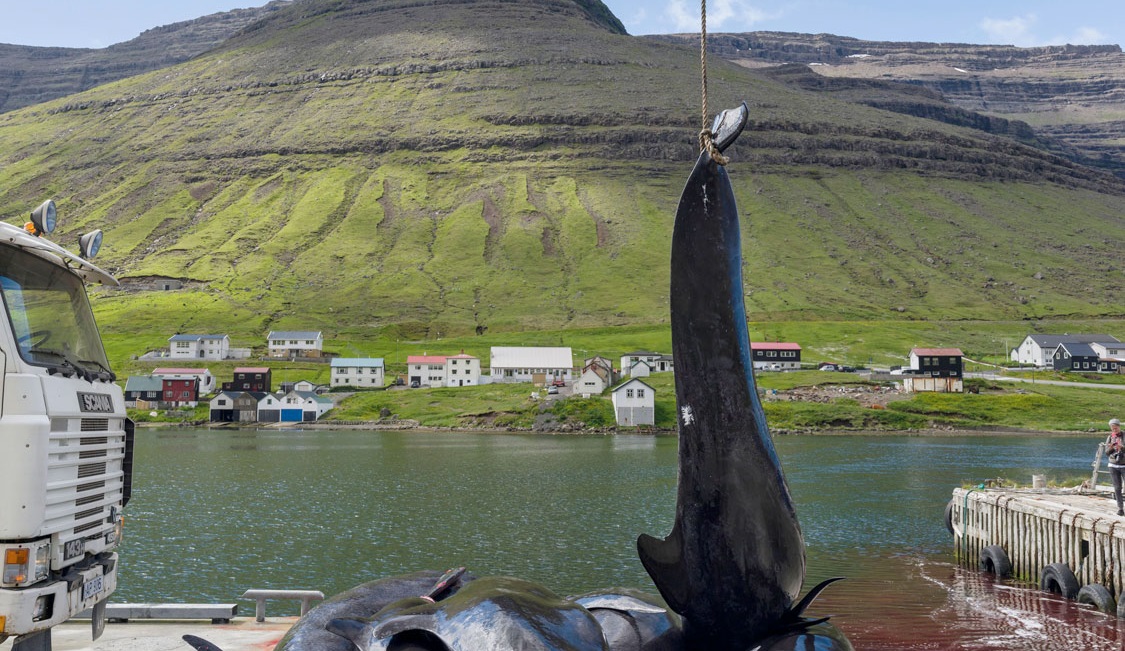
Photo by Reda Company srl/Alamy Stock Photo. Retrieved from hakaimagazine.com
In a centuries-old tradition known as a grindadráp, the Faroese people hunt long-finned pilot whales for their meat and blubber. The whales are technically large dolphins, ranging from four to over six meters long, with bulbous heads and black tails. When a pod is sighted, someone calls a “grind,” pronounced “grinned,” and people are free to leave work to participate. School children leave class to watch. Once the hunters have killed the whales using lances, they share the meat and blubber, carrying it home in buckets, wheelbarrows, and truck beds for boiling and preserving.
For many in this place so deeply connected to the sea, the practice is meaningful and central to cultural identity and memory. But it’s proven controversial to outsiders. Compared with industrialized commercial meat production today, which tends to remain contained within factories and industrial slaughterhouses, the grind does not hide the violent reality of harvesting meat for food. That—and the fact that the grind’s quarry is an intelligent marine mammal—have made the hunt a high-profile target for Østrem and Marshfield, and other activists. The pair is part of a land crew with the Captain Paul Watson Foundation UK. Paul Watson is the infamous founder of Sea Shepherd Conservation Society—best known for its militant tactics on behalf of marine life, including against Indigenous whalers. When Watson split with Sea Shepherd in 2022 over directional differences, a few chapters around the world changed their names to stay aligned with him, including Sea Shepherd UK.