
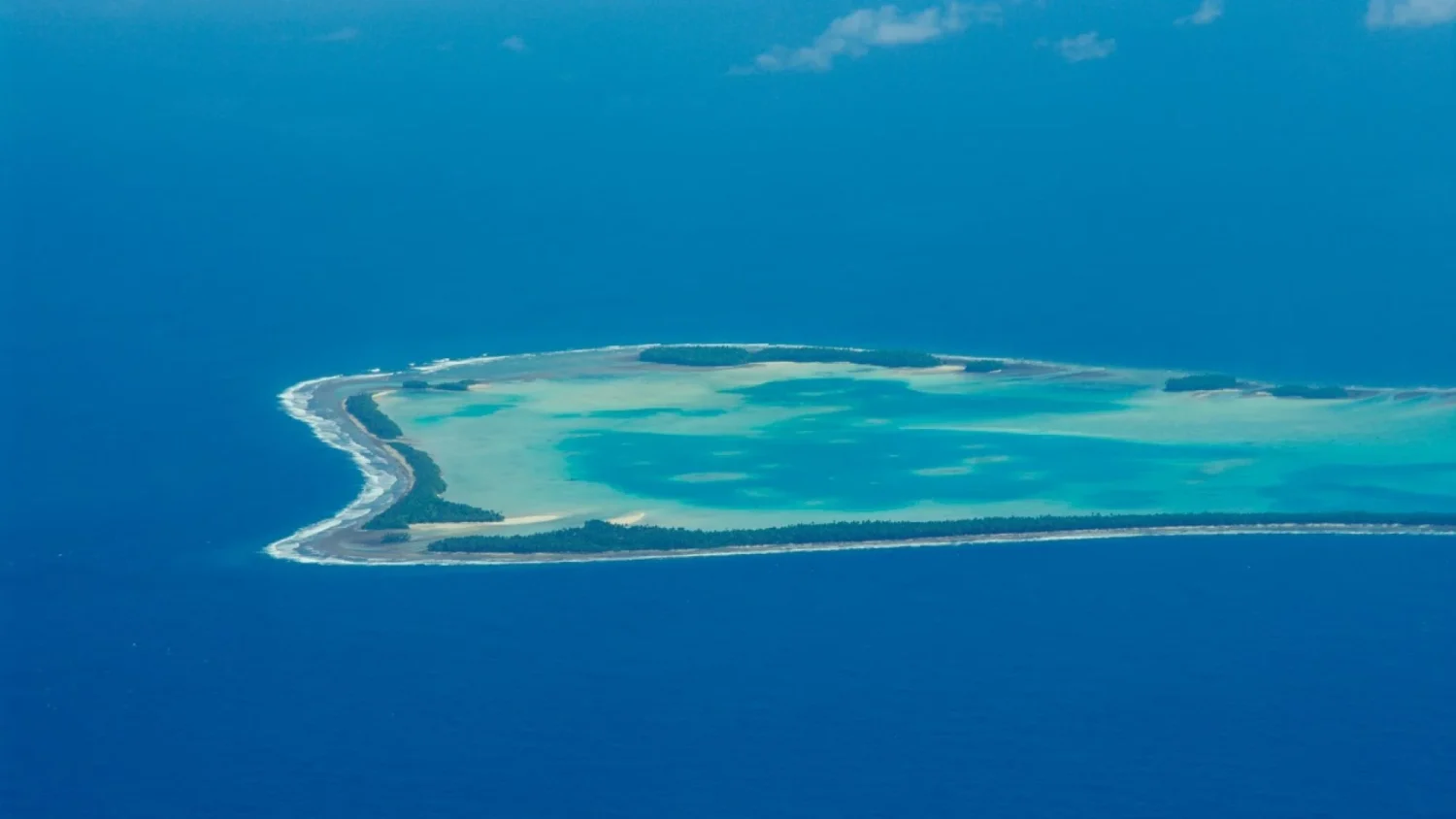
Image Retrieved from gjia.georgetown.edu
Pacific Islanders
The Pacific Ocean covers nearly a third of the Earth’s surface with diverse islands scattered throughout, from active volcanoes to coral atolls. Pacific island countries range from Papua New Guinea, which is larger in area and population than New Zealand, to Tuvalu, with a mere 26 square kilometers of land and 11,000 to 12,000 people. Pacific islander peoples speak hundreds of languages, have millennia-long histories, and possess a deep understanding of their environments and livelihoods.
The Impact of Climate Change
Human-caused climate change is severely affecting the Pacific, from more intense tropical cyclones to changing floods and droughts. Sea level is rising, the ocean is acidifying, and the water’s surface temperature is increasing. Coral reef destruction and shifting locations of marine species have impacted ecosystems. Encroaching saltwater contaminates freshwater supplies and makes some islands unsuitable for typical agriculture.
As the environment changes, local knowledges and traditional livelihoods are becoming outdated in certain areas. Significant adjustments are needed to sustain water and food supplies without more imports, especially to maintain fishing and agriculture-based livelihoods.
Many Pacific island communities are sustained by residents migrating (temporarily or permanently) and sending back remittances. If islanders cannot adjust quickly enough to climate change’s short and long-term impacts, more people might have to move. While this could increase remittances and reduce stress on local resources, if too many migrate, communities could lose viability, potentially not having enough children for local schools.
Responding to Climate Change’s Impacts
Who should primarily work with Pacific islanders to address social and environmental issues related to climate change? This question permeates negotiations on international climate change agreements, such as the United Nations Framework Convention on Climate Change (UNFCCC). The “polluter pays” advocacy from island states led to an initiative advocating for major greenhouse gas emitters to pay for the “loss and damage arising from the adverse effects of climate change.”
Vanuatu first suggested a “loss and damage” mechanismin 1991, although the phrase did not appear in a formal UNFCCC document until 2007. A preliminary agreement on a “loss and damage” fund covering greenhouse gas emissions was eventually reached in 2022 with minimal details on its funding and operations.