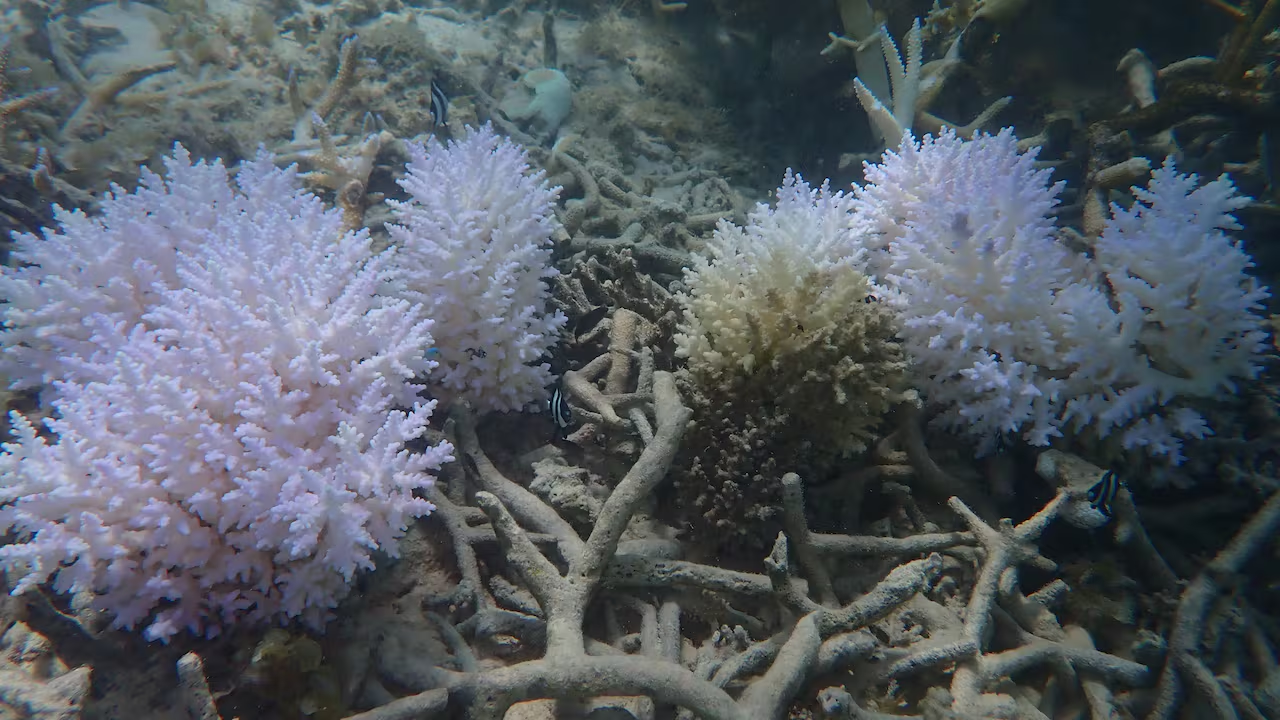
Coral reefs in Mauritius are turning ghostly white. Can nurseries rescue them from climate change?

Excerpt from cbc.ca
For Nadeem Nazurally, snorkelling off the coast of Mauritius lately has become disheartening.
The coral reefs that once glowed in vivid greens, blues and pinks now stretch out below him, faded and ghostly.
“When I see … all white, it means there is a big problem,” Nazurally, an associate professor at the University of Mauritius’ faculty of agriculture, told What on Earth’s Laura Lynch. “We are losing all these colours, we are losing life, we are losing those important corals,” which not only act as natural buffers against the island’s frequent cyclones, but are also vital to tourism, fisheries and support a wide range of marine life.
In Mauritius, home to nearly 250 species of coral and 150 kilometres of reef, the decline has been stark. The island nation off Africa’s southeast coast has lost roughly half of its coral cover since the 1970s, according to the International Union from the Conservation of Nature, enduring multiple bleaching events and a devastating oil spill in 2020. Across the western Indian Ocean, rising ocean temperatures driven by climate change are triggering mass coral bleaching events on an unprecedented scale. The Intergovernmental Panel on Climate Change (IPCC) warns the world's coral reefs would virtually vanish if global warming exceeds 2C above pre-industrial levels.