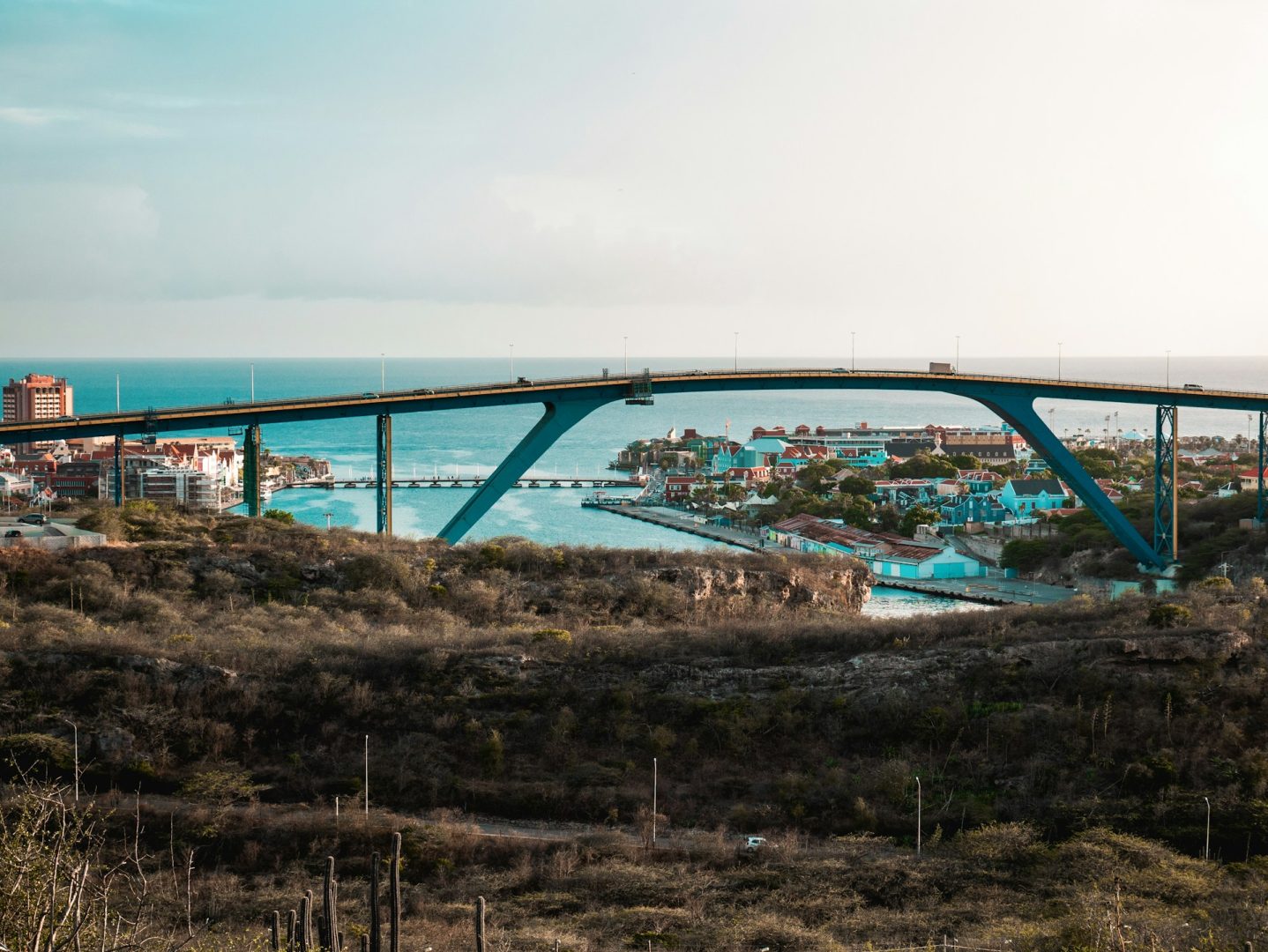
As the year wound down, I embarked on my yearly journey back to Curaçao, my island home in the Caribbean. Where I grew up is almost literally a world away from the hustle of Seoul where I now live and work, yet this largely unknown paradise holds centuries of fascinating history, with a vibrant melting pot of cultures populating its shores. Curaçao is far more than the namesake blue liqueur made from local oranges that you might have spotted on a bar shelf.
The island boasts a highly multicultural population of about 155,000, with 24.6% of residents not born on the island. In addition to the majority African-descended population, the island enjoys Dutch, Colombian, Portuguese, Lebanese, Chinese, American, Indian, Indonesian, and many more communities. Most of those born on the island speak at least two to three languages, with many speaking other languages at home besides the official languages of Papiamento and Dutch. I grew up speaking Spanish at home and learned Dutch and Papiamento at school. The latter is a unique language spoken on the Dutch Caribbean islands and is derived from African languages, Portuguese, and Spanish.
Given that all schooling is conducted in Dutch, most students leave for the Netherlands to attend university after high school, although local universities have been growing in recent years. As for religion, despite centuries of Dutch influence, various norms of previous Spanish rule (1499-1634) remain embedded, with 68.2% of citizens identifying as Roman Catholic. The food eaten on the island also shares many similarities with the cuisine of Latin America, although restaurants serving food from around the world can be easily found throughout Curaçao. Moreover, unlike the Dutch who love their bicycles, most people drive everywhere in Curaçao, with most destinations being no further than 20 minutes away.