
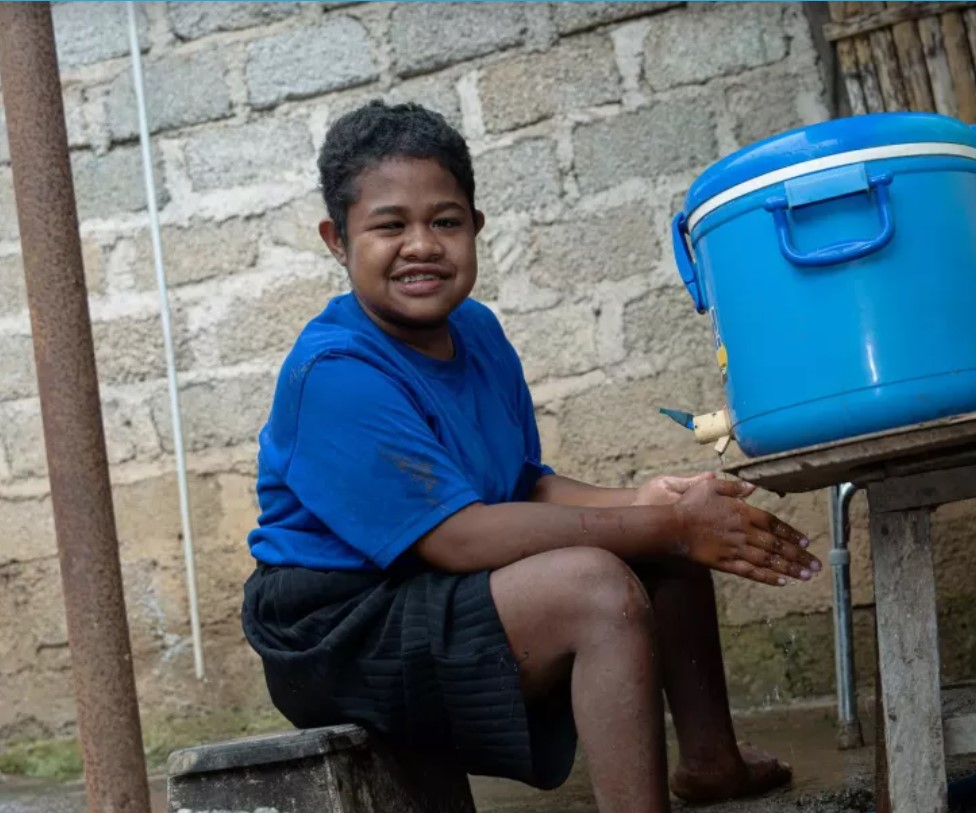
Photo courtesy: UNICEF/2024/Chair. Retrieved from unicef.org
Fourteen-year-old Febi, who has multiple disabilities, used to start each day with a daunting challenge. To reach the toilet – located behind her home in Lamahoda village on Adonara Island in East Flores – Febi had to navigate through sand, rocks and uneven ground, risking injury. Her aging parents, who took turns helping her, feared that Febi would one day have to face this alone.
In nearby Lewopulo village, eight-year-old Chafanno had similar hardships. Born with a physical disability, he had no toilet at home. “We had to hitchhike to a house owned by a neighbour or relative, about 50 meters from home,” recalls his father, Sukri. Sometimes Chafanno had to make the uncomfortable trip in the early morning darkness.
These scenarios are common in villages across Adonara Island, where many children and teenagers with disabilities struggle without the facilities they need close by. An estimated 1 in 500 persons who live on the island has a disability – yet accessible, disability-friendly toilets are rare, and many lack clean water.