
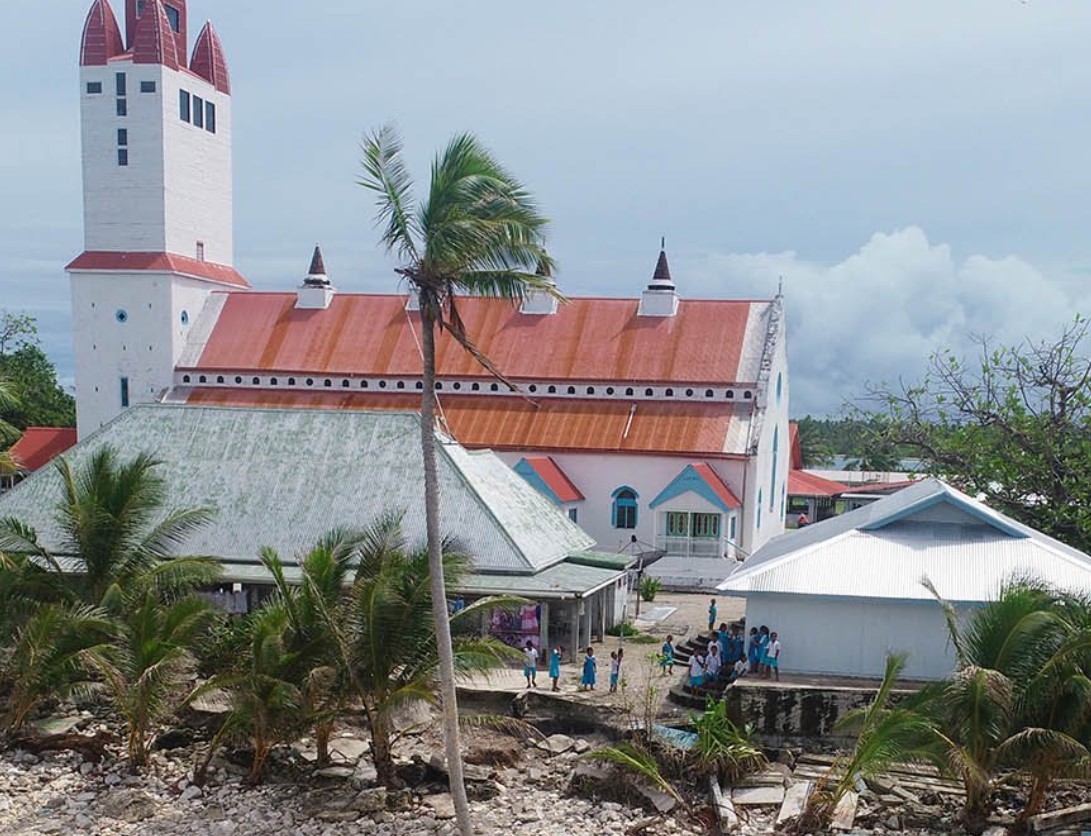
Photo courtesy: TCAP. Retrieved from undp.org
Nanumea, the fourth largest and most remote island of Tuvalu, is located 650 kilometers north of the nation’s capital. The outer island’s white shores are home to a population of 485 people and around 180 houses, only accessible to the public by ship. On average, one ship a month makes the 24-hour voyage to the island, carrying vital supplies to stock around 12 small stores with basic home and food necessities.
The island has two major constructed landmarks: a 2.5-kilometer airstrip and a church building. The airstrip was built during World War II and is in good condition. The most visible building dominating the landscape of Nanumea is the church, which was built before World War II by a local man named “Valo” and is a prominent and cherished structure in the community.
Public services on the island include a community hall, hospital, powerhouse, fisheries office, and office for the elders committee known as the “Kaupule,” which comprises six staff and six members providing service delivery to the local population. There is also an agriculture station, pre-school and primary school providing education until grade eight. Power is mainly provided by a solar-backed fuel generator, and the internet is expected to arrive soon.