
Image by Ryan Truscott for Mongabay.
The people living around the Ngezi Forest Reserve on Pemba Island, off the coast of Tanzania, depend on its resources for many things: timber for building materials, a place to gather firewood and hunt animals for food, and sometimes pasture for cows or goats. Khamis Ali Khamis is the acting chief-in-charge of the 2,900-hectare (7,200-acre) reserve. Leading a small team of forest guards, he has the difficult job of protecting the reserve from illegal activity, while also balancing the needs of tens of thousands of local villagers who depend on it.
Khamis was born on the Zanzibar archipelago’s biggest island, Unguja, where he trained as a teacher, obtained a diploma in forestry, and ran his own butterfly farm. Later, he spent 10 years as a volunteer guide at Unguja’s Jozani Chwaka Bay National Park. He moved to Pemba Island to take up his current role six years ago.
Khamis spoke to Mongabay about the challenges of the work and his vision for the forest. The conversation was lightly edited for length and clarity.
Mongabay: How do the needs of surrounding communities affect your work as a forest guard? Because it’s your job to protect the forest, and yet the community depends on the forest for resources. So is there conflict?
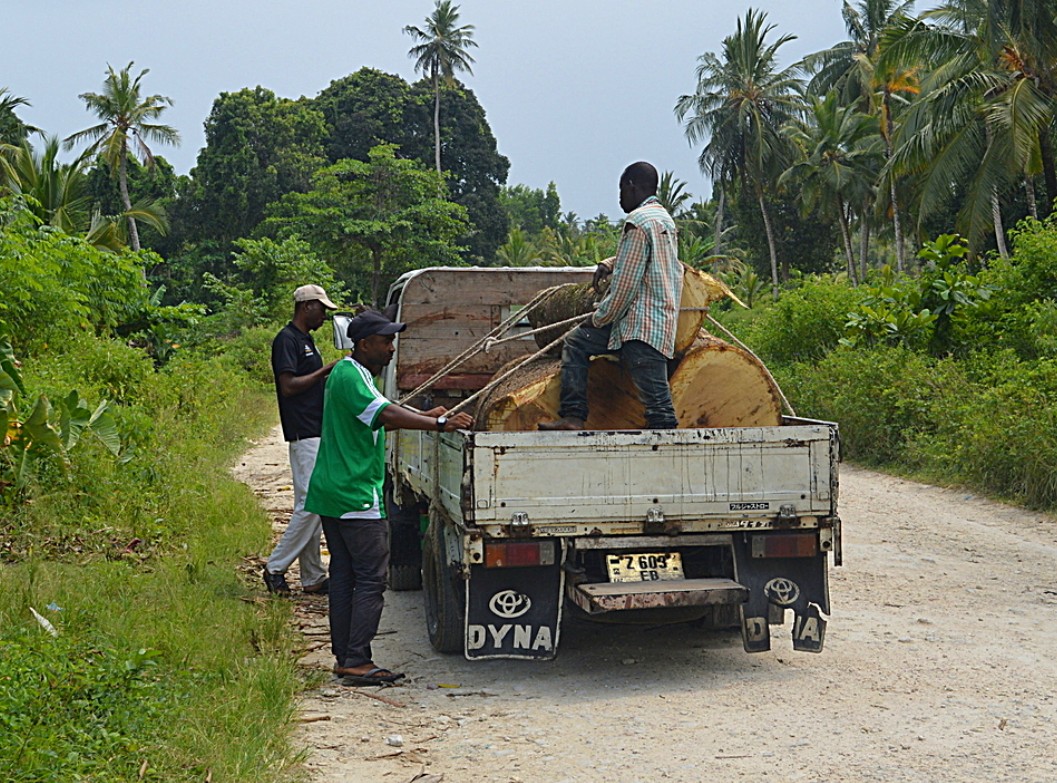
Khamis Ali Khamis: That is a big challenge facing us because we have some trees which are very good for furniture, like iroko (Milicia excelsa), like intsia (Intsia bijuga) — these are the trees that local people like to cut for timber. Some people sell them to get money to support their family members.
I can say we have some conflict, but we try our best [to mitigate]. For those felling trees for logs, normally we catch them and we punish them, either by imposing fines or jail terms. But for the poor, especially those cutting poles, sometimes we try to raise awareness about the importance of this forest.
And these people, in turn, sometimes help us by giving us information whenever they find big issues inside of the forest [like illegal logging]. So, that way they help us to plan on how we can fight [to defend Ngezi].