
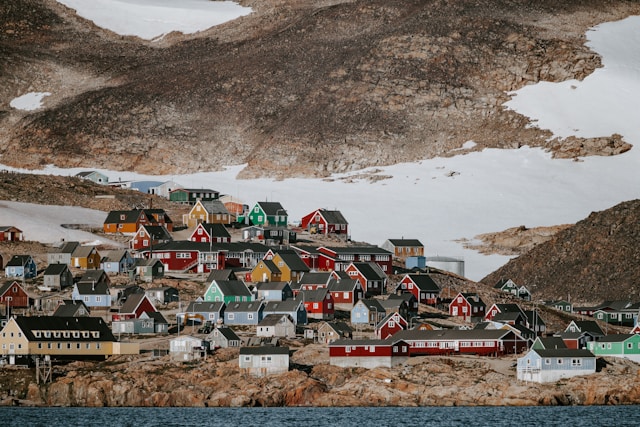
An analysis of the genomes of nearly 6,000 Greenlandic people suggests that their Inuit ancestors rarely moved around after settling the island around 1,000 years ago. This historical isolation means that people from some parts of Greenland are more likely to develop certain genetic diseases than are people in other parts of the world.
The findings, published on 12 February in Nature1, offer “new insights” on how genetics can be used to deliver better health care to Arctic populations, says Anders Koch, a senior physician at Queen Ingrid’s Hospital in Nuuk.
Small, Indigenous populations — including Greenland’s — have long been a blind spot in genetics research, because most of the DNA in genetic databases comes from people of European ancestry. What little research has been done on the island suggests that living in the Arctic has profoundly altered the genetic make-up of Greenlanders, most of whom have mixed Inuit and European ancestry.
In the current study, researchers sequenced the DNA of 5,996 Greenlanders — around 14% of the adult population. By comparing these full or partially sequenced genomes, the team was able to confirm that Greenland was originally populated by a small group of travellers, fewer than 300 people, who arrived from Siberia, via North America, in the past 1,000 years.