
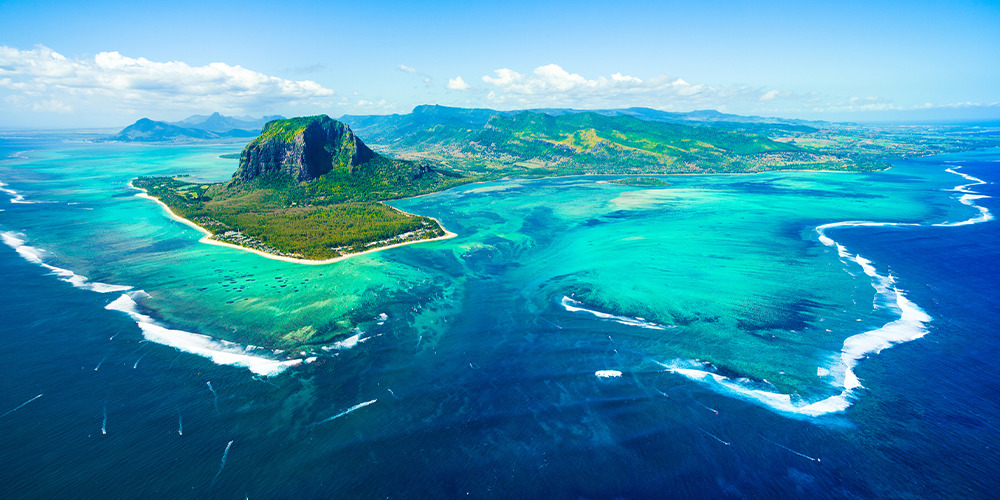
Excerpt and Photo from omfif.org
The World Risk Report 2023 has ranked Mauritius, a small island developing state in the Indian Ocean, 106th out of 193 countries most vulnerable to climate disaster risk. As a tropical island, Mauritius has always been vulnerable to climate events such as cyclones and heavy rains. The impact of cyclones was mostly felt on agriculture and some damage was caused to infrastructure.
However, the impact of climate change has taken a different turn – the livelihoods of the islanders may be at stake in the coming years. Mauritius is now vulnerable to risks on which the tourism industry is dependent, notably erosion of its pristine beaches. This is due to rising sea levels as the ice sheets of the Arctic and Antarctic regions melt. Mauritius has experienced beach erosion of up to 20m in places over the last few decades. It is estimated that half of our beaches are at risk of disappearing over the next 50 years. The rise in temperature of the sea also affects the coral reefs that make up the blue lagoon.
Although climate adaptation is more crucial for SIDS, most of these countries have taken bold climate mitigation commitments. The government of Mauritius has set ambitious objectives, such as reducing the country’s greenhouse gas emissions by 40% by 2030, in its nationally determined contributions under the 2015 Paris agreement. Mauritius requires funding estimated at $6.5bn for meeting its NDCs and the government and domestic private sector would fund up to 35% of that amount. The remaining 65% or $4.3bn would have to be financed externally by 2030. This results in a yearly financing requirement of $264m, which is no small feat.