
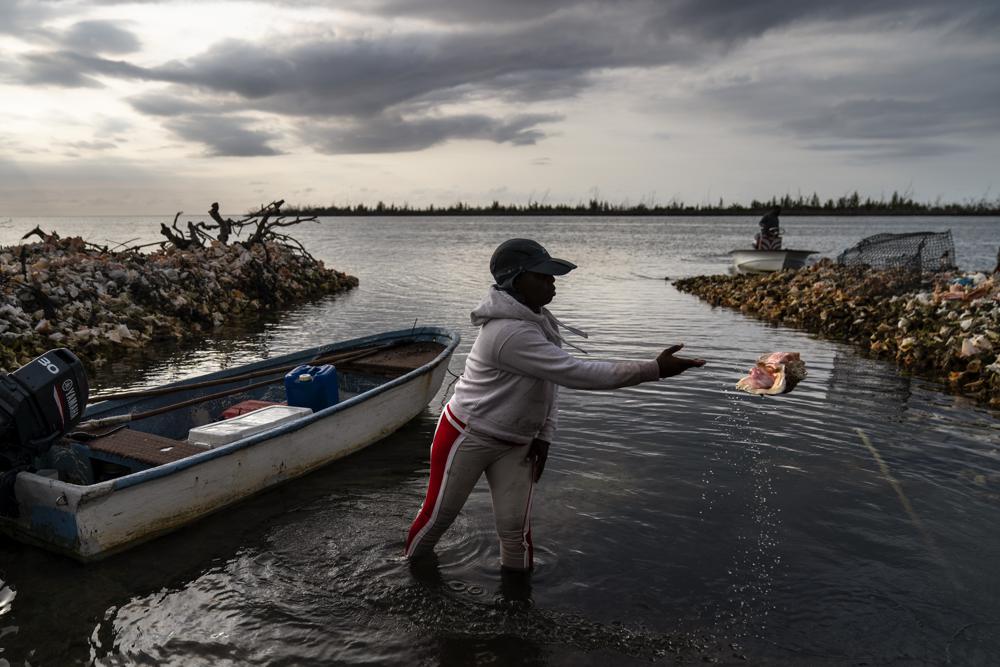
Scientists, international conservationists and government officials have sounded the alarm that the conch population is fading due to overfishing, and a food central to Bahamians’ diet and identity could cease to be commercially viable in as little as six years.
“When I was a child, we never had to go that far to get conch,” said Davis, speaking at a Freeport market where she sold her catch. “Without conch, what are we supposed to do?”
Conch’s potential demise reflects the threat overfishing poses around the world to traditional foods. Such losses are among the starkest examples of how overfishing has changed people’s lives – how they work, what they eat, how they define themselves.
Governmental organizations and advocacy groups are working to stop illegal, unreported and unregulated fishing that has expedited the loss of species. They blame poaching, poor regulations and lack of enforcement of existing laws. Regulators, such as the National Oceanic and Atmospheric Administration in the U.S., have said cutting down on illegal fishing is critical to prevent losing beloved food options.