
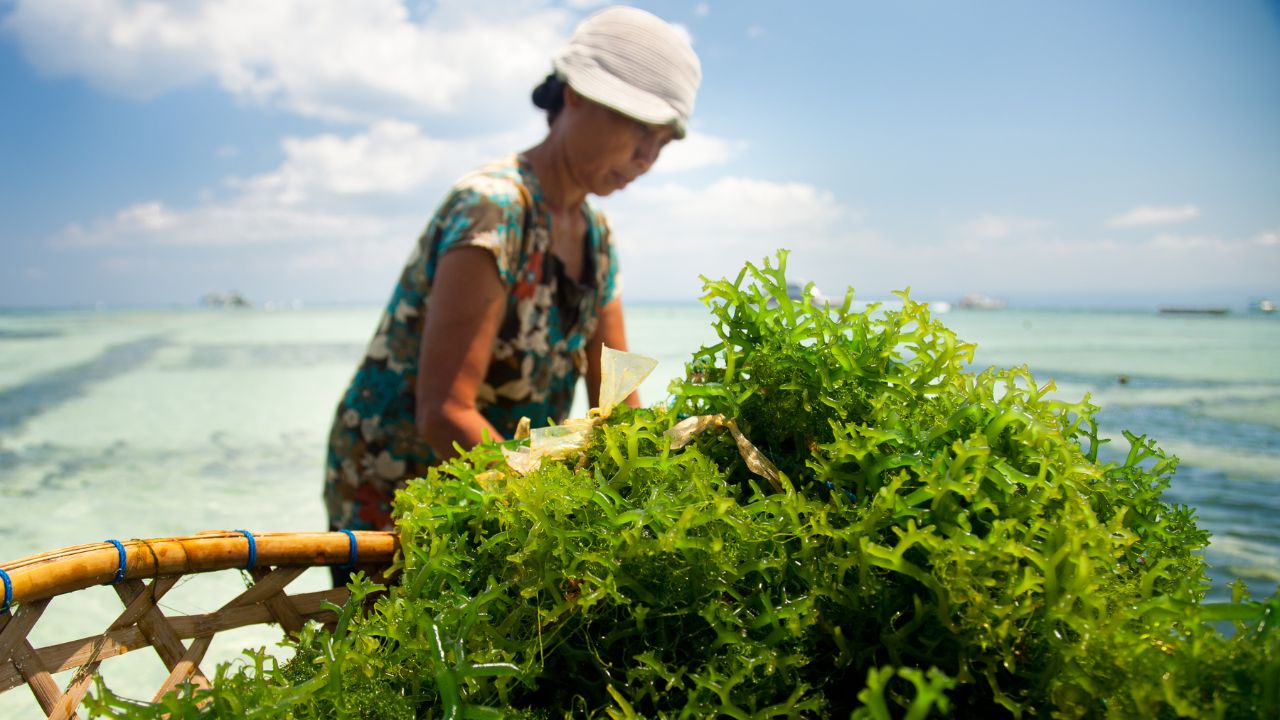
NUSA PENIDA, Indonesia — Storm clouds loom overhead as Nyoman Mitri peers out at rows of seaweed lines stretching across the shallow tidal waters of Nusa Penida. Her weathered hands move with practiced ease as she secures a strand of green seaweed to a rope.
“It never used to be like this,” she says. “It’s only been the last 10 years or so that rain has begun to seriously damage the seaweed.”
Ibu Mitri, or Mrs. Mitri, as she’s known by her community, is sharing her seaweed cultivation techniques with a few tourists. Together, they sort through fresh seaweed, discarding damaged strands and carefully tying healthy green ones onto lengths of rope, preparing them to be returned to the sea and fastened to wooden posts, where they’ll continue growing until the next harvest.
As she ties hundreds of strands of seaweed back onto the lines, lulled into a methodical rhythm, she begins to share her concerns: the changing climate, increasing development, and the growing unreliability of each harvest. With a shy smile, she speaks of how increased rainfall and more frequent storms have threatened traditions once guided by the seasons, not by storms.