
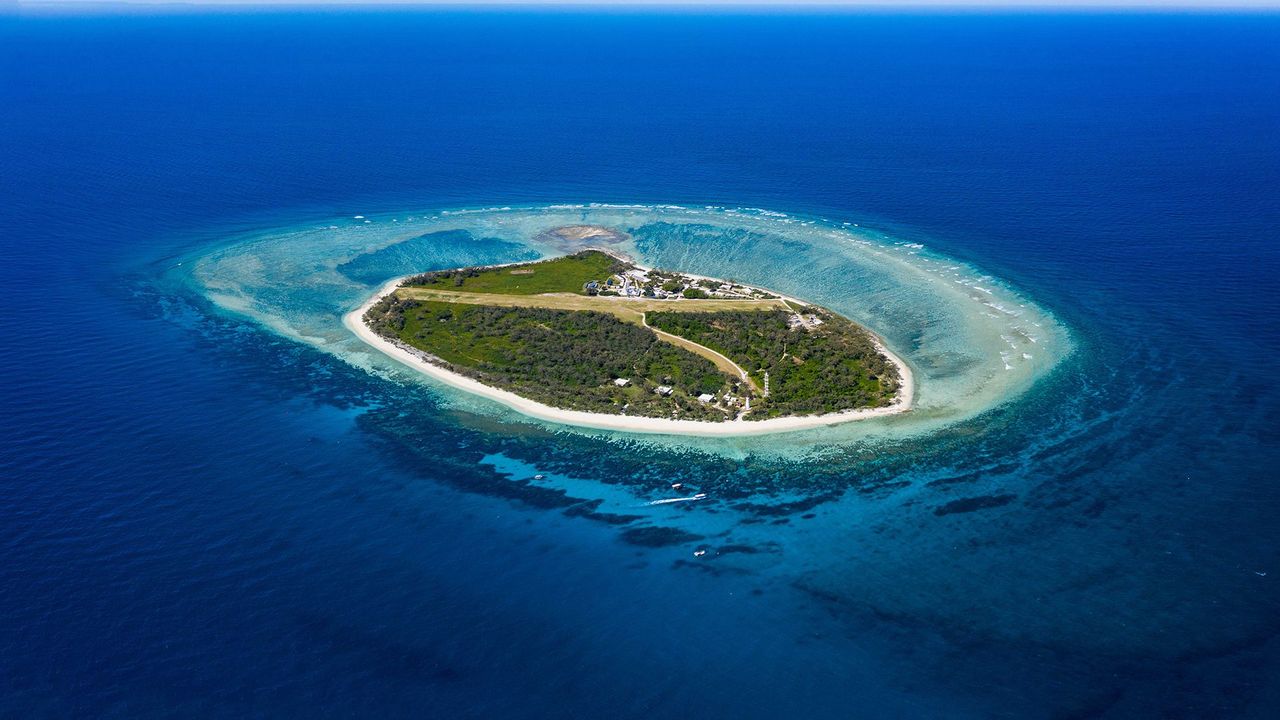
Image credit: Lady Elliot Island. Retrieved from bbc.com
With no how-to guide, Gash took himself off on a trip around Australia to research solar power stations. “People said I was mad to attempt something like this out here, but I knew we’d find a way,” he grinned.
The father of two finally achieved his goal in 2020. But the island’s renewable energy journey is just one chapter of an incredible regenerative tourism story with lessons for the world.
Stripped almost bare by guano miners in the late 1800s, with the establishment of new growth prevented by goats placed on the island by the Queensland Government to ensure food for shipwrecked sailors, Lady Elliot had been reduced to little more than a field of compacted coral by the mid-20th Century. Yet, keen aviator Don Adams saw a business opportunity when he landed on the degraded Commonwealth island in 1969, opening a small resort and commencing a DIY revegetation programme.
The revegetation of the island, now home to the second-highest diversity of bird species on the Great Barrier Reef, is also having a ripple effect on the surrounding reef, with seabird nutrients naturally filtered by the shingle coral cay recently found to have a fertiliser-like effect on coral.
His efforts haven’t gone unnoticed, with Gash awarded an Order of Australia Medal in 2020 for his services to ecotourism and aviation. Lady Elliot has also drawn some the world’s biggest names in conservation over the years, including King (then-Prince) Charles, who visited in 2018 as part of a roundtable discussion with business leaders on the role they could play in protecting the reef. The same year, Lady Elliot was selected as the first “climate change ark” to be established through the Great Barrier Reef Foundation’s Reef Islands Initiative, a 10-year project to establish a network of climate change refuges to protect critical habitats on key reef islands.