
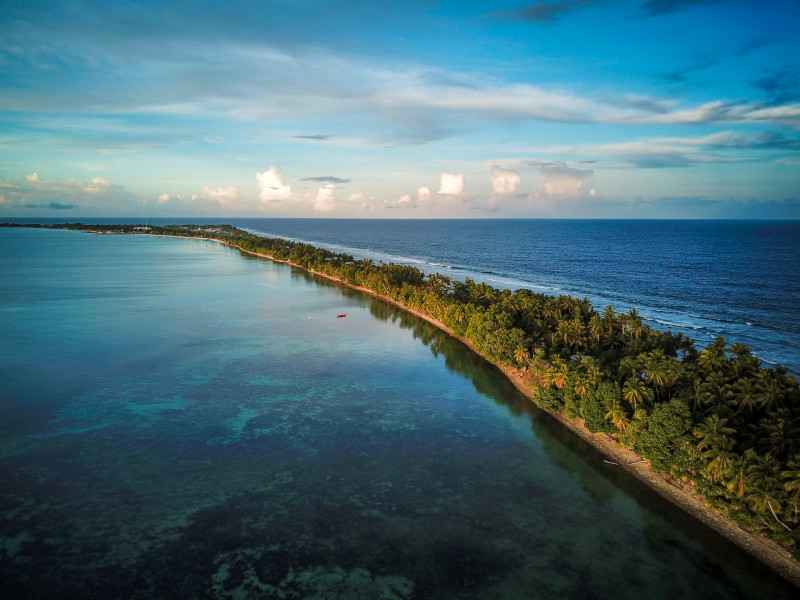
Excerpt and Photo from undp.org
Youth in the Pacific Island Countries and Territories (PICTs) live in surroundings where the relentless ocean waves have been inching closer to their homes for generations. The salty breeze carries not only the sea’s aroma but also the echoes of ancestral tales and the looming anxiety of a climate-threatened homeland. By mid-century sea levels are expected to rise between 25-58 centimetres.
For young people who constitute up to 75 percent of the region’s population, these climate vulnerabilities manifest as physical and emotional distress, hampering their well-being and curtailing their potential for a fulfilling life. UNDP’s recent policy paper, “A Turbulent Future: How Climate Change Impacts Young People in the Pacific,” details these issues. If no action is taken, young people are expected to face more climate-related hardships in their lifetime compared to past generations.
The climate threats are not just future projections, they’re here. Many people in PICTs live in low-lying coastal areas, making them highly susceptible to natural hazards. In Kiribati, Marshall Islands, and Tuvalu the entire population lives just five metres above sea level. According to the 2021 Victims of Disaster Index, over 75 percent of the PICTs population is already affected by disasters. The crisis in the Pacific takes different shapes. Between 2030 and 2050 rising sea levels could cause around 250,000 more fatalities each year. This increases vulnerability and economic shocks, generating a real climate emergency.