
Marshall Islands Increases Climate Change Resilience By Tackling Invasive Species On Irooj Island
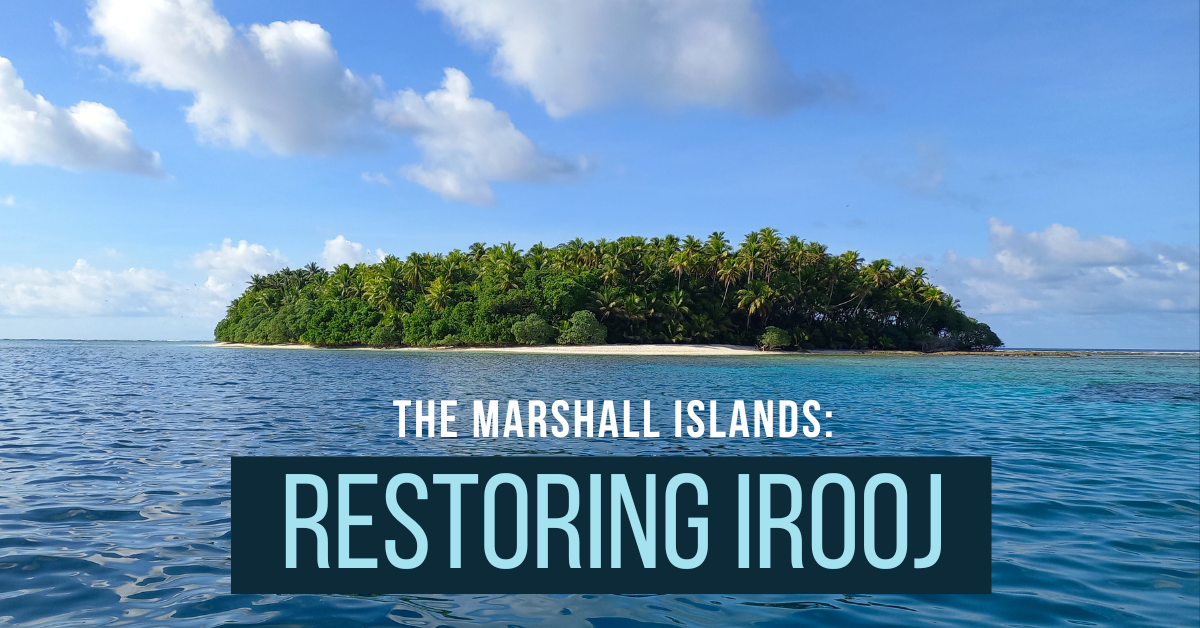
Photo retrieved from islandconservation.org
In its efforts to adapt to climate change impacts, the Republic of the Marshall Islands (RMI), an island country located near the equator in the Pacific Ocean, has taken a significant step forward in addressing the threat of invasive species on Irooj, a small islet that forms part of Majuro.
In 2022 a team from the Ministry of Natural Resources and Commerce (MNRC), with support from the Secretariat for the Pacific Regional Environment Program (SPREP) and guidance from global nonprofit Island Conservation, undertook an operation to remove invasive rats from Irooj. In March 2023, the project was declared an overwhelming success.
The island feels alive again,” said Kennedy Kaneko, RMI’s National Invasive Species Coordinator. “Careful monitoring showed zero signs of rats on Irooj. In fact, seabirds and crabs were found in abundance.”
For decades, invasive rodents on Irooj destroyed native biodiversity and threatened vulnerable species, including seabirds, crabs and other animals that are crucial to the island-ocean ecosystem. Studies have shown that eliminating such threats allows native plants and animals to thrive, which leads to greater nutrient deposits, thereby nourishing both terrestrial and marine organisms throughout the ecosystem. It is vital for local communities relying on natural resources that this cycle be restored and protected.
“Communities that live and rely on islands are particularly vulnerable to environmental changes,” said Richard Griffiths, South and West Pacific Regional Director at Island Conservation. “Destructive invasive species destroy biodiversity and upset the natural balance of an ecosystem, adding incredible risk to these already susceptible islands. By removing invasive species, we can build resilient island-ocean ecosystems that serve as a natural defense against climate change impacts.”
The eradication activities are part of the Regional Predator Free Pacific program, within the Pacific Regional Invasive Species Management Support Service (PRISMSS) of which Island Conservation is a technical lead. The activities are funded under the GEF 6 Regional Invasive Project (GEF 6 RIP), which aims to develop and implement comprehensive national and regional invasive species management frameworks that help to reduce the threats from invasive species to terrestrial, freshwater, and marine biodiversity in the Pacific. The GEF 6 RIP is funded by the Global Environment Facility (GEF), implemented by the United Nations Environment Programme, and executed by SPREP.