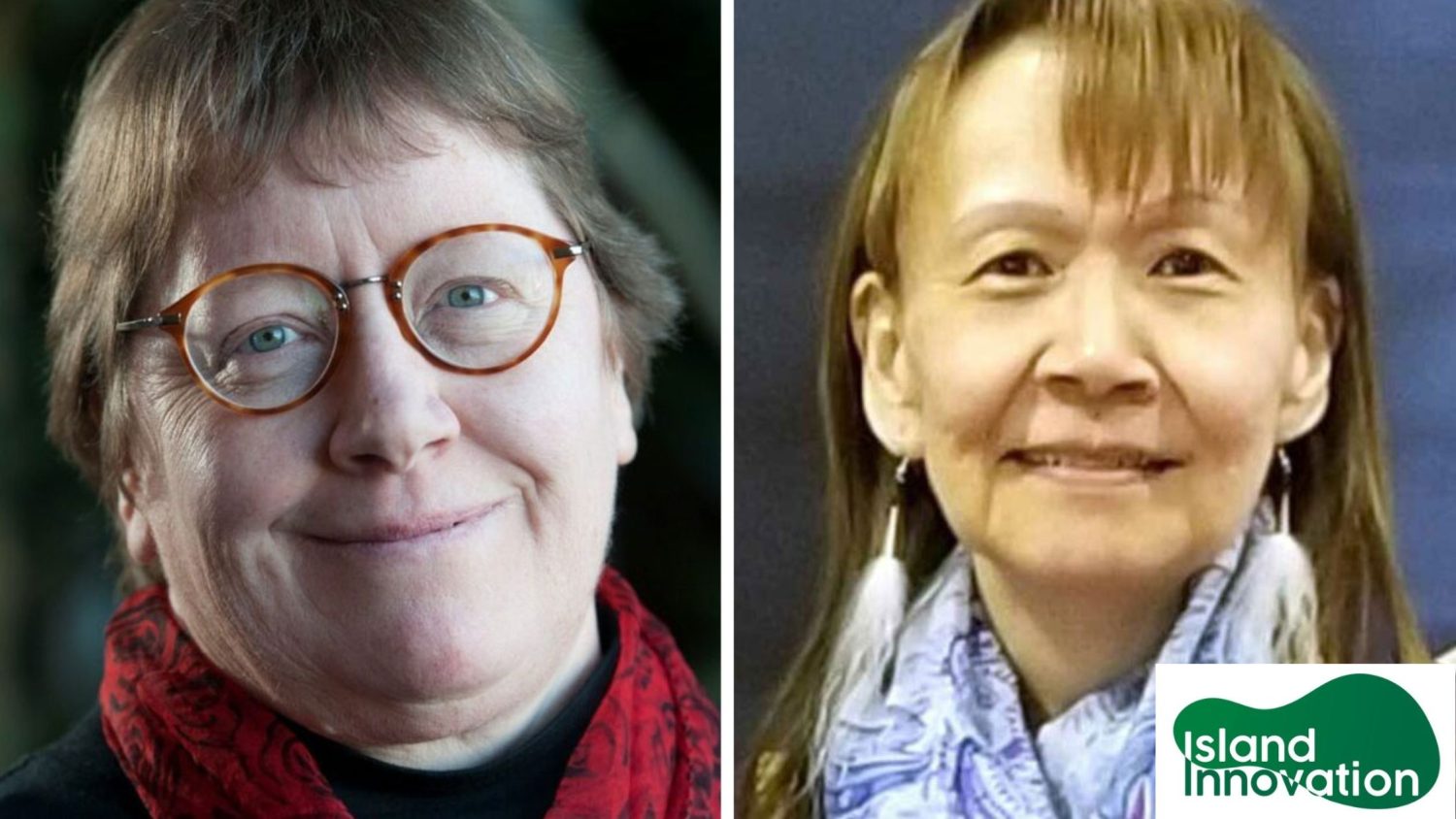
The Native American Heritage Month Annual Guest Lecture Nov. 16 focused on NIEHS-funded environmental health research in Alaska with co-presenters Pamela Miller and Viola “Vi” Waghiyi of the nonprofit group Alaska Community Action on Toxics (ACAT). Waghiyi is a tribal citizen of the Native Village of Savoonga, a Yupik community on Sivuqaq (St. Lawrence Island). Miller and Waghiyi shared the story of community-based research (CBR) underway on Sivuqaq, where for decades U.S. military waste abandoned after the Cold War has contaminated water and soil.
ACAT has been a part of the NIEHS grant portfolio since 2000, but their work breaks the typical National Institutes of Health (NIH) model of an academic institution grant project. ACAT is a statewide environmental health and justice organization that works to address environmental health risks from formerly used defense sites and the global transport of persistent organic pollutants.
“We have learned that having tribal communities engaged in a research process that values traditional knowledge is a critical step to addressing local environmental public health concerns,” said Rick Woychik, Ph.D., director of NIEHS, during the lecture. “This approach continues to be at the forefront of the NIEHS mission.”