
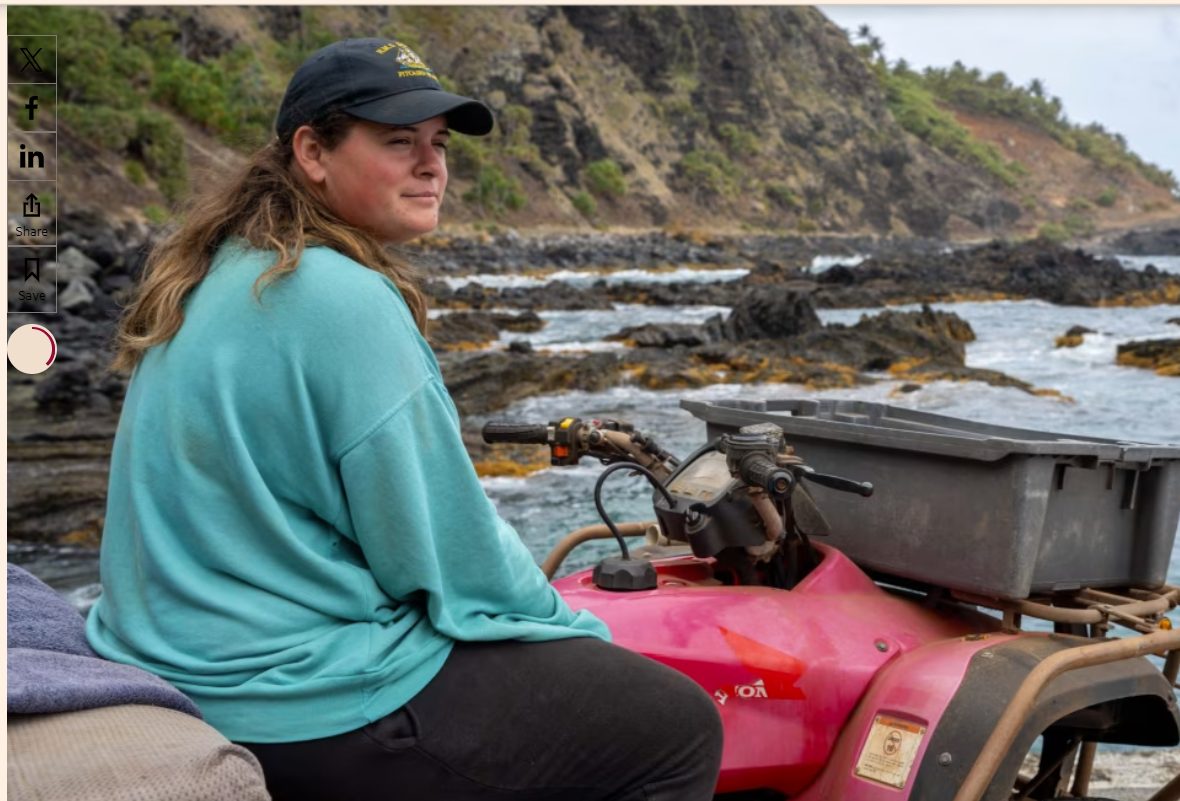
Photo: Jamie Lafferty. Retrieved from ft.com
Dawn in the south Pacific was blinding, the low sun reflected across a glittering ocean. Pitcairn Island lay dead ahead, but only when the sun rose into a more benign position could we discern its ragged profile. “The perfect island on which to seek refuge,” said one of the guides on the Aranui 5, a combined freight and passenger ship that connects Polynesian islands. As we sailed closer, the island began to look like a fortress, an ancient citadel hewn for defence. It was here that the final mutineers settled — and it is here a vanishing handful of their descendants still live.
…
“Most of our young people went to New Zealand for boarding school — I went myself,” said Kevin Young, who had been assigned a group of visitors to guide around Adamstown, the only significant settlement on the island. It is not a large place — Pitcairn currently has only 38 permanent residents. With three other islands, all uninhabited, it officially constitutes a British Overseas Territory, and is sometimes referred to as the world’s smallest democracy. I asked about the future — a tipping point for viability must be coming soon. “Oh, we’re well past that,” said the guide flatly. “The number of roles [job vacancies] is going up, but the population isn’t.” Young is one of the descendants of the Bounty and like many islanders spent years living abroad. Unlike most, he decided to come back. This emigration is one reason the population is in terminal decline, but there are several more.