
Revitalised Boracay island in the Philippines faces next challenge – the return of mass tourism
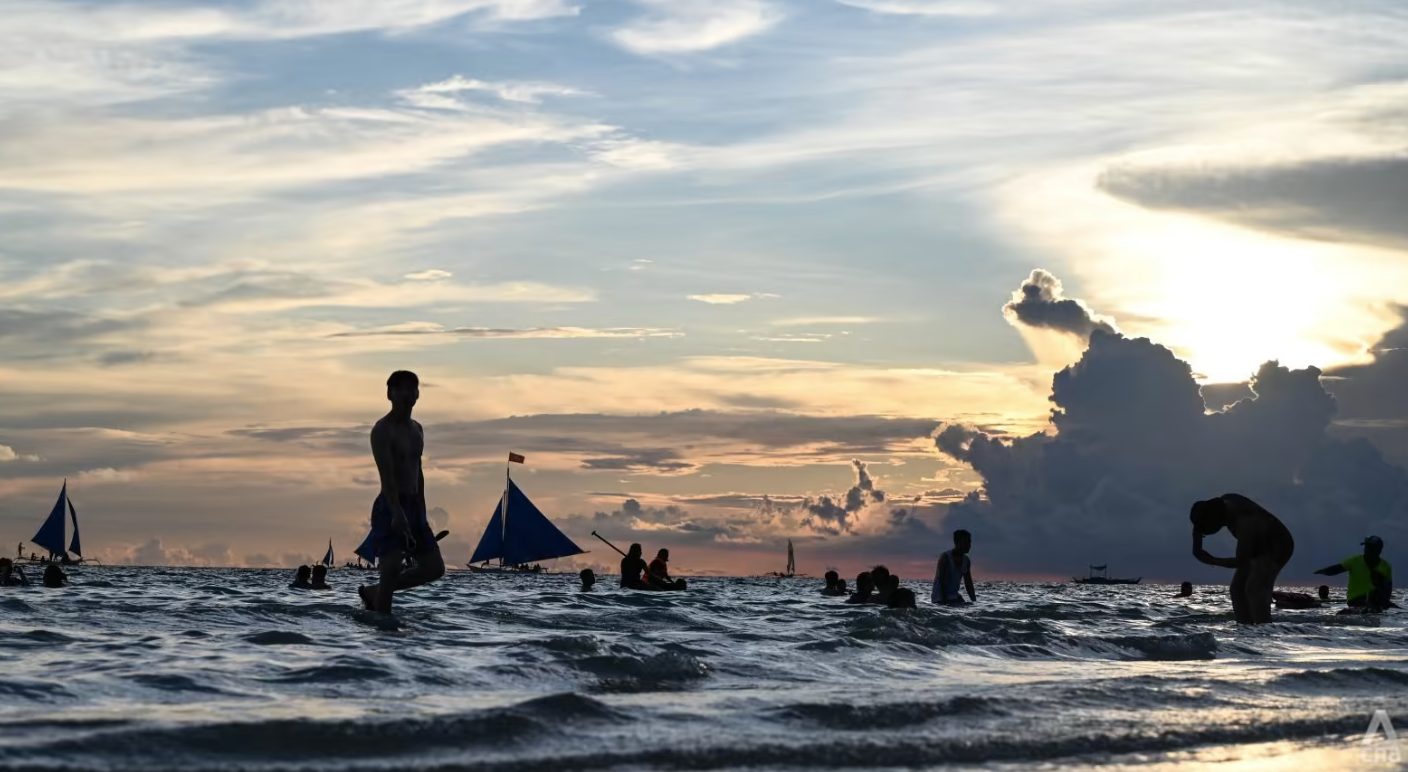
Photo: CNA/Jack Board. Retrieved from channelnewsasia.com
The sunset in Boracay has a certain wonder to it. As the horizon starts to burn with colour, crowds are drawn out from their afternoon malaise to the shimmering foreshore in time for an inevitably spectacular show.
Streaks of lilac and magenta fill the dusk sky, casting new shades on a beach that blinds with the whiteness of its powder-like sand throughout the day. Children splash in the shallows and couples pose for photos, silhouetted by the fading light.
Further out, blue-sailed boats criss-cross the calm sea. These are the picture perfect moments that this tourist island has promised for decades.
For much of the past five years though, the number of visitors on Boracay has been greatly reduced. Locals have watched the sun set and rise on their own.
The Philippines’ holiday jewel has lurched from crisis to crisis. Its environment has undergone a radical revitalisation and its economy derailed by closures and evaporating tourist numbers.
In 2018, then-president Rodrigo Duterte labelled the island a “cesspool”, a reaction to the island’s overcrowded beaches, wastewater being pumped into the sea, green tides of seaweed, congested roads and sprawling infrastructure.
He ordered the island abruptly closed for a period of six months to allow it to be rehabilitated. It was a controversial and radical option that shocked business operators, airlines and locals alike.
The tap that brought millions to Boracay every year was switched off.It was just over a year after the island re-opened for visitors when the COVID-19 pandemic struck another blow to tourism here.