
Scaling agroforestry can support fisheries, local food production, cultural practices
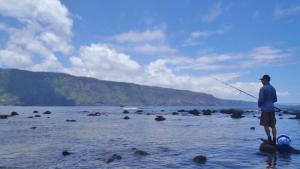
Photo credit: Maggie Sogin. Retrieved from hawaii.edu
Protecting native forests combined with transitioning fallow and unmanaged agricultural lands to ʻŌiwi (Native Hawaiian) and other place-based agroforestry systems has direct benefits for local fisheries, according to a new study inNature Ocean Sustainability by an interdisciplinary team from the University of Hawaiʻi at Mānoa, Institute of Pacific Islands Forestry, Kamehameha Schools and Seascape Solutions. These forest management and restoration efforts can improve local food production, biodiversity conservation and cultural connection in places from land to sea.
Mauka to makai
For generations, Kanaka ʻŌiwi, like other Pacific islands cultures, managed from land to sea (mauka i makai) through a system of land divisions (moku) that ensured food security and ecological balance. However, colonization, land privatization and industrial agriculture disrupted these systems. Over the past few decades, large-scale declines in plantation agriculture has now left 40% of Hawaiʻi’s agricultural lands fallow and unmanaged, which can pose risks from elevated erosion, invasive species and wildfire.
The research found that combining native forest protection (100,000 acres) with transitioning suitable fallow agricultural land to agroforestry (400,000 acres) could increase sediment retention by 30%, thereby reducing erosion and boosting nearshore food production by almost 100,000 meals per year in some moku. Benefits of this magnitude were shown for west Kauaʻi, the south shore of Molokaʻi, west Maui and east Hawaiʻi Island, where communities are tightly connected to and reliant on fishing for livelihoods, subsistence and social networks.