
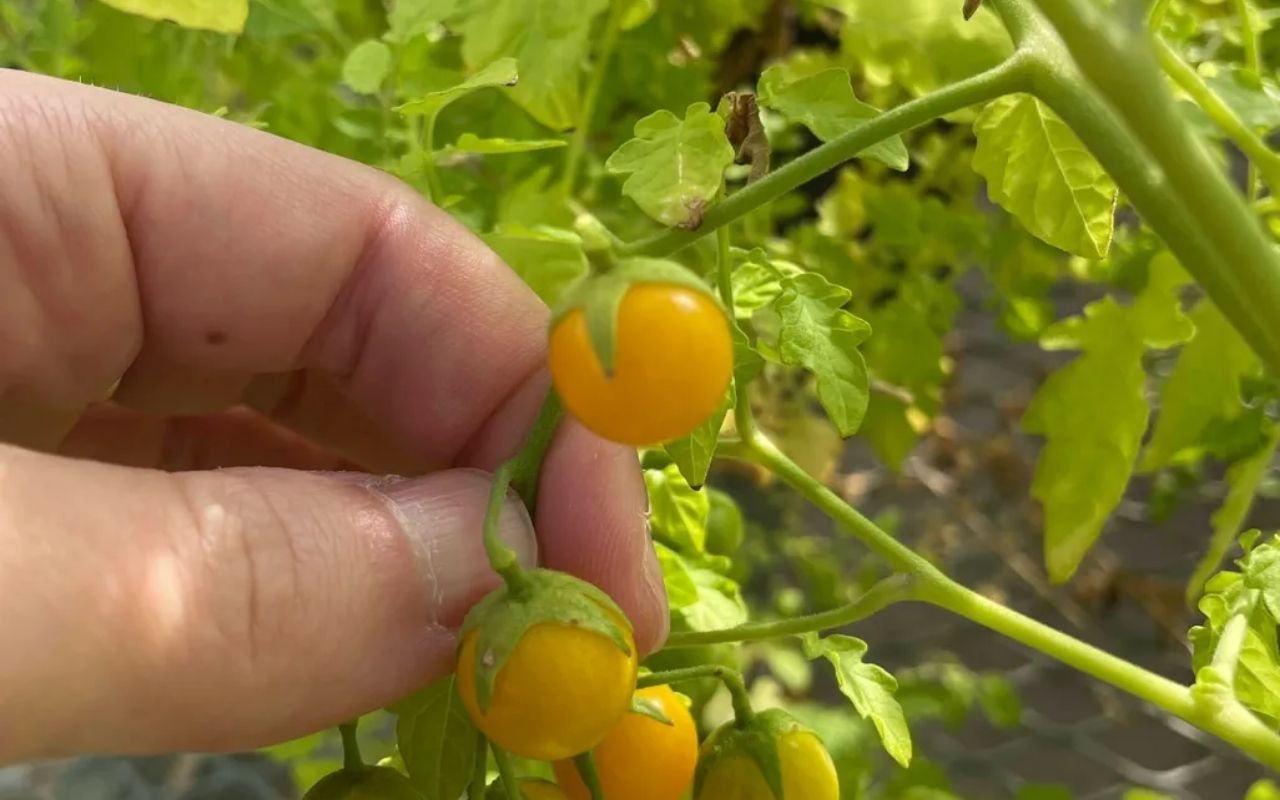
Caption: Scientists are investigating the production of ancestral alkaloids by tomatoes in the Galápagos Islands. Image Credit: Adam Jozwiak / University of California, Riverside via smithsonianmag.com
Excerpt from smithsonianmag.com
Some tomatoes growing on the Galápagos Islands appear to be going back in time by producing the same toxins their ancestors did millions of years ago.
Scientists describe this development—a controversial process known as “reverse evolution”—in a June 18 paper published in the journal Nature Communications.
Tomatoes are nightshades, a group of plants that also includes eggplants, potatoes and peppers. Nightshades, also known as Solanaceae, produce bitter compounds called alkaloids, which help fend off hungry bugs, animals and fungi.
When plants produce alkaloids in high concentrations, they can sicken the humans who eat them. To better understand alkaloid synthesis, researchers traveled to the Galápagos Islands, the volcanic chain roughly 600 miles off the coast of mainland Ecuador made famous by British naturalist Charles Darwin.
They gathered and studied more than 30 wild tomato plants growing in different places on various islands. The Galápagos tomatoes are the descendents of plants from South America that were probably carried to the archipelago by birds.