
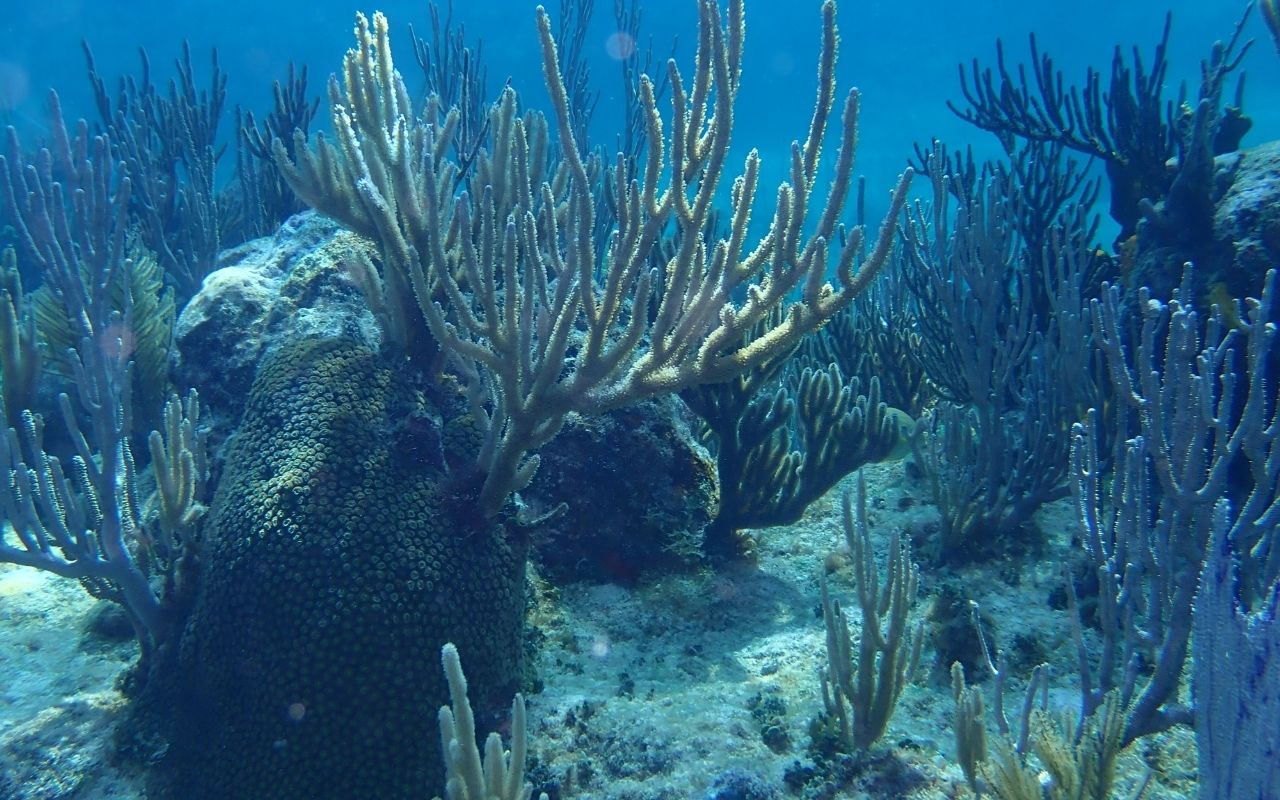
Excerpt from oceanographicmagazine.com
It’s the middle of the night. The sky is dusty white with stars, so many that it’s difficult to distinguish one from another. The full moon hangs low above the ocean’s inky surface and creatures scuttle across the seafloor. Stripy lionfish dance their poisonous dance, fins fanned in dazzling display. And throughout the intricate passageways of an extensive reef, corals get ready to spawn.
Each August, under the cover of darkness, a species of coral at Playa el Coral – off the northern coast of Cuba – releases a cloud of eggs and sperm. The underwater world comes to mirror the sky above, the sea sprinkled with millions of microscopic particles.
Coral species reproduce either through “brooding” or “broadcasting.” The former release fully fertilised juveniles; the others, called broadcast spawners, release sperm and eggs separately. If all goes well, somewhere in the vast water column, a tiny sperm and egg will find each other.
If by a moon dance miracle, the two gametes do connect, they become a planula, or coral larvae. They are carried by currents or settle on the reef below, trying to beat the odds: only 1% of corals survive their first year of life.
Along the two square kilometres of Playa el Coral, hundreds of species reproduce this way: the vibrant purple fan coral, the branching orange elkhorn, and the boulder star coral that encrusts rocks in tiny green polka dots. The scientists and divers who know this spot well all agree: it is one of the healthiest reefs in the Caribbean, if not the world.
Many narratives about coral reefs are centred on bleaching, death, and extinction. Which is, for the most part, accurate. According to the World Economic Forum, 14% of reefs have been lost since 2009. In Australia, over 70% of the Great Barrier Reef has bleached. In Florida, 90% of the reefs – stretching some 350 miles – have disappeared in just the past 40 years.