
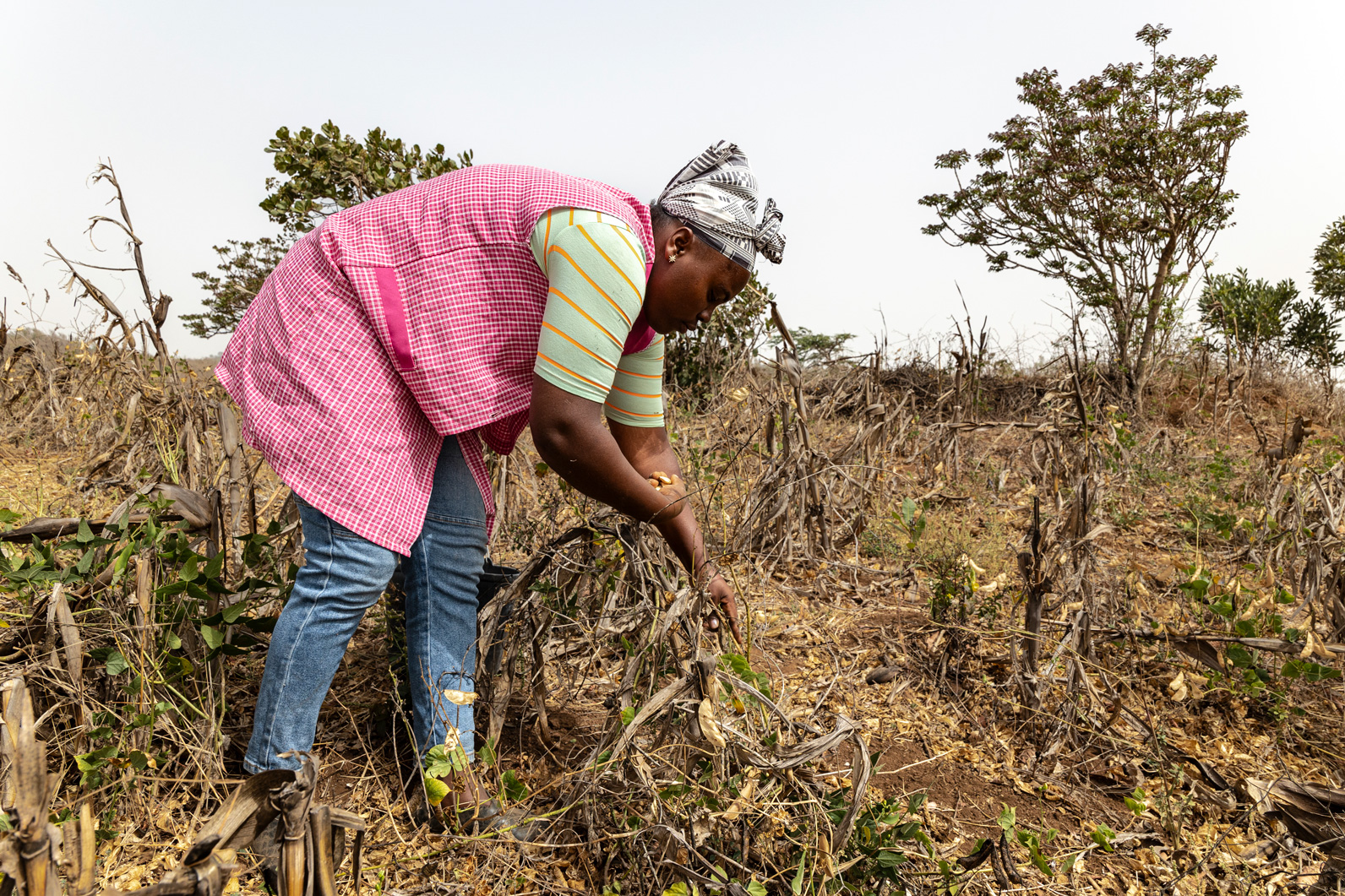
Excerpt and Photo from fao.org
The beans pop out of their sheathing as Elisabeth Da Conceiçao lays them out to dry. It’s the end of the harvesting season. This year there was enough rain that she could keep some of the beans, sweet potatoes and corn for her family’s consumption, but also sell some. It all depends on the rain.
Though the climate in Rui Vaz in the high hills of Cabo Verde’s capital island, Santiago, is humid and gets more precipitation than the rest of the arid country, there have been big changes here too.
“In recent times, rainfall has been one of the major challenges because, as we know, the climate has changed. It rains less. We spend a lot of money to produce, and when there’s a lack of rain, everything is lost,” says Elisabeth.
With the changes in climate, Cabo Verde like many other countries, has not only seen a decrease in rain but has also seen an increase in agricultural pests. In 2017, fall armyworm arrived in the country decimating much of the corn crops, and not only. But there has been an increase in many other pests as well.