
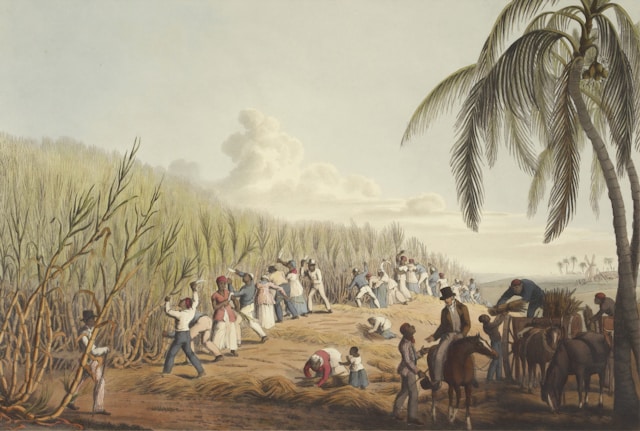
The human suffering of the Africans who were captured, trafficked across the sea and enslaved in the Americas, as well as the indigenous peoples who also suffered under the barbaric colonial system, are well known. What may be less known are the enduring financial implications, for the enslaving societies as well as for the slaves and their descendants.
More and more frequently, governments and institutions that benefited from the conquest, chattel enslavement and colonialism are being demanded to acknowledge the role they played in these systems, and to make adequate restitution. This is increasingly so in the Global South, which is broadly comprised of Africa, Latin America and the Caribbean, and parts of Asia and Oceania.
The key demand is for these entities to recognize that their wealth was created from the destruction of countless racial and ethnic communities, cultures and societies, which continue to have far-reaching implications on their ability to thrive. This has already been demonstrated by Saint Lucian economist and Nobel laureate Arthur Lewis, author of Labour in the West Indies in 1939; the historian and first Prime Minister of Trinidad and Tobago Eric Williams, who wrote Capitalism and Slavery in 1944; and the Barbadian economic historian Hilary Beckles.