
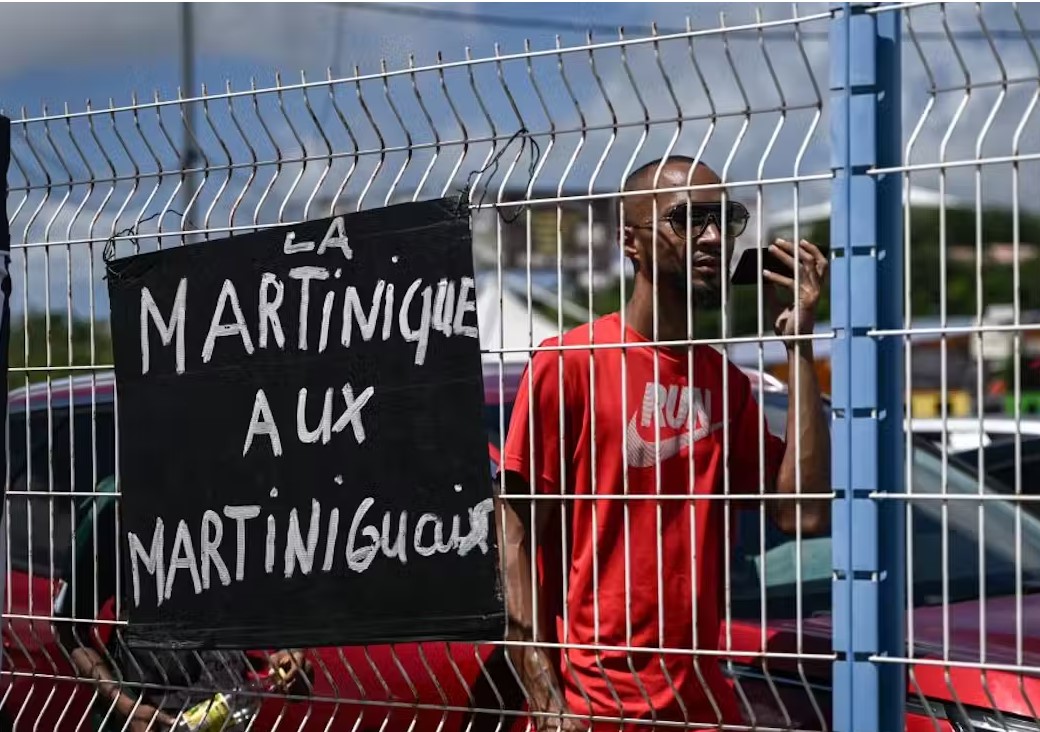
Photo source: PHILIPPE LOPEZ / Contributor. Retrieved from theconversation.com
For weeks, the French Caribbean island of Martinique has been the site of at-times violent protests over high living costs and worsening economic conditions. And Martinique isn’t alone; in the neighboring French island of Guadeloupe, striking workers stormed the control room of a power station on Oct. 26, 2024, causing a blackout that led to a government-imposed curfew.
Media coverage of the unrest has often focused narrowly on the immediate economic causes. But there is a much longer backstory to the protests, one that takes into account social and political inequality and the lasting legacy of colonialism in the French Caribbean.
Martinicans, who are French citizens, pay significantly higher prices for goods than residents on mainland France, including 40% more for food and 13% more for health care.
At the same time, Martinicans earn significantly less. About 30% of the island population falls below the poverty line, roughly twice the rate of European France.
With household budgets already tight, the impact of inflation triggered the latest wave of protests, with another scheduled for Nov. 1.
But current economic difficulties reflect only the latest illustration of Martinican and Guadeloupean anger over what they feel is an inequitable relationship to mainland France. Similar protests occurred in 2009 and 2021.