
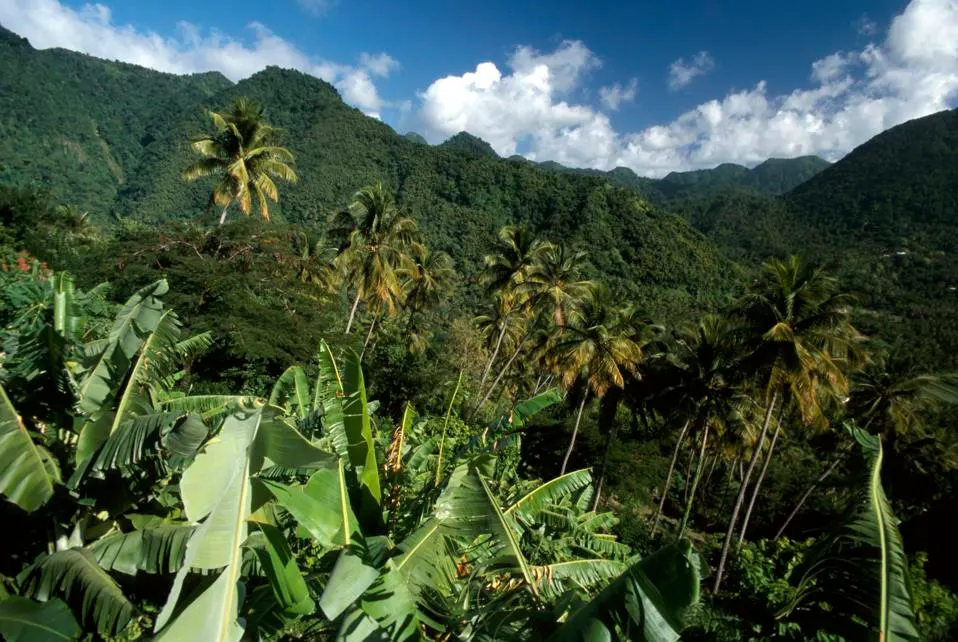
Photo by: Jeffrey Greenberg/Universal Images Group via Getty Images. Retrieved from forbes.com
St. Lucia may only be 27 miles long and 14 miles wide, but it boasts one of the world’s fastest women — Julien Alfred, the female version of Jamaica’s Usain Bolt. The country of roughly 180,000 people is also proud of its two Nobel Prize winners for literature and economics.
And while it may be the world’s top-rated honeymoon destination, St. Lucia is slipping off the global radar — a quiet victim of climate events that are wiping out its farm products and infrastructure. Tropical Storm Brett sucker punched it in June and has yet to recover. The Caribbean Island needs help, too, ironic because it is close to becoming a net carbon remover — a function of its rainforest preservation efforts.
Once colonized by the British and French, St. Lucia is part of the West Indies. The area is composed of Antigua, Barbuda, Bahamas, Barbados, Cuba, Dominica, Dominican Republic, Grenada, Haiti, Jamaica, Saint Kitts, Nevis, Saint Vincent, the Grenadines, Trinidad, and Tobago.
As the climate effects worsen, these countries will suffer more. Heavy rains often wash down the mountains, destroying homes, farmland, and transportation routes — events I witnessed last year in the Dominican Republic.