
The Okalolies of Old Year’s Night: Celebrating tradition on the world’s most remote inhabited island
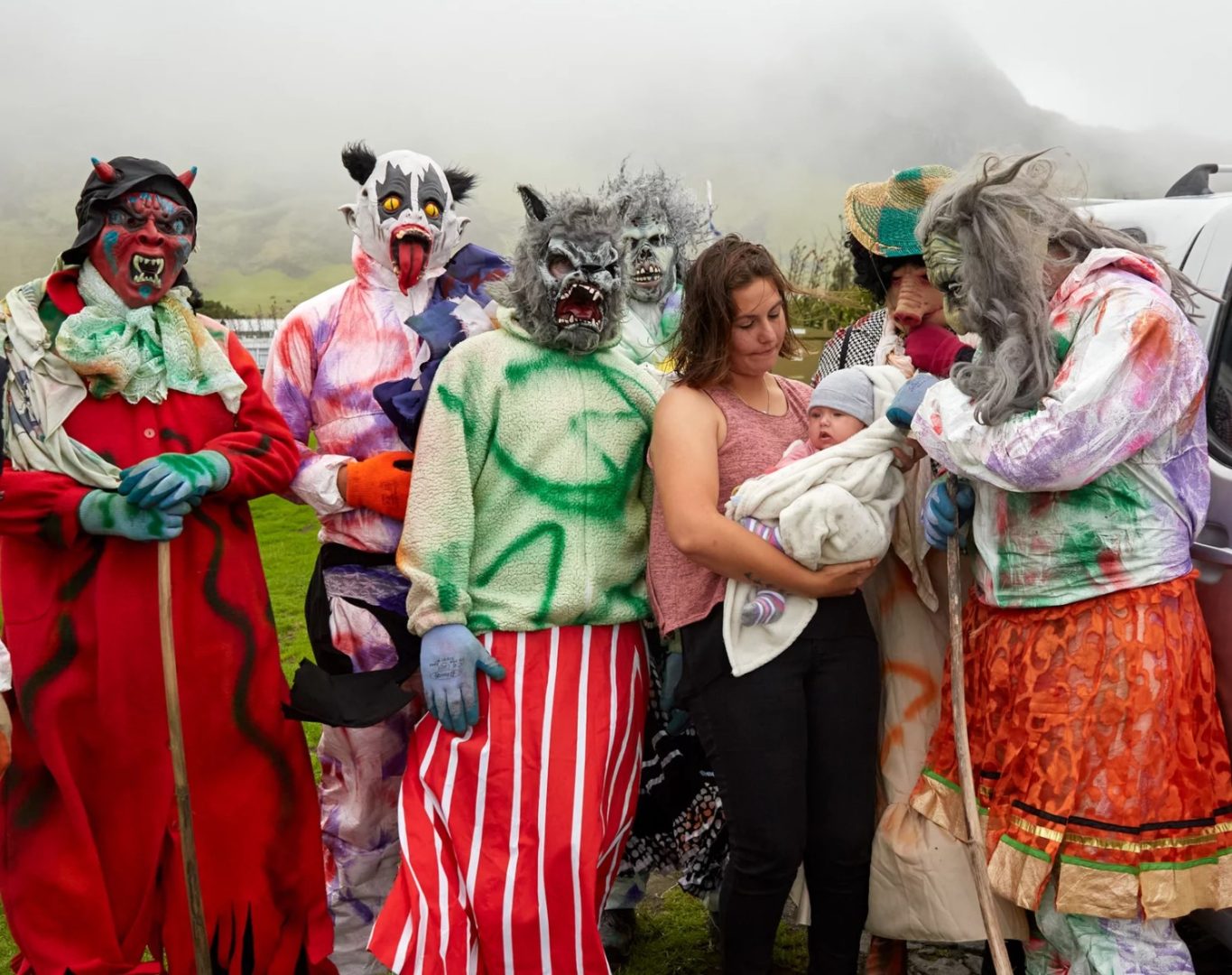
Photo credit: Julia Gunther. Retrieved from npr.org
You’d be forgiven for thinking that it’s impossible for a group of 15 young men to keep anything a secret in a community this small, but that is exactly what we — 16 Okalolies in total — manage to pull off.
Okalolies are always male. There is no selection process. “You just need to be brave enough,” explains Randal, who himself was 15 years old when he first took part.
Young boys see the tradition as a rite of passage. Randal remembers putting on an Okalolies mask as a child. “I looked into the mirror and frightened myself to death,” he laughs as we get into our costumes. Now, he can’t wait to find others to scare.
One of the first years that Albert Green, 67, was an Okalolie, he and a friend were getting dressed in his father’s shed. “We had our backs to one another and when we turned ’round, we both jumped with fright,” Albert says.
…
The Okalolies are part of a type of visiting custom known as mumming or guising, in which young men disguise themselves, visit homes and engage in playful pranks — mainly on Christmas and New Year’s — that have existed in Europe for the past 500 years.
Although she can’t remember how or why the Okalolies got their start on her island, 94-year-old Gladys Lavarello knows they existed when she was a little girl.