
Photograph by Tatsiana Chypsanava. Retrieved from nytimes.com
Next year, Tahiti will be home to the surfing competition of the Paris Olympics, almost 10,000 miles away from France. But the region has its own annual games, known as the Heiva.
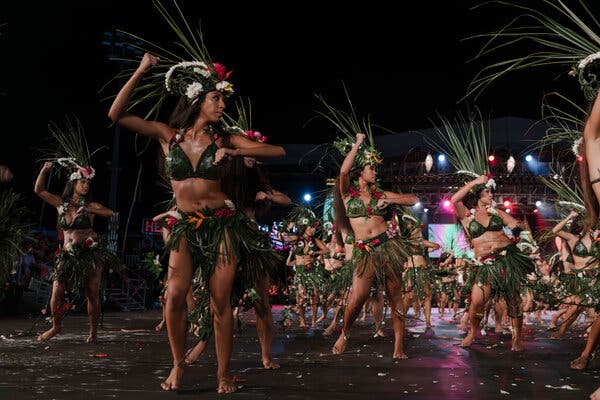
Toakura, the Tahitian dancing group and the winner of the Heiva festival, take part in their final performance of the festival in Papeete, French Polynesia.
Drenched in sweat, lungs heaving, Christopher Ravatua looked like any other athlete in the wake of a hard-fought win. But the remains of the contest — the flesh and shells of several hundred freshly husked coconuts, the sugary scent of their juice — reflected, in fact, the singularity of the scene.
Ravatua, 36, from the French Polynesian island of Rimatara, had just taken first place in a coconut-opening competition last month in Papeete, Tahiti. The event was part of the Heiva i Tahiti, an annual festival on the island that features competitions in traditional Polynesian dance and games and now draws hundreds of contestants from around the region.
Next year, Tahiti will host an event with a far larger global profile, the surfing competition of the 2024 Paris Olympics, in an arrangement that has produced conflicting emotions on the island. There is pride and excitement, Tahitians say, about the money to be made; about capturing the world’s attention, however briefly, during its largest sporting event.