
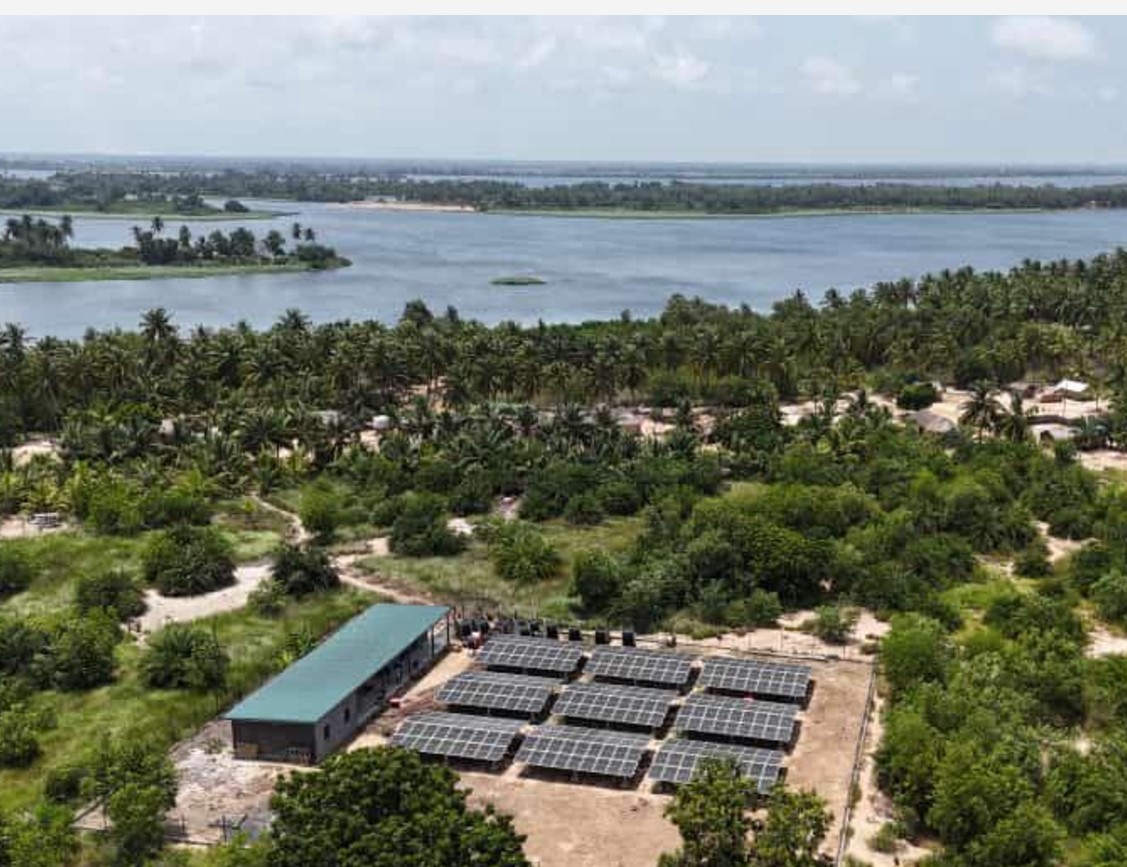
Excerpt and featured photo from GNA.org.gh
On a quiet evening in Lala, an island community, 16-year-old Aku Boakye sits by the dim glow of a kerosene lamp, straining to read her textbook.
The rhythmic sound of waves lapping against the shore is broken by the occasional flicker of the weak flame, casting long shadows on the walls of the 16-year-old family’s small home in Sene District of Bono East Region. Aku dreams of becoming a nurse, but every night, the darkness threatens that dream. “I can only study when the Sun is up,” Aku says. “At night, we have no electricity. When it’s dark, it’s really dark.” This is the reality for over 170 island and 2000 lakeside communities in Ghana, where access to electricity remains a distant hope.
These isolated communities, surrounded by water, are cut off from the national grid, live without the modern conveniences that much of the world takes for granted—lighting, refrigeration, or even the ability to charge a mobile phone.
At a time when the global conversation around climate change (COP29) focuses on renewable energy and reducing emissions, for people like Aku, the conversation is simple- they need power to build a brighter future.
For these communities with inhabitants of about three million, this conversation at ongoing climate talks in Baku, Azerbaijani resonates deeply.