
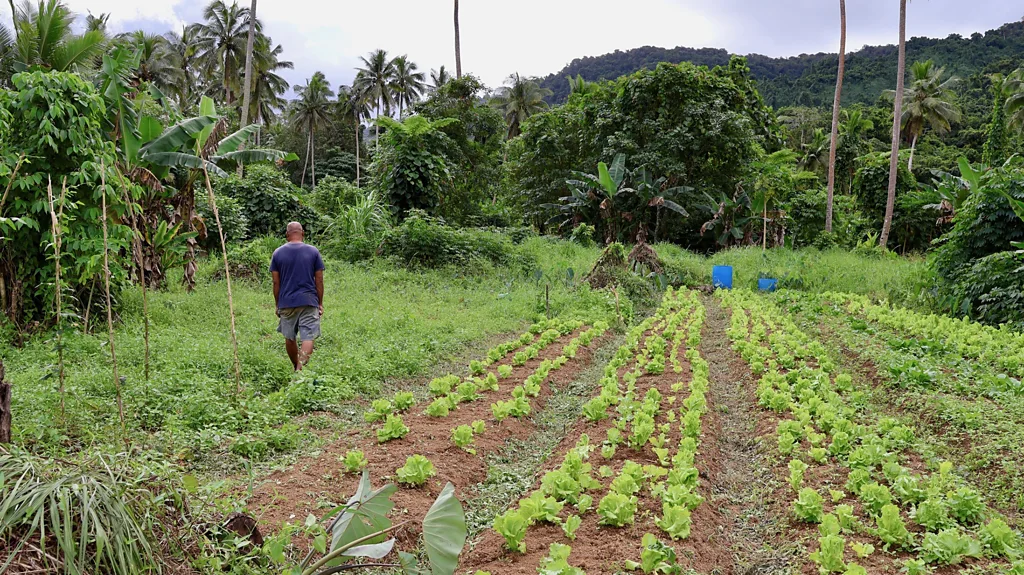
Photo credit: Frankie Adkins via BBC.com Excerpt from bbc.com
It's July, a month when Fijian farmers begin watching wild yams closely. "If they see wild yam vines creeping along the ground, there's going to be a hurricane in between November and April – the hurricane season," says farmer Marika Radua. If the vines shoot upwards, it's unlikely a hurricane will hit, he says.
In the dense jungle on Vanua Levu, Fiji's second largest island, Radua's farm is a riot of green. Every plant has its place – from rows of delicate lettuce, to sturdy taro and cassava. For years, Radua has read the signs in nature to know when, and where, to plant his crops to ensure they thrive each season.
Yam vines are natural indicators of extreme weather, according to Fijian traditional ecological knowledge. This environmental knowledge comprises ancient traditions held and practiced by indigenous peoples. When the vines hug the ground, "they are already trying to protect themselves from the wind. It's nature," Radua says.
Many Fijians – especially those from older generations who are more likely to use traditional farming methods – believe other organisms act as natural weather forecasts, such as bananas, bees and breadfruit.