
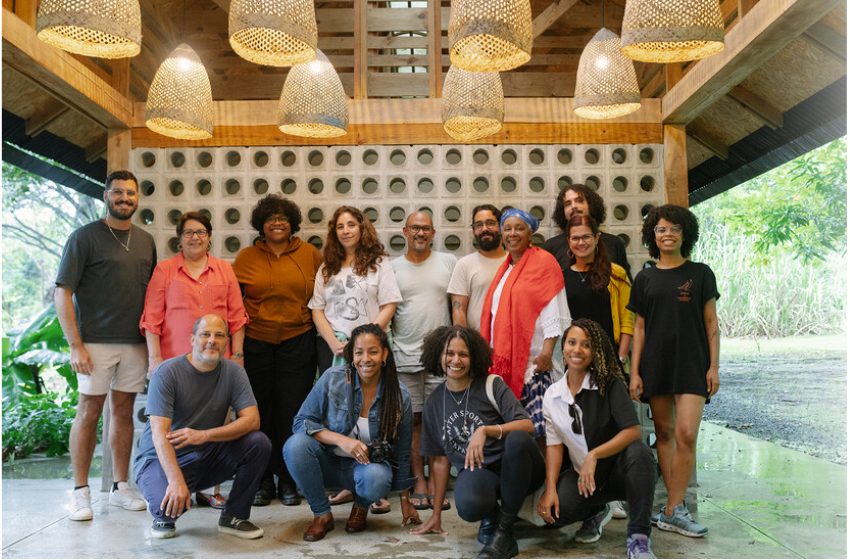
Photo source: Retrieved from e-flux.com
For the vast majority of the people who inhabit the Caribbean Basin, moving between the countries that comprise it presents a difficult challenge: mobility in the region is determined by existing colonial structures, and travel visas and high transportation costs depress the circulation of the area’s inhabitants.
The economies associated with tourism have contributed to this deadlock, and the movement of foreign visitors and investors is generally more fluid. Through many strategies, over centuries, the Caribbean has been a brutal laboratory for the implementation of capitalist economic models: first, in the sixteenth century, through colonial exploitation by European powers, and later, since the nineteenth century, by the United States. What we in the Caribbean are today was forged from pure violence, both historical and contemporary.
Many of these frameworks still manifest in manipulations to local sovereignty, such as France’s indemnity against Haiti for its independence (repealed only in 2016), or in direct colonial policies, as is the case of the United States’ control of Puerto Rico and some of the Virgin Islands, to name only some. Despite these adverse political and economic circumstances, cultural production in the region is extremely interesting, complex, and powerful, and despite differences in history and language, certain idiosyncrasies are common among the populations of the Caribbean.
I do not wish to repeat homogenizing perceptions or clichés, but it is true that the people of the region share much in common, including ways of being, thinking, working, and living. Against colonial impositions, much of the thought produced from the Caribbean considers the body of water that defines our region not as a border but as a “unifying agent.” 1 Figuring the Caribbean as a site of exchange and emancipation is just one starting point of the educational program RAY | RAYO | RAYON.