
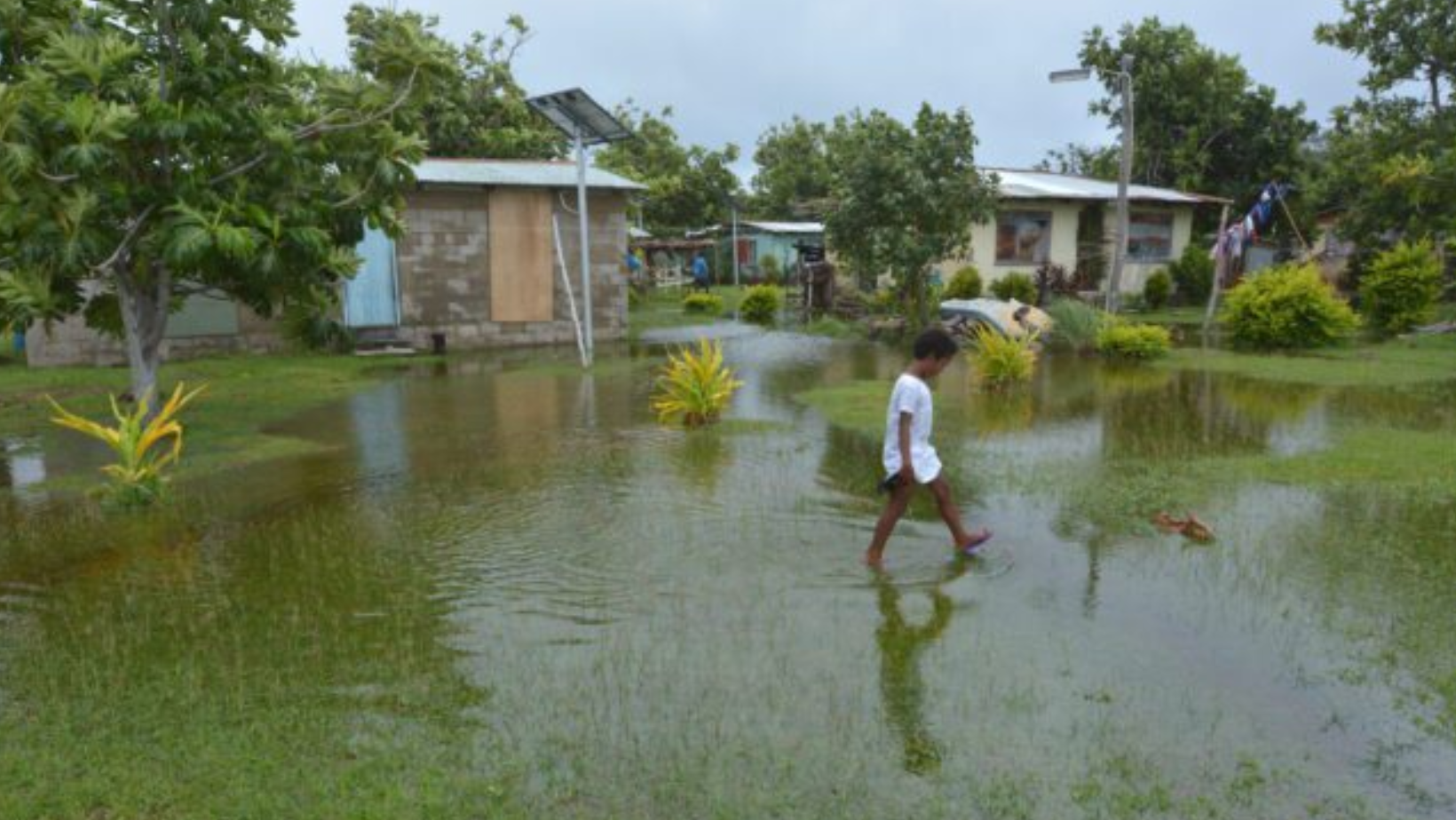
Photo Credit and Excerpt from newsecuritybeat.org
Pacific Island countries sit at the frontline of climate change. Many consist of small, low-lying islands, with long coastlines and vast ocean spaces between them. Livelihoods often depend on agriculture and fishing, and importing water or food is often infeasible or expensive. This makes those large ocean nations highly vulnerable to the impacts of climate change, such as storms, droughts, and rising sea levels.
Given these vulnerabilities, analysts have expressed concerns that climate change could heighten various forms of socio-political conflict in the region. Yet the Pacific Island countries have received scarce attention in research on climate change and conflict. While recent scholarship has begun to explore possible pathways between climate stress and conflict in the Pacific Island countries, the region remains comparatively understudied. This is especially surprising given the regions’ high climate vulnerability and increasing geopolitical relevance.