
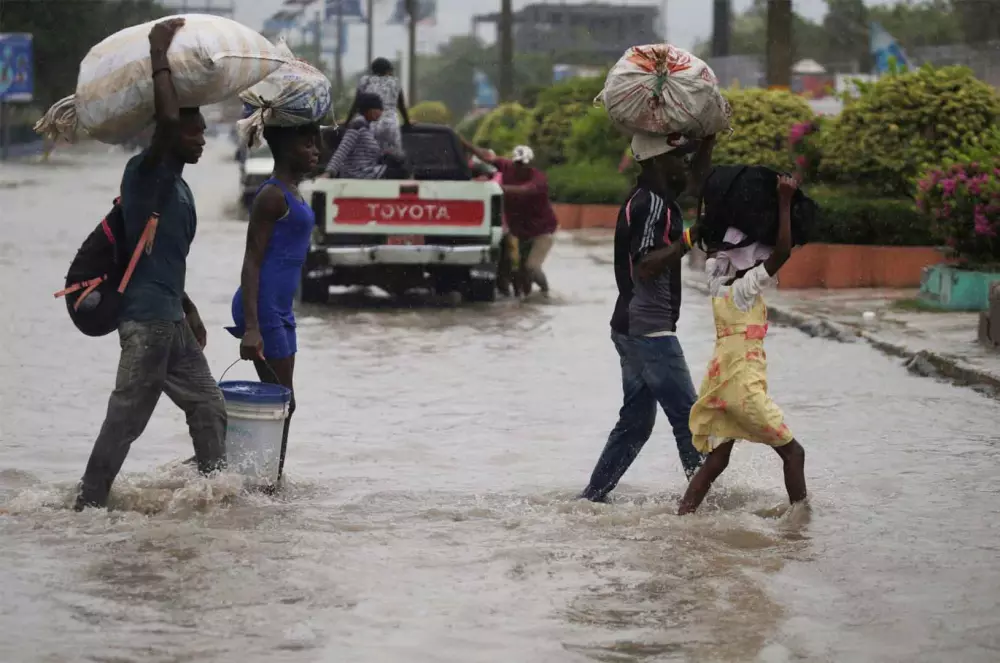
Photo: Andres Martinez Casares/Reuters. Excerpt from thenewhumanitarian.org
A few weeks ago, the UN acknowledged for the first time that climate change adversely impacts food security, water scarcity, and the humanitarian situation in Haiti, aggravating existing instability. This is a step forward, taken as the UN agreed to continue supporting wide-ranging work in the country, and as momentum builds for a “multinational force” to be deployed to help rein in rampant gang violence. Up to now, international interventions have focused on political and security approaches to cure the symptoms of Haiti’s ills but have failed to address their causes.
Without properly addressing climate and environmental challenges, the violence, exclusion, and poverty that confront so many Haitians are doomed to spiral further and become entrenched in daily life.
With the international climate conference COP28 –thefirst ever COP with a thematic session dedicated to relief, recovery, and peace –fast approaching, it is time for multilateral and bilateral donors to rethink climate finance so it finally serves the needs of those living in fragile and conflict-affected states such as Haiti.
Haiti is themost vulnerable country in Latin America and the Caribbean to climate change. Rising temperatures and declining rainfall have intensified drought, contributing to the food insecurity that affects 4.9 million Haitians, almost half the population. Climate-related storms are also growing more intense, causing devastating flooding. In June alone, floods and landslides affected more than 37,000 people. The impact of extreme weather is magnified by a history of poor natural resource management and overexploitation – rooted in the policies of the country’s colonial past. Deforestation and unmaintained drainage infrastructure add to the devastation of climate-related storms.
Today,85% of Haiti’s soils are severely degraded, and tree cover, mangrove forests, and coral ecosystems have been lost. As a coastal nation, Haiti is also at a high risk ofsea level rise, which threatens the lives and livelihoods of many people living close to the coast. These risks are all set to intensify over the next 30 years.