When people think about the blue economy, they often think of fisheries, tourism, renewable energy or marine conservation. Yet one of the biggest challenges facing island economies today begins much closer to home: waste management.
Across island communities worldwide, plastic pollution has become a growing environmental and economic concern. Limited land availability, dependence on imported goods and waste infrastructure constraints can make it difficult to manage increasing volumes of waste. When waste systems become overwhelmed, the impacts are felt not only on land but also in the marine environments that many island economies depend upon.
This connection between land-based systems and ocean health is increasingly shaping how researchers, policymakers and practitioners think about sustainable island development.
One example is eXXpedition, a global all-women research initiative whose mission is to lead ocean research missions that help people better understand the plastic crisis and identify their role in addressing it. Through a series of voyages around the world, eXXpedition brings together researchers, professionals and changemakers to explore the sources and impacts of marine plastic pollution.
As part of its Caribbean programme, the organisation will travel across several island communities between December 2026 and January 2027. Among those selected to participate is Shari Lorang, a PhD candidate at Nanyang Technological University whose research focuses on waste systems, circular economy and policy in Small Island Developing States (SIDS). Shari also participated in Island Innovation's Circular Economy for Sustainable Islands course.
Her interest in these issues has been shaped by experiences across island and coastal communities around the world. In her expedition proposal, Shari reflects on how a beach clean-up on Indonesia's Gili Islands first exposed her to the scale of the plastic pollution challenge. She later travelled through the Amazon, where she observed the impacts of waste pollution along the river system, before conducting research and fieldwork in Fiji, Samoa and Bali focused on the environmental, economic and policy dimensions of waste management in island contexts.
In January 2027, Shari will join Leg 3 of the Caribbean voyage, travelling between Curaçao, Bonaire and Aruba. Through her doctoral research, she explores how circular economy approaches and effective policy frameworks can help island communities address waste challenges more sustainably. Her participation in eXXpedition reflects the growing international focus on understanding how land-based waste systems influence ocean health and how circular solutions can help reduce marine plastic pollution.
Why Waste Management Is a Blue Economy Issue
Plastic pollution is often viewed as an environmental challenge, but for islands it is also an economic one. Healthy oceans support tourism, fisheries, recreation, biodiversity and coastal resilience. When marine ecosystems are affected by pollution, the consequences can extend across multiple sectors that contribute to island livelihoods and economic development.
This is why the blue economy cannot be separated from how islands manage resources on land. Effective waste systems, circular business models and policies that reduce material leakage all play a role in protecting ocean health.
Part of the eXXpedition's global voyages, the Caribbean mission reflects this integrated approach. The research programme combines scientific sampling at sea and on land, stakeholder engagement, waste site visits, workshops and community outreach to better understand how plastic moves through island systems and into the marine environment. Filling the critical gaps in our understanding of where ocean plastic comes from will ultimately also help pinpoint the most impactful solutions.
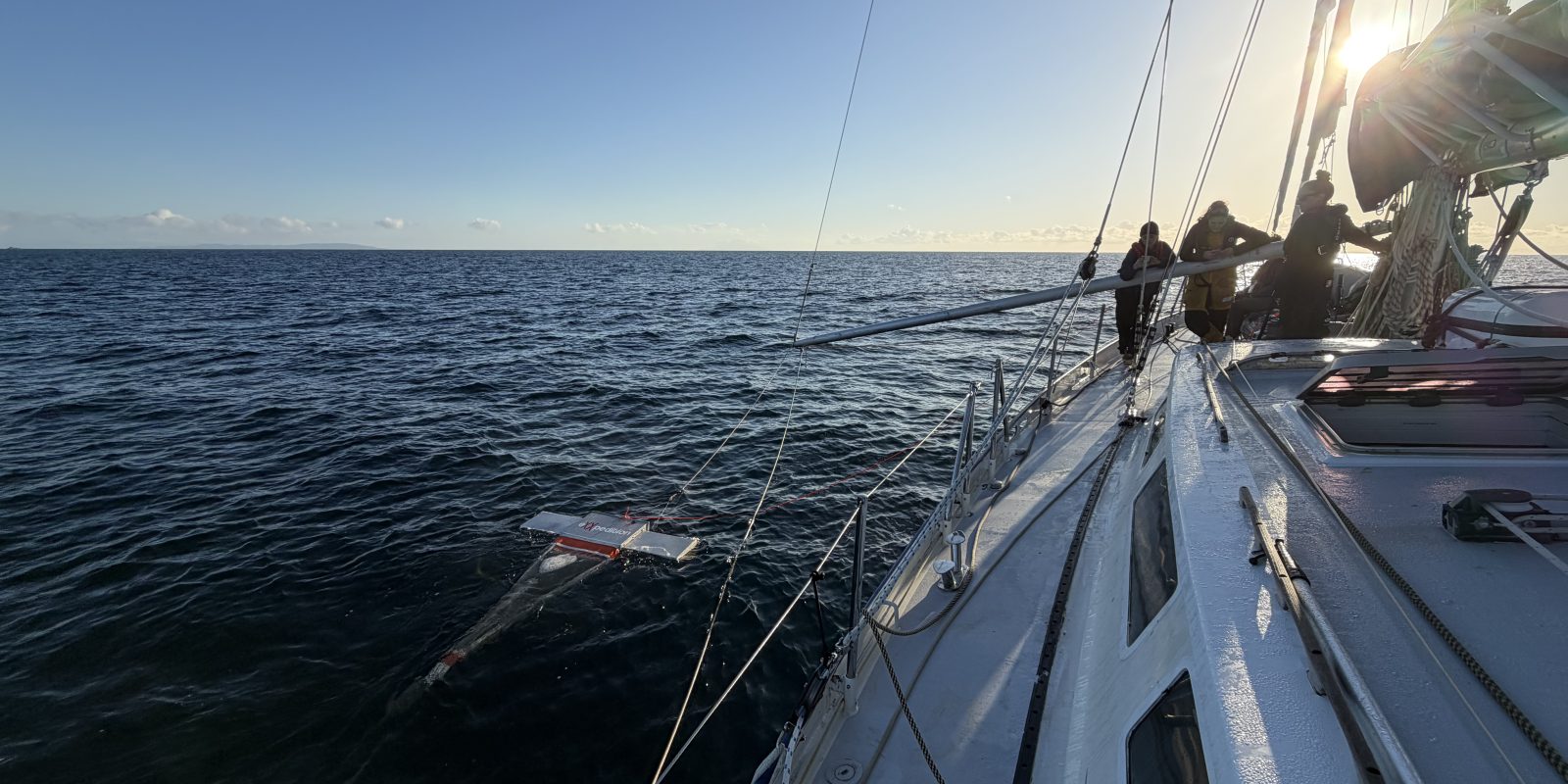
South Pacific I: Auckland to Bay of Islands eXXpedition voyage
Connecting Circular Economy and Blue Economy
For many years, circular economy and blue economy discussions were often treated as separate topics. Today, the links between them are becoming increasingly clear.
A circular economy seeks to minimise waste, keep materials in use and reduce pressure on natural systems. A sustainable blue economy depends on healthy marine ecosystems that can continue to support economic activity and community wellbeing.
For islands, these goals are deeply connected. Reducing plastic leakage, improving resource recovery, developing sustainable supply chains and strengthening waste management systems can all contribute to stronger environmental and economic outcomes. The result is not simply cleaner coastlines, but more resilient island economies.
Building the Skills Needed for Island Futures
As island communities navigate increasingly complex sustainability challenges, there is growing demand for professionals who understand the connections between environmental stewardship, economic development and ocean health.
Whether working in government, tourism, fisheries, conservation, infrastructure, community development or research, island professionals are increasingly being asked to take a systems-based approach to solving problems.
These are some of the themes explored in Island Innovation's new Blue Economy for Sustainable Islands course, which examines how islands can create sustainable economic opportunities while protecting and restoring the marine environments on which they depend.
The course brings together island leaders, practitioners and experts to explore topics including ocean governance, marine conservation, sustainable tourism, fisheries, innovation and the growing relationship between the blue economy and other sustainability priorities, including circular economy.
Looking Ahead
The challenges facing islands rarely fit neatly into a single category. Plastic pollution, waste management, economic development and ocean health are all interconnected.
Initiatives such as the Caribbean eXXpedition highlight the importance of understanding these connections and developing solutions that work across sectors. As more island professionals engage with these issues, opportunities continue to emerge for collaboration, innovation and leadership.
We congratulate Shari on her selection for the 2027 Caribbean eXXpedition and look forward to following the insights generated through this important mission.
Interested in exploring how ocean health and sustainable economic development intersect in island communities? Learn more about Island Innovation's Blue Economy for Sustainable Islands course and join a growing network of island professionals working towards resilient and prosperous island futures.