A Tuvaluan Researchers' Plastic-to-Fuel Work is Now Running Generators in Funafuti
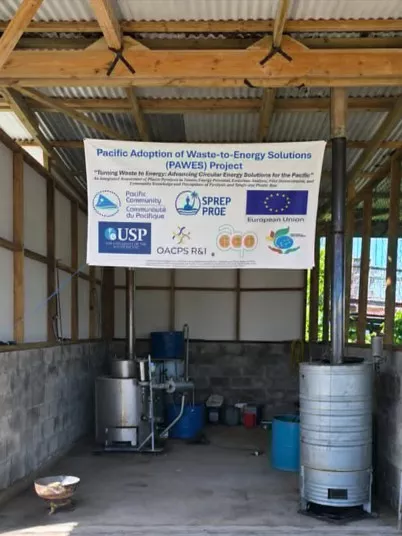
A biomass-fired reactor at the Department of Waste Management took in 10 kilograms of discarded plastic and returned about 10 litres of liquid fuel and four cubic metres of gas, while officials, researchers and newly certified operators watched.
The demonstration commissioned Tuvalu’s first plastic pyrolysis unit, built on research by a Tuvaluan postgraduate student and delivered under the Pacific Adoption of Waste-to-Energy Solutions (PAWES) Project. The unit also converts used engine oil into a diesel-like fuel. Fuel from the system has already been tested in generators, machinery and household cooking stoves.
Walter Pulogo, Acting Secretary of the Ministry of Home Affairs, Climate Change and Environment, commissioned the unit.
Operators trained in Funafuti received certificates in the safe operation and maintenance of the unit. They will run it from here.
The unit is being framed in Funafuti as an answer to two problems at once.
"This initiative demonstrates how innovation can help address two of Tuvalu's pressing challenges, plastic waste management and energy security, through one practical solution," said Mr. Kilei. "By converting plastic waste into valuable fuel products, we are not only reducing environmental pollution but also creating opportunities to strengthen local capacity, support the circular economy, and improve resilience. We are grateful for the strong partnership between the Government of Tuvalu, the PAWES Project, USP, NuFuel Ltd and all those who have contributed to making this achievement possible. This is an important step towards a cleaner and more sustainable future for Tuvalu", said Mr. Simona Kilei, Director of the Department of Energy, Tuvalu.
The unit grew out of postgraduate research by Miriama Uluiviti Taukiei, a Tuvaluan student at the University of the South Pacific (USP) and a PAWES scholar, whose work examines integrated approaches to plastic waste management in Tuvalu.
"As a Tuvaluan, it is incredibly rewarding to see my research move beyond the classroom and make a real difference for my own country", said Ms. Miriama Uluiviti Taukiei, a Tuvaluan postgraduate researcher at the University of the South Pacific (USP) and a scholar under the Pacific Adoption of Waste-to-Energy Solutions (PAWES) Project, the occasion marked the successful translation of research into tangible benefits for her home country.
She added, "This project demonstrates that with innovation, research and community partnership, plastic waste can become part of the solution rather than the problem. I hope this inspires more Pacific students to pursue research that responds to the needs of our islands and creates lasting benefits for future generations."
For the Pacific Community (SPC), the point of the unit is who operates it.
"It’s about people, the communities that deserve cleaner environments, the young researchers developing practical solutions, and the local operators who now have the skills to sustain this technology for years to come," said Ms. Ngedikes Olai Uludong, Deputy Director of the Georesources and Energy Programme at SPC and added, “the project's greatest achievement lies in the people it empowers.”