
Image retrieved from mare-madeira.pt
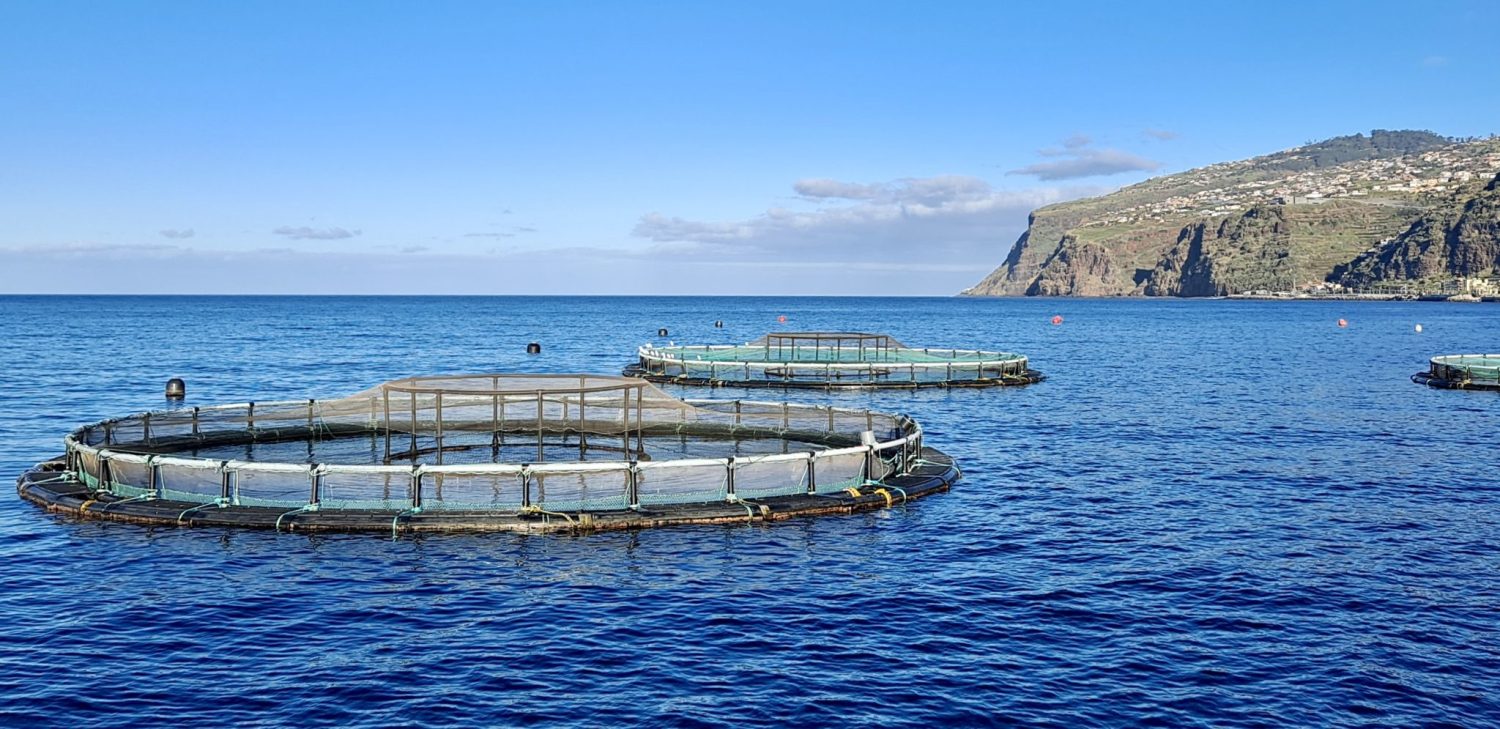
Madeira pioneered open ocean aquaculture in the 1990s. Learning from early aquaculture projects around Europe and adapting those processes and equipment for the harsher conditions of the Atlantic Ocean, Carlos Andrade and his team in the Fisheries Directorate of Madeira set up an aquaculture pilot project in 1995. Following this feasibility trial, offshore aquaculture has continued to grow around Madeira; these days, around 900 tons of fish are produced here every year.
Carlos is one of the more recent additions to MARE-Madeira and our leadership team. A principal investigator within our Ecosystem Services and Blue Economy team, Carlos is now dedicating his time to researching ways to improve the sustainability and circularity of aquaculture in Madeira.
In this interview, you’ll get an insider’s look at aquaculture in the open ocean, the challenges to doing aquaculture well, the value aquaculture brings to Madeira and Europe, and the uncertain future of limpets. (Lapas lovers beware the invasive algae now on our shores!)
What can the rest of the world learn from Madeira’s aquaculture efforts? We’re one of the few regions doing production in oligotrophic waters. This means there’s no primary production to support bivalves, like oysters and mussels. It would be great if we could grow bivalves because they’re being used everywhere and the techniques are available and easy to adapt and there are markets for it. But we can’t do that – we don’t have the productivity or the commercial spaces for it. So we’re looking for grazers like limpets or urchins. We’re hoping that putting them in areas close to the fish farms, where it’s a little more productive and macroalgae can grow, will allow us to create a multi-trophic system for Madeira. Our trials in this area could help make open ocean aquaculture more circular in other regions, too.
We’re one of the few regions doing production in oligotrophic waters. This means there’s no primary production to support bivalves, like oysters and mussels. It would be great if we could grow bivalves because they’re being used everywhere and the techniques are available and easy to adapt and there are markets for it. But we can’t do that – we don’t have the productivity or the commercial spaces for it. So we’re looking for grazers like limpets or urchins. We’re hoping that putting them in areas close to the fish farms, where it’s a little more productive and macroalgae can grow, will allow us to create a multi-trophic system for Madeira. Our trials in this area could help make open ocean aquaculture more circular in other regions, too.