
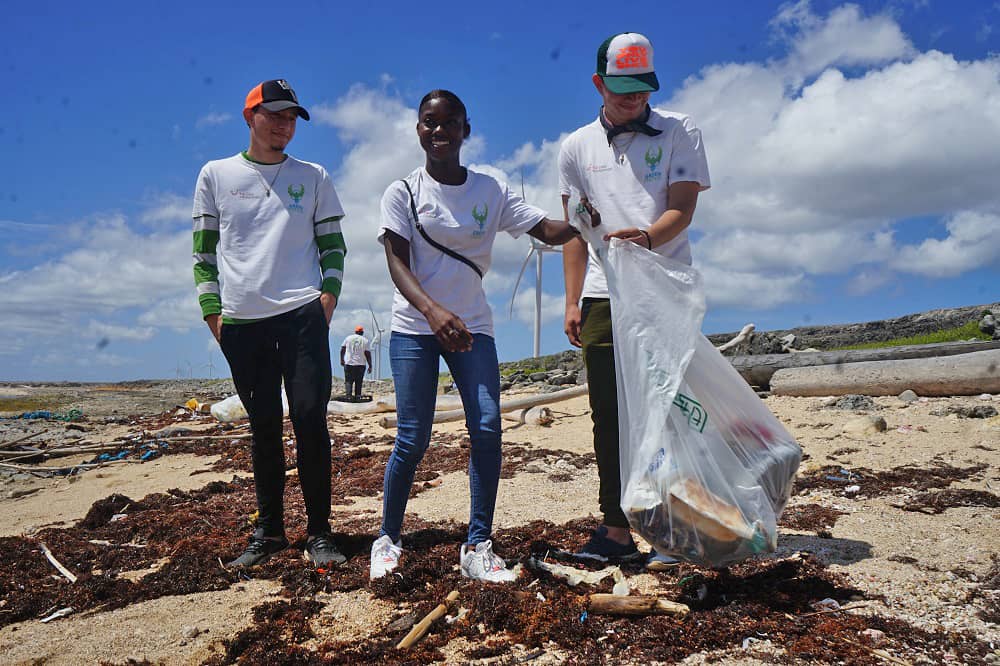
Image by Sandra Weiss. Retrieved from news.mongabay.com
The best place to party on the Caribbean island of Curaçao is Mambo Beach, near the island’s capital, Willemstad. On weekends, DJs outperform each other, spinning the hottest music at shoreside hotels and beach clubs. Tourists and locals dance the night long, consuming beer, cocktails, rum, soft drinks, and maybe water.
Then, at 4 a.m., when the last partyers have fallen asleep on the beach’s sunbeds, the Green Phenix team arrives and starts collecting the garbage strewn by guests.
Green Phenix is a local environmental startup that has set itself a big goal: To clean up Curaçao. This is more than a civic duty — it may also be a national imperative: Waste disposal has become a serious problem on the island, which is the size of Manhattan, and it’s getting worse. The same is true on islands across the Caribbean.
“In 2020, each [Curaçao] islander produced an average of 1,200 kilograms [about 2,650 pounds] of waste per year,” says Ciaretta Profas, a government adviser on environmental policy. “That’s three times as much as usual in Latin America,” she adds. Of course, this isn’t because the inhabitants of Curaçao are particularly wasteful, but because all the garbage left behind by tourists is statistically attributed to the 150,000 inhabitants.