
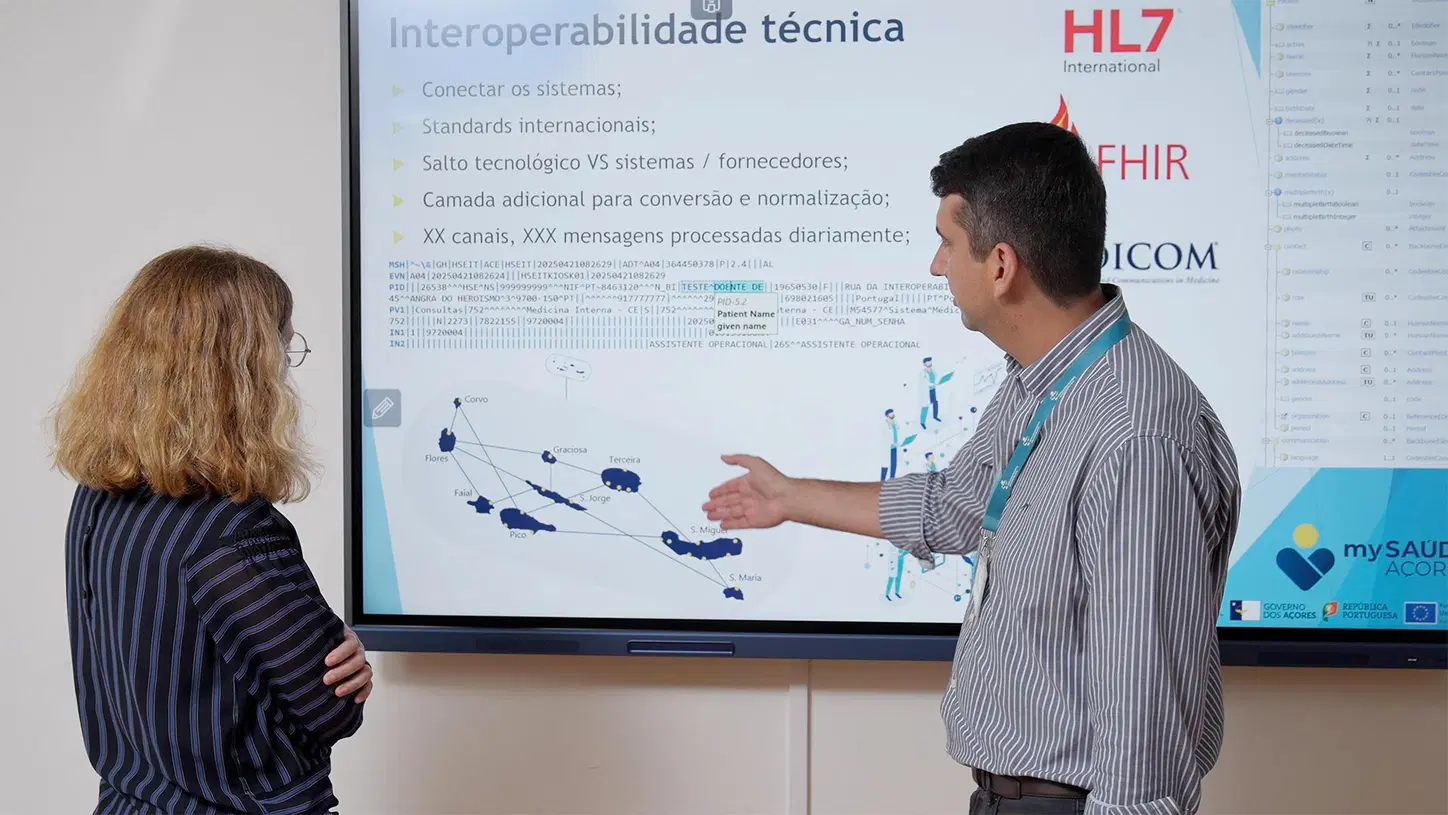
For the 240,000 people living across the nine islands of the Azores, an archipelago of Portugal, access to healthcare has always been shaped by geography. Patients often face long journeys between islands to reach specialists.
Healthcare professionals work across a fragmented network of hospitals, local health units, and care centers. As Regional Secretary for Health and Social Security Mónica Seidi puts it: “The Azores are made up of nine islands, and I would almost dare to say nine challenges.”
To address these barriers, the Azores Regional Health Service launched its Digital Hospital project, a region-wide transformation designed to connect healthcare providers, patients, and clinical information across the archipelago. Working with Siemens Healthineers, the initiative is creating an integrated digital ecosystem built around a unified electronic health record, patient and physician portals, teleconsultations, and standardized clinical data.
Improving access to specialized care through digital healthcare
The goal is clear: ensure that high-quality care is available regardless of where patients live. Instead of traveling by plane for routine specialist appointments, patients can increasingly access care virtually, review medical records online, manage prescriptions, and schedule appointments through a single digital platform.
Connecting clinical data for better patient care
For healthcare professionals, centralized information means more informed decisions and fewer administrative barriers. As physician Lénio Couto explains: “Centralizing data allows us to spend more time with patients, to talk with them. It’s not a separation, but rather a way to get closer.”
The impact is already becoming visible. Patients can access consultations, exam results, and vaccination records online, while teleconsultations are reducing travel and improving access to specialist expertise. Digitalization is strengthening coordination across the islands, reducing redundancies, and supporting safer, more efficient care.