
From Maggots to Solutions: A Young Scientist Turning Waste Into Opportunity in the Caribbean
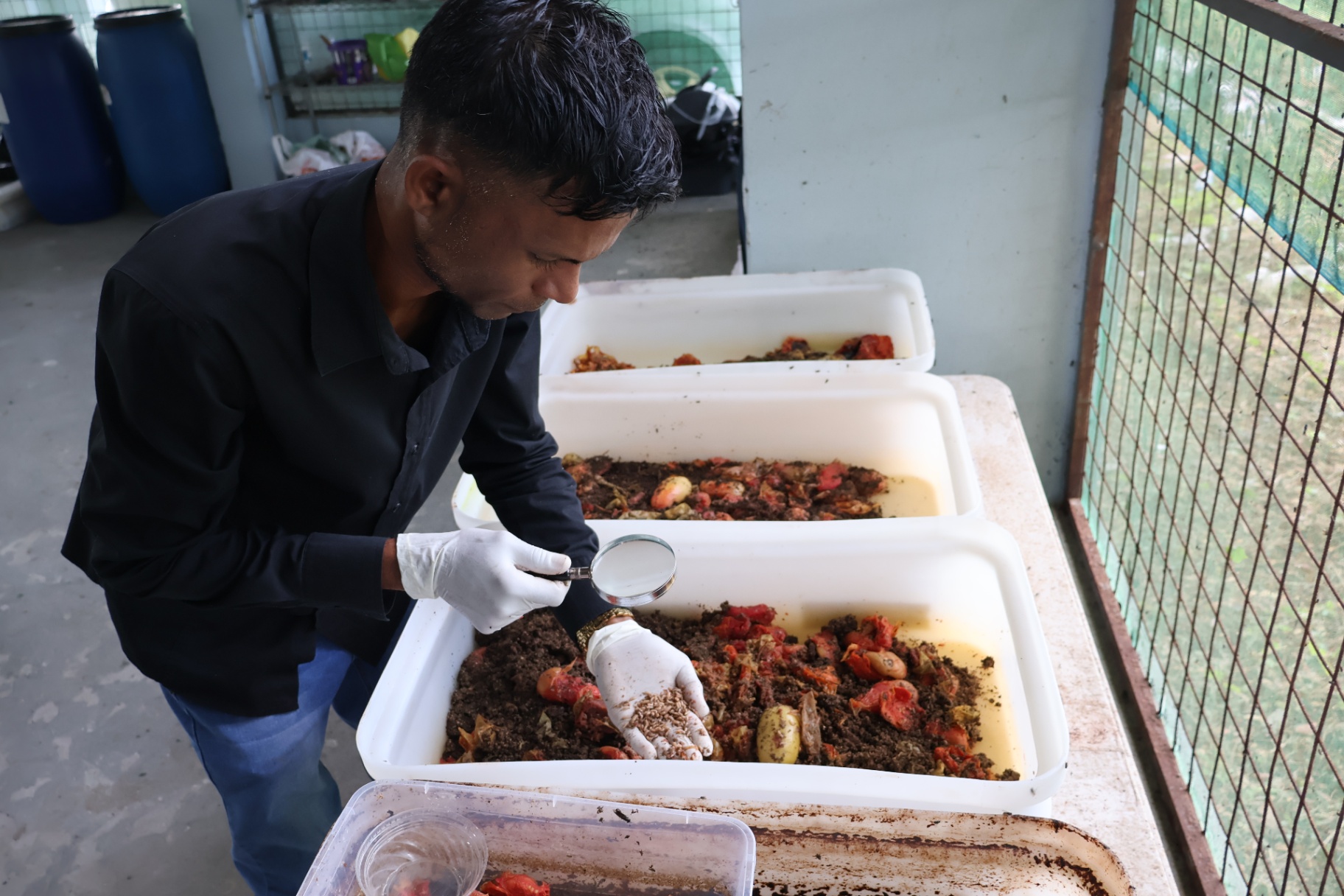
From a young age, Rakesh Bhukal imagined a future in fields as diverse as accounting, aviation and the oil industry, but growing up in a rural village, surrounded by the natural world, a different passion took hold: the sciences, specifically environmental studies, began to captivate him. He saw how environmentalists across the globe were making real change, and he knew he wanted to be one of them.
"I believe that once you have a strong drive and a passion towards something, you must have the technical know-how and the expertise," he says. His belief that any dream that comes to mind can be achieved drove him to pursue a degree in Environmental and Natural Resource Management with minors in Marine Biology and Zoology at the University of the West Indies (UWI). His ultimate goal was to make a difference in the world.
Bhukal's path to making that difference took an unexpected turn when he was introduced to the Black Soldier Fly (BSF) project, a groundbreaking initiative funded by the Food and Agriculture Organization of the United Nations (FAO) in partnership with UWI and the Ministry of Agriculture and Fisheries of Trinidad and Tobago.
The project's goal is to introduce insect production as a sustainable, local source of high-quality protein for animal feed. This is a critical need, as feed prices can comprise up to 70% of livestock production costs, and the Caribbean region spends millions of dollars annually on imported feed ingredients like soybean cake.
BSF larvae-maggots, essentially can do something remarkable. They can turn organic waste into two valuable products: high-protein animal feed and nutrient-rich biofertilizer. For a country like Trinidad and Tobago, which consumes more than 1.3 million kilograms of chicken every week - requiring 6.8 million kilograms of feed - that’s a potential gamechanger. Locally produced insect meal could replace costly imported feed ingredients, strengthen food security, and cut waste.