
In Wallis and Futuna, a Unique Healthcare System: "You Don't Govern in Wallis the Same Way You Govern Elsewhere."
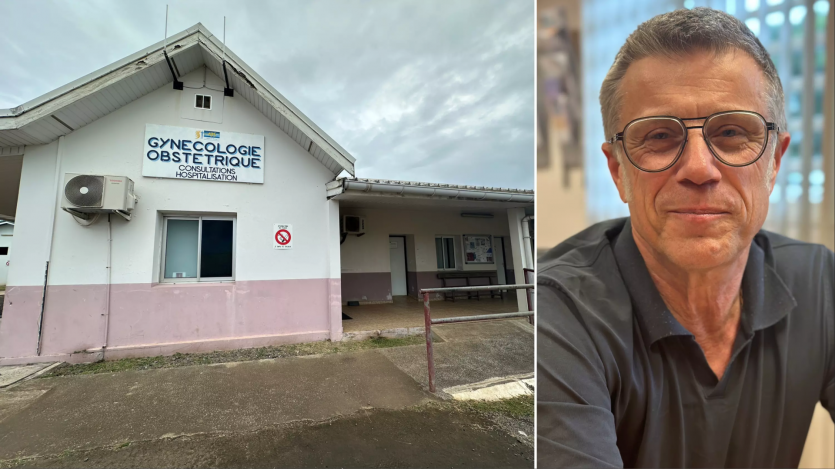
From New Caledonia to Mayotte, via Guadeloupe, hospitals in France's overseas territories play a vital role. Despite challenges related to geographical isolation, insularity, weather conditions, various diseases, and staff shortages, they persevere, innovate, and grow. Our partner Outremers360 gives a voice to the directors of these hospitals. Dominique Cheveau, former director of Médipôle, heads the Wallis and Futuna Health Agency and oversees the territory's two hospitals.
How are the hospitals in Wallis and Futuna doing?
The hospitals are doing well. The situation on our island is very specific; the local healthcare system relies on the Wallis and Futuna Health Agency. This agency is responsible for the two hospitals: Sia Hospital in Wallis and Kaleveleve Hospital in Futuna, located 240 kilometers apart. The agency also oversees three clinics that offer general medical consultations, maternal and child health services, and dental care. The agency therefore has missions related to public health, epidemiology, and prevention.
This public institution that you manage is responsible for implementing health policy in a territory without a general social security system or earmarked taxation. Why?
This unique situation stems from an agreement between Wallis and Futuna and the French State when the territory joined the Republic. It was agreed that healthcare would remain completely free for everyone. Whether for residents or tourists, healthcare costs are covered by the State. There is no private medical practice; the Health Agency remains the sole healthcare provider, overseeing the two hospitals and three clinics.
Are hospitals under strain?
Hospitals represent 20% of the agency's activity. They are small facilities with relatively low patient volumes. It's exceptional for us to be at capacity. We have 20 medical beds, 20 surgical beds, and an operating theater with a surgeon. Practitioners regularly come from New Caledonia and mainland France to conduct consultations and perform operations. We almost always have visiting doctors on assignment in our hospitals. These include gastroenterologists, ophthalmologists, oncologists, and so on.
Which practitioners are permanently based in your area?
We have an anesthesiologist, a surgeon, two general practitioners, a pharmacist, a radiologist, a biologist, and emergency physicians. For an area of about 11,000 inhabitants, that's already quite good. We have no trouble attracting specialists for missions lasting from two to three weeks; the candidates are here because it's very enriching for them medically to come here.
In cases of complex medical needs, the Health Agency organizes the transfer of patients to mainland France, New Caledonia, or Australia. How many are there per year?
We carry out approximately 850 medical evacuations per year. Ninety percent of these transfers are to New Caledonia. Medical evacuations to mainland France involve specialized oncology, and we also send patients to Australia for neurosurgery or cardiac surgery. These transfers represent 30% of our budget, or 25 million euros per year [nearly 3 billion francs, editor's note], and we receive state funding that allows us to pay our service providers.
What are the other specific characteristics of your territory in terms of healthcare?
In terms of health, we have significant nutritional problems, with widespread overweight and a very high obesity rate, as in most overseas territories. These issues lead to numerous health problems such as diabetes and heart disease. We also have vector-borne diseases, transmitted by mosquitoes, such as dengue fever. We are conducting prevention campaigns among the population, and the territorial authorities are doing everything possible to prevent an outbreak.
Filariasis [a parasitic disease that affects the lymphatic system, editor's note] is also present in our territory. We are currently conducting a major treatment campaign in Futuna, with the goal of treating 60% of the population against this disease, which was thought to have been eradicated twenty years ago. However, filariasis can be neutralized, meaning it goes dormant, but it can reappear.
Endometrial cancer is also prevalent in young women around the age of 30. A study is currently underway to understand the reasons for this prevalence, and we are working on this in partnership with the Eugène-Marquis Center at the University Hospital of Rennes, in Brittany.
At the beginning of the year, the hospital in Futuna acquired its first hemodialysis center. What has this brought?
The establishment of a hemodialysis center in Futuna has allowed many patients to receive treatment at home. Previously, Futunans had to travel to Wallis for their treatment. I met a woman who had undergone dialysis in Wallis for ten years. She was finally able to return to her island after a decade away from home.
With a similar objective, we plan to install a scanner in Futuna and are considering replacing the aging one in Wallis. Our goal is to be able to more easily treat immediate emergencies in Wallis and Futuna. For acute treatments conducted outside the territory, we want patients to be able to return home as soon as possible; to achieve this, our infrastructure must be adapted for rehabilitation and postoperative care.
What is the state of your healthcare infrastructure?
Our buildings are old and outdated; we have renovation projects and we received €45 million [5.37 billion francs, editor's note] as part of the Ségur de la Santé (healthcare reform plan) for hospital renovations. But the work hasn't started yet; we're currently working on real estate investments.
My predecessors only stayed for short periods, which doesn't make projects easy. In Wallis and Futuna, everything rests on three pillars: the Republic, the Catholic Church, and customary law (the three kingdoms). Decision-making requires time to consider each of the territory's stakeholders.