
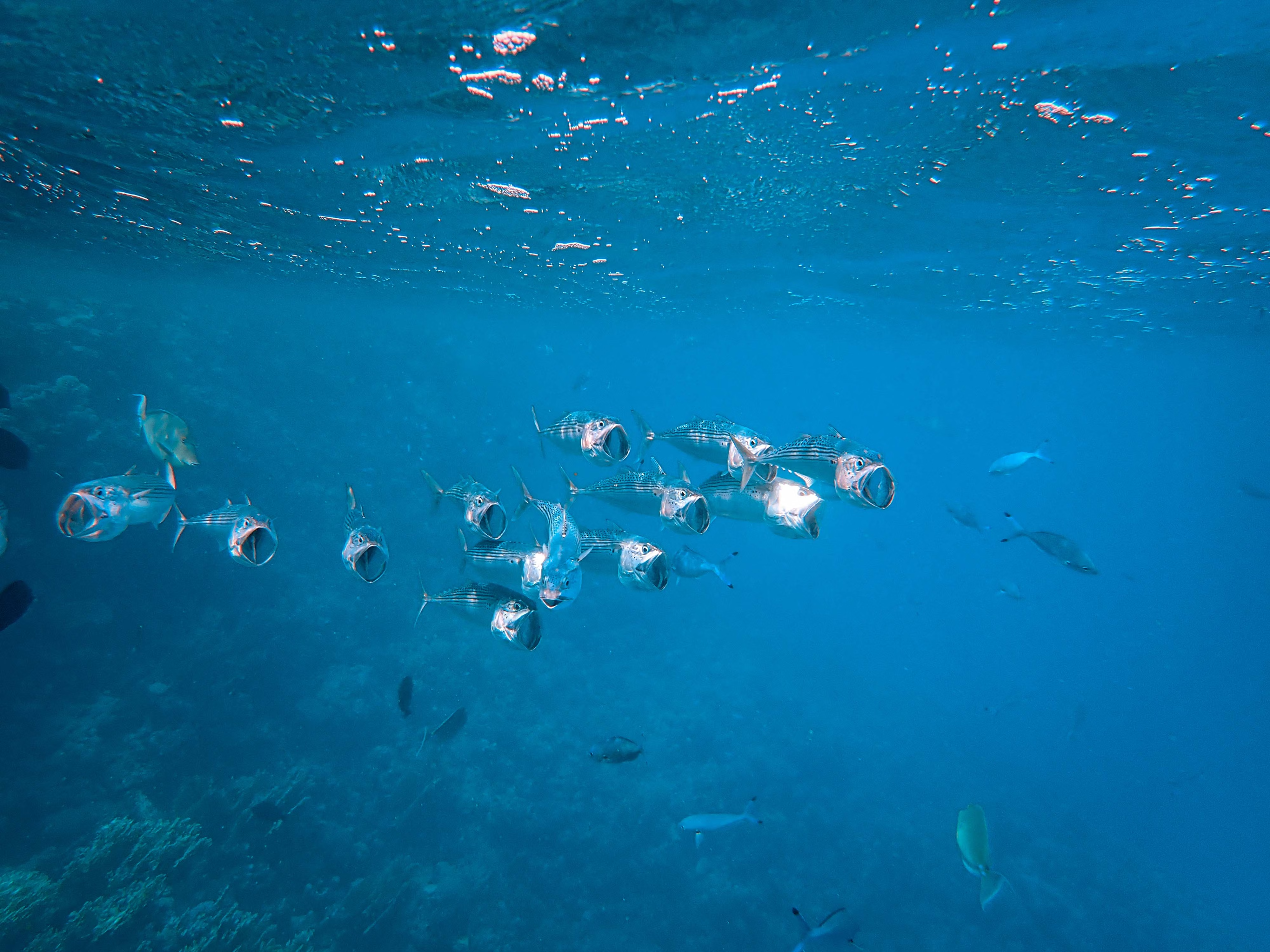
Artificial reefs created from sunken ships in Madeira and Porto Santo help support marine biodiversity, but cannot reproduce all the ecological functions of natural reefs, a scientific study has concluded.
The findings are based on nine years of fish monitoring by Madeira’s marine biodiversity programme, BioMa, which has been operating across the archipelago since 2016.
Pedro Neves, a researcher at the Oceanic Observatory of Madeira, said the study compared two natural reefs and one artificial reef on each island. The research was carried out in partnership with Madeira’s Institute of Forests and Nature Conservation and the University of Las Palmas.
The two artificial reefs studied were created by sinking former Portuguese Navy corvettes: the Afonso Cerqueira off Madeira and the General Pereira d’Eça off Porto Santo.
“We concluded that artificial reefs behave like natural reefs in some respects, because more or less the same species are found in both places,” Neves told Lusa. “However, the species living around the artificial reefs do not perform all the same ecological functions as those found on natural reefs. Artificial reefs remain very important, for example for diving, tourism and the local economy, but we cannot regard them as substitutes for natural reefs,” he said.
In Madeira, where fish communities are richer and more functionally diverse, the differences between natural and artificial reefs were less pronounced. The artificial structures appear to act mainly as an extension of the island’s existing network of marine habitats.
In Porto Santo, however, the differences between sites were more evident. The artificial reef displayed high levels of functional diversity compared with a natural reef exposed to greater fishing pressure.
Researchers recorded 52 fish species during the study, including several considered particularly important for conservation and the functioning of the marine ecosystem. These included large predators and ecologically distinct species such as grouper, triggerfish, dogfish and several types of ray.
Neves said artificial reefs are valuable because they create additional habitats, but stressed that natural environments must continue to be protected, warning that conservation decisions should not be based solely on the number of species found in one location. Instead, marine protected areas should encompass a mosaic of different environments, including sandy seabeds, rocky reefs and kelp fields.
“We cannot protect only a natural reef because it has more species than a sandy bottom, or just an artificial reef because it has a higher density than a natural reef,” he said. “We have to try to preserve a little of everything.”