
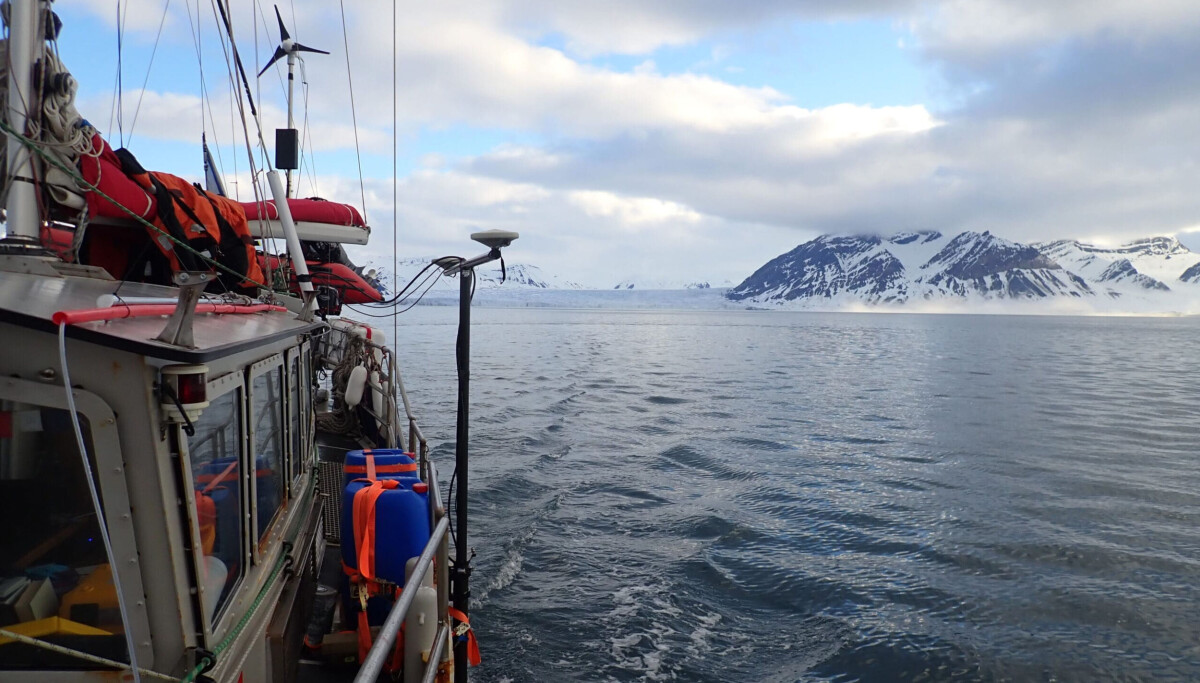
Excerpt and Photo from thebarentsobserver.com
Researchers from the Norwegian Geotechnical Institute, the University Centre in Svalbard and MARUM have documented hundreds of methane gas flares across the fjords around Longyearbyen, in an area the published literature previously suggested held very few seeps. With temperatures in Longyearbyen rising more than seven degrees in 25 years and permafrost increasingly fragmented, the team is now mapping what drives the activity and what it tells us about future methane releases in a warming Arctic.
The findings raise fundamental questions about gas source depth, fluxes and temporal variability, and challenge the assumption that the geological system beneath Svalbard is quiescent. As an archipelago sitting above significant natural gas deposits, Svalbard serves as an early warning for how permafrost thaw could unlock previously trapped greenhouse gases at scale.