
Renewables Offer Pacific Island States a Lifeline. How Can We Speed the Transition?
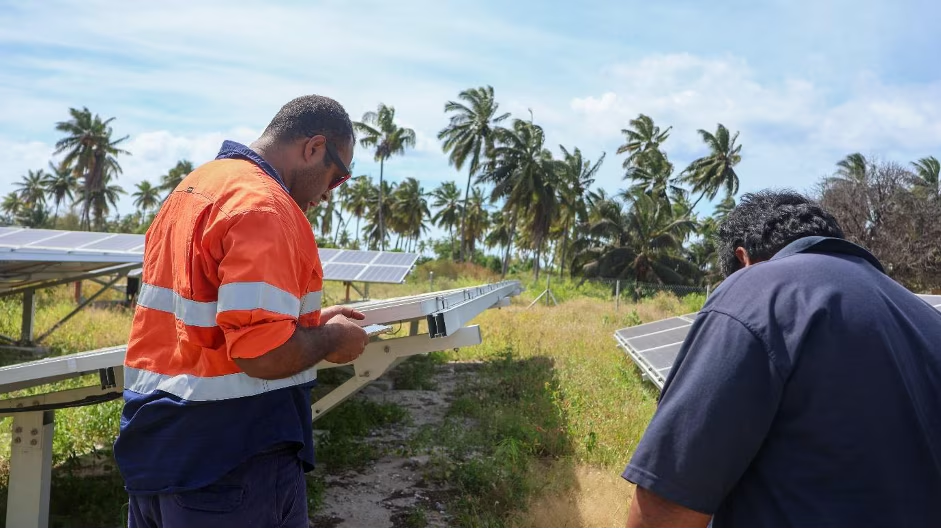
Excerpt and Photo from weforum.org
Pacific small island developing states (PSIDS) are driving ambitious renewable energy transitions despite low emissions, aiming to reduce dependence on fossil fuel imports while confronting multiple urgent and development challenges.
The far-reaching effects of the current war in the Middle East and the energy crisis it has caused have already impacted the Pacific region. Economies have seen energy rationing. Austerity measures and potential power cuts are being considered to buffer already stretched national economies against price shocks as well as the limited availability of oil.
Pacific small island developing states continue to remain heavily reliant on fossil fuel imports. Currently, imported fossil fuels supply 40% of the region’s electricity generation. This comes at a significant cost to the region. In 2018, fossil fuel imports reached an estimated $1.1 billion, equivalent to an average of 7.8% of national GDP for countries in the region, ranging from 1.2% of GDP for Papua New Guinea to 12.9% of GDP for Palau.
Renewables could ease this reliance and the vulnerability it causes – and now, Pacific island states are laying the groundwork for a wider rollout of renewables.