
Rocks on Rapa Nui tell the story of a small, resilient population − countering the notion of a doomed overpopulated island
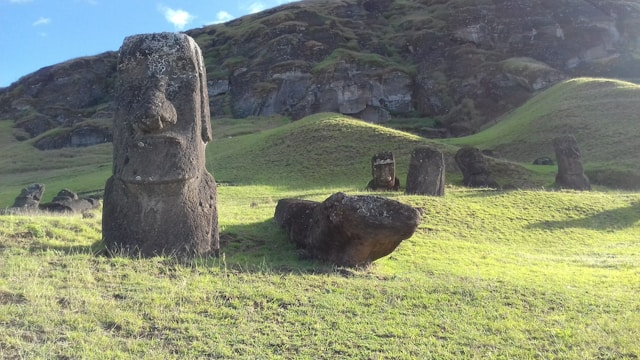
Over the past 20 years, researchers have generated significant new evidence about the archaeological record of Rapa Nui, contributing to reframing the island’s narrative away from the idea of collapse. For example, studies from my team demonstrate that the statues were moved in a walking fashion from the quarry to their final locations on platforms called ahu. We have also tackled the question of how the islanders placed giant multiton hats called pukao on the tops of these statues.
However, the idea that there were much larger numbers of people on the island remains embedded in the academic and popular literature. The persistence of this idea has consequences outside of the field of Rapa Nui archaeology. Despite archaeological evidence to the contrary, it is not uncommon, for example, for ecologists to use Rapa Nui as a case study of so-called Malthusian demographics, where the population is assumed to have reached a massive peak that momentarily outstripped the island’s resources and triggered an ecological catastrophe.
While my colleagues and I agree that it is essential to be concerned about the potential for exploitation of natural resources, catastrophe is not the only possibility. Human history offers many examples demonstrating how it is possible to live sustainably despite constraints.