
Seychelles President tells UN global financing must ‘measure reality correctly’ for small island states
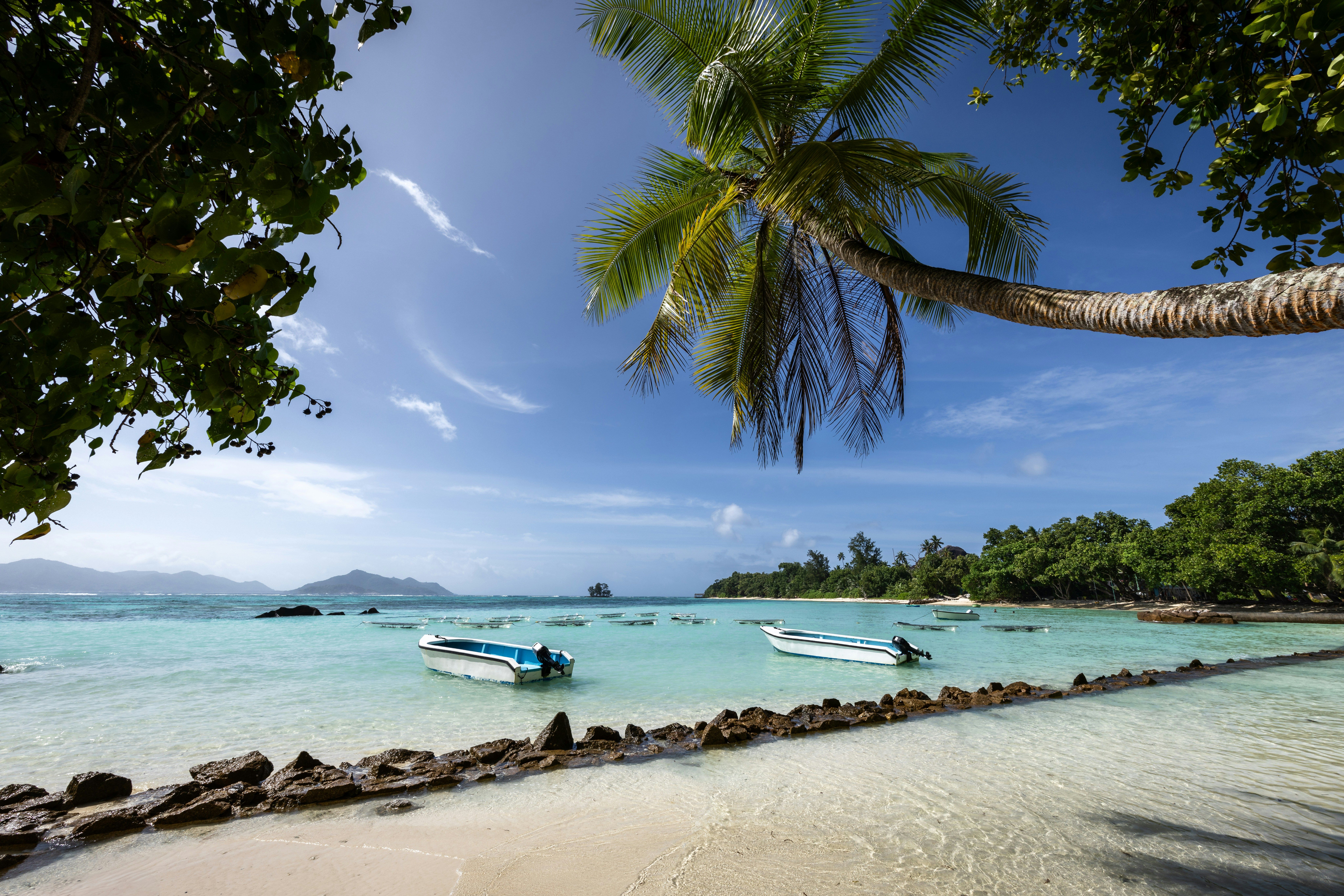
Seychelles' President Patrick Herminie has called for a rethink of how small island states qualify for international financing at the United Nations General Assembly, saying that relying on income per capita can conceal the economic vulnerabilities faced by countries such as Seychelles.
He made the statement in his address at the General Debate of the 81st Session of the UN General Assembly in New York and called for the full implementation of the Multidimensional Vulnerability Index (MVI), which is designed to measure countries according to structural vulnerabilities that conventional economic indicators may overlook.
“Measuring a nation's development solely by GDP per capita ignores extreme exposure to climate shocks and geographic isolation. If international finance is to serve reality, it must first measure reality correctly,” he said.
High income, limited access to finance
The issue is particularly significant for Seychelles, which has achieved high-income status but remains a small island developing state with an economy heavily exposed to developments beyond its borders.
The International Monetary Fund (IMF) said in its 2026 assessment of Seychelles that the country's high-income status limits its access to concessional financing, despite its vulnerability to external shocks.
The IMF noted that Seychelles remains heavily dependent on tourism and imports, leaving the economy exposed to disruptions in international travel, commodity prices and shipping.
The institution projected economic growth of 1.5% for 2026, compared with an estimated 5.1% in 2025, amid disruptions linked to the conflict in the Middle East. Around 60% of visitors to Seychelles travel through Doha, Dubai or Abu Dhabi, while the country imports about 95% of its energy as well as much of its food and industrial inputs.
The World Bank similarly describes Seychelles as Africa's only high-income economy, while noting that its small domestic market, geographic isolation, limited diversification and exposure to external and climate shocks remain significant structural constraints.
The tension between income and vulnerability has long been raised by small island developing states, or SIDS, many of which have argued that traditional measurements can leave relatively prosperous island economies with reduced access to affordable development finance despite their exposure to disasters and external economic shocks.
The UN General Assembly adopted the Multidimensional Vulnerability Index in August 2024 as a tool to complement conventional income-based measurements.
The index considers economic, environmental and social vulnerabilities and is intended to provide a broader picture of the structural challenges facing countries. The UN has said that access to concessional financing has traditionally depended heavily on income per capita, which can fail to reflect countries' exposure to external shocks.
Herminie told world leaders that the issue went beyond access to development funding and extended to the sustainability of national debt.
“For small island states, debt sustainability is a matter of national survival. We require affordable, accessible, long-term financing, meaningful debt relief, and the full implementation of the Multidimensional Vulnerability Index,” he added.
Climate costs
His remarks come as Seychelles continues to balance its comparatively strong economic indicators with the high costs associated with climate adaptation.
A World Bank assessment released earlier this year found that without action, climate and environmental pressures could reduce Seychelles' GDP by more than 6% by 2050, with implications for employment, incomes and public finances.
Herminie linked the financing challenge directly to climate change, describing rising sea levels and threats to coastal infrastructure and livelihoods as present-day concerns rather than future risks.
“For Seychelles, climate change is not a prospective debate, it is a daily reality that strikes at the very foundations of our society. Economic growth that bankrupts the planet for future generations is not progress,” Herminie said.
He welcomed the International Court of Justice's advisory opinion on states' obligations in relation to climate change and called for stronger action on mitigation, adaptation, technology transfer and support for loss and damage.
Seychelles had participated in proceedings before the ICJ, where it argued that small island states face particularly severe consequences from a climate crisis to which they have contributed comparatively little.
The proceedings were initiated following a UN General Assembly request seeking clarification of states' obligations under international law and the consequences where environmental harm particularly affects vulnerable countries, including SIDS.